- Region
- Okinawa Prefecture, Japan
- How long
- 5–7 nights
- Airport
- Naha Airport (OKA), domestic and international flights
- Size
- About 1,200 km², a little over 100 km from Cape Hedo to Cape Kyan
- Capital
- Naha, linked to the airport and Shuri by the Yui Rail monorail
- UNESCO
- Gusuku sites of the Ryukyu Kingdom (2000); northern Okinawa forest (2021)
In short
- Why go: Okinawa Main Island packs a royal capital, a coral-fringed west coast, one of the world's great aquariums, subtropical forest and a living Ryukyuan culture into an island you can drive end to end in about three hours.
- Must-do: Shuri Castle, whose rebuilt main hall opened to the public on 23 November 2026; the Churaumi Aquarium and Kouri Island in the north; a boat to the Blue Cave at Cape Maeda; Sefa-utaki and the Peace Memorial Park in the south.
- Six areas: Naha & Shuri, central Okinawa, the Onna coast, the Motobu Peninsula, Yanbaru and southern Okinawa.
- Getting around: the monorail covers Naha; almost everything else is easiest by rental car, with express and route buses and day tours as the alternatives.
- How long: five to seven nights for the main island, plus a night or two on the Kerama Islands, 50–90 minutes away by ferry.
Why Okinawa Main Island
Okinawa Main Island (Okinawa Hontō, 沖縄本島) is the largest island of the Ryukyu chain and the seat of Okinawa Prefecture, about 640 km south-west of Kyushu and a little closer to Taipei than to Tokyo. It covers roughly 1,200 km² and runs a little over 100 km from Cape Hedo in the north to Cape Kyan in the south, narrowing to a few kilometres at Ishikawa. The prefecture has about 1.47 million people (2020 census), and most of them live in the urbanised southern third, between Naha and Okinawa City.
For travellers the island works on several levels at once. It is the gateway to the whole archipelago, with the busiest airport and the ferry port for the Kerama, Kume and Tonaki islands. It is a city-break destination, with Naha's markets, izakaya and the castle town of Shuri. It is a beach and diving island, with reefs a few metres off the west coast and the Kerama Islands on the horizon. And it is the place to understand Ryukyu: a kingdom that traded with China, Japan and South-East Asia for four centuries, a battlefield in 1945, a territory under US administration until 1972, and a prefecture with its own music, food and religion.
The climate is subtropical. Winters are mild (Naha's January mean is around 17 °C), summers are long and humid, and the rainy season usually runs from about mid-May to late June. Typhoons are possible from roughly July to October. See best time to visit and typhoons for the month-by-month detail.
Book tours in Okinawa Main IslandLive times, prices and free cancellation terms on GetYourGuide.
Check availabilityThe island in six areas
Okinawa is small enough to cross in a day but varied enough that where you base yourself changes the trip. This guide splits it into six areas, each with its own page:
- Naha & Shuri — the capital: Kokusai-dōri, the Makishi market, Tsuboya pottery quarter, Shikinaen garden, Tamaudun and Shuri Castle. Best base without a car.
- Central Okinawa — Chatan's American Village and Sunset Beach, Okinawa City (Koza), Yomitan's pottery village and Zakimi castle, Katsuren and Nakagusuku castles, and the Kaichū-dōro sea road to the eastern islands.
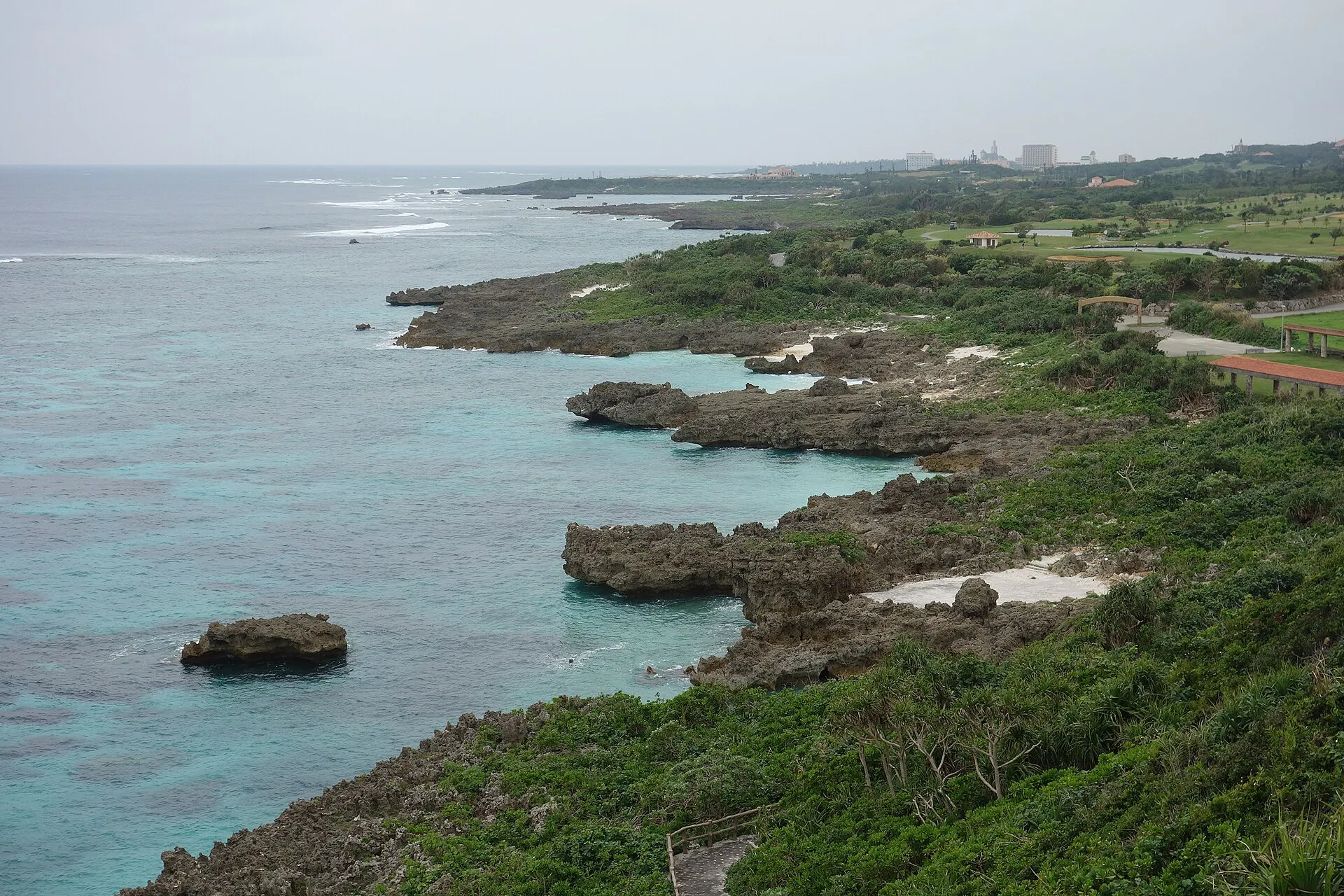
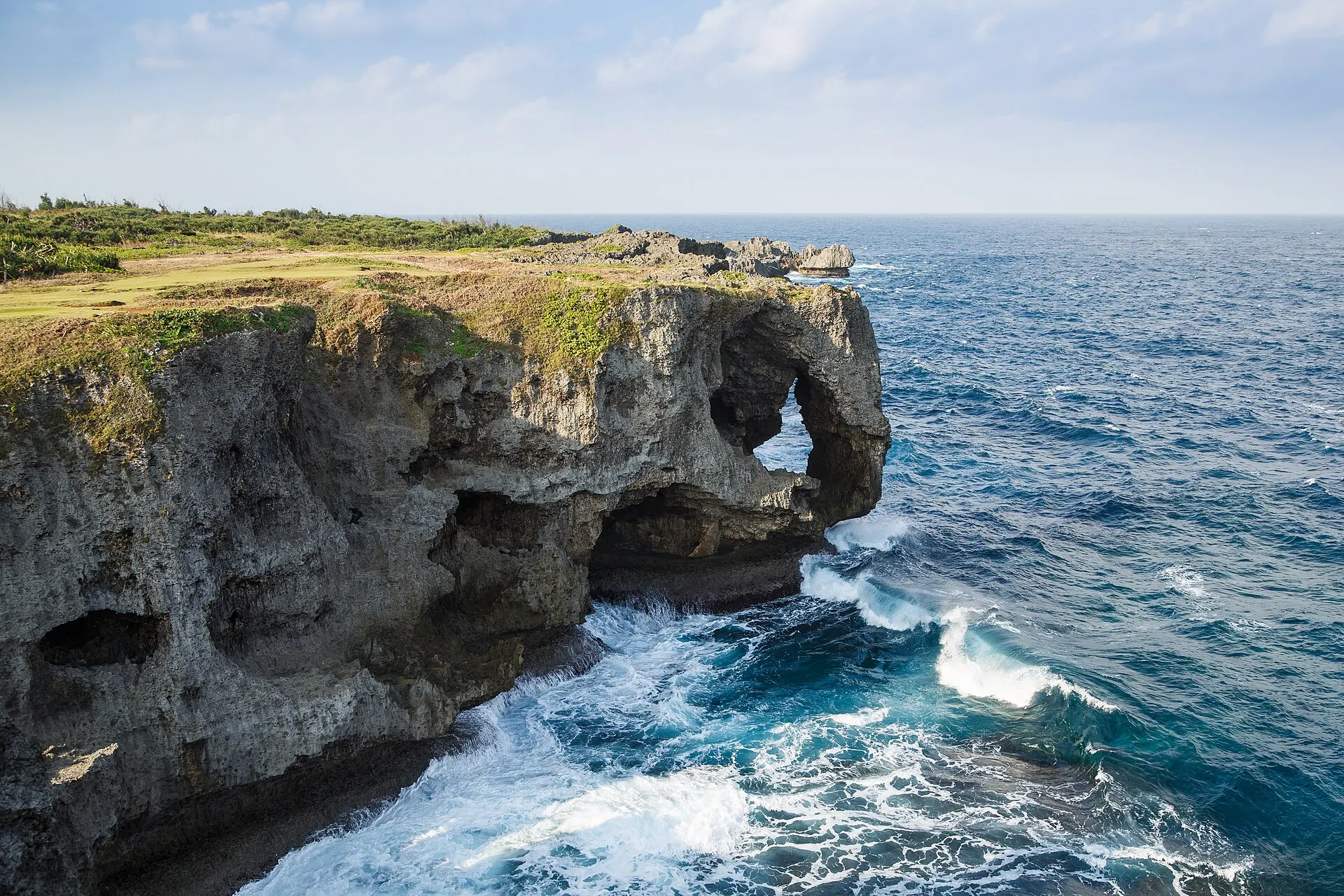
- Onna coast — the resort strip on the west coast: Cape Maeda and the Blue Cave, Cape Manzamo, beach hotels and dive shops.
- Motobu Peninsula — the Churaumi Aquarium in Ocean Expo Park, Bise's Fukugi tree lanes, Nakijin castle, Kouri and Sesoko islands, and the ferry to Ie Island.
- Yanbaru — the forested north, a national park since 2016 and part of a World Heritage site since 2021: Hiji Falls, Daisekirinzan, Cape Hedo and the Okinawa rail.
- Southern Okinawa — Sefa-utaki, the sacred island of Kudaka offshore, Gyokusendō cave, Itoman, and the battlefields and memorials of 1945.
Most first-time visitors split their nights between Naha and one west-coast base (Onna or Motobu), and use day trips for the south and the Kerama Islands.
Ryukyu: the kingdom behind the island
In the 14th century Okinawa was divided between three rival polities, Hokuzan, Chūzan and Nanzan, ruled from stone castles called gusuku. Shō Hashi of Chūzan unified the island in 1429, and from Shuri the Ryukyu Kingdom grew rich as a go-between in the trade of China, Japan, Korea and South-East Asia. Its tributary relationship with Ming and Qing China shaped court ritual, architecture and cuisine.
In 1609 the Satsuma domain of southern Kyushu invaded and the kingdom became a dependency of Satsuma while keeping its king and its ties to China. Japan abolished the kingdom in 1879 and created Okinawa Prefecture. The history page tells the full story. All nine Gusuku sites inscribed by UNESCO in 2000 are on this island, and each appears on one of the area pages: Shuri Castle, the Sonohyan-utaki stone gate, Tamaudun and Shikinaen in Naha; Zakimi, Katsuren and Nakagusuku castles in central Okinawa; Nakijin on the Motobu Peninsula; and Sefa-utaki in the south. See world heritage for the full list.
1945, the bases and modern Okinawa
The Battle of Okinawa, from the US landings in the Kerama Islands on 26 March 1945 and on the main island's west coast on 1 April to the end of organised Japanese resistance in June, was one of the deadliest battles of the Pacific War. The Cornerstone of Peace at Mabuni in Itoman bears 242,659 names of the dead of all nationalities (Okinawa Prefecture, as of 23 June 2026). Civilians made up a large share of the dead. 23 June is Okinawa Memorial Day (Irei no Hi), a prefectural holiday.
Okinawa remained under US administration until 15 May 1972. Today the prefecture hosts about 70% of the land area of facilities used exclusively by US forces in Japan; those facilities cover about 8% of the prefecture and about 14% of Okinawa Main Island (Okinawa Prefecture figures, 2025–26). Visitors see the bases mostly as long fences along Route 58 and aircraft over Kadena and Futenma. The southern Okinawa and central Okinawa pages cover the museums and memorials; visiting them with time and quiet respect is one of the most important things to do on the island.
What to do: the highlights
The full list, with practical details, is on things to do. The short version:
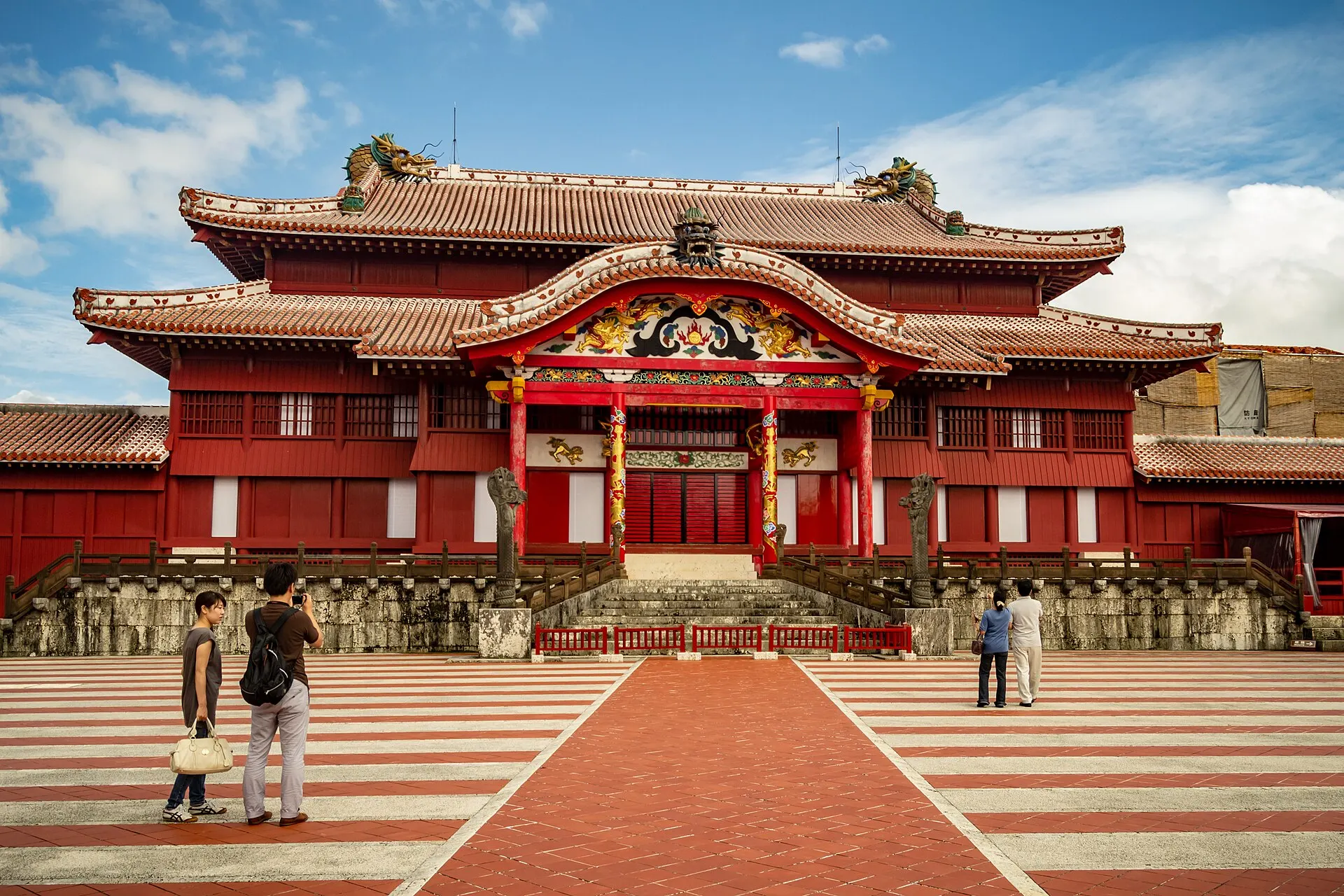
- Shuri Castle (Shurijō, 首里城) — the royal palace burned on 31 October 2019. The reconstructed main hall (Seiden) was completed in November 2026 and opened to the public on 23 November 2026; entry to the hall's interior needs a timed reservation. More on the Naha & Shuri page and the full story on Shuri Castle.
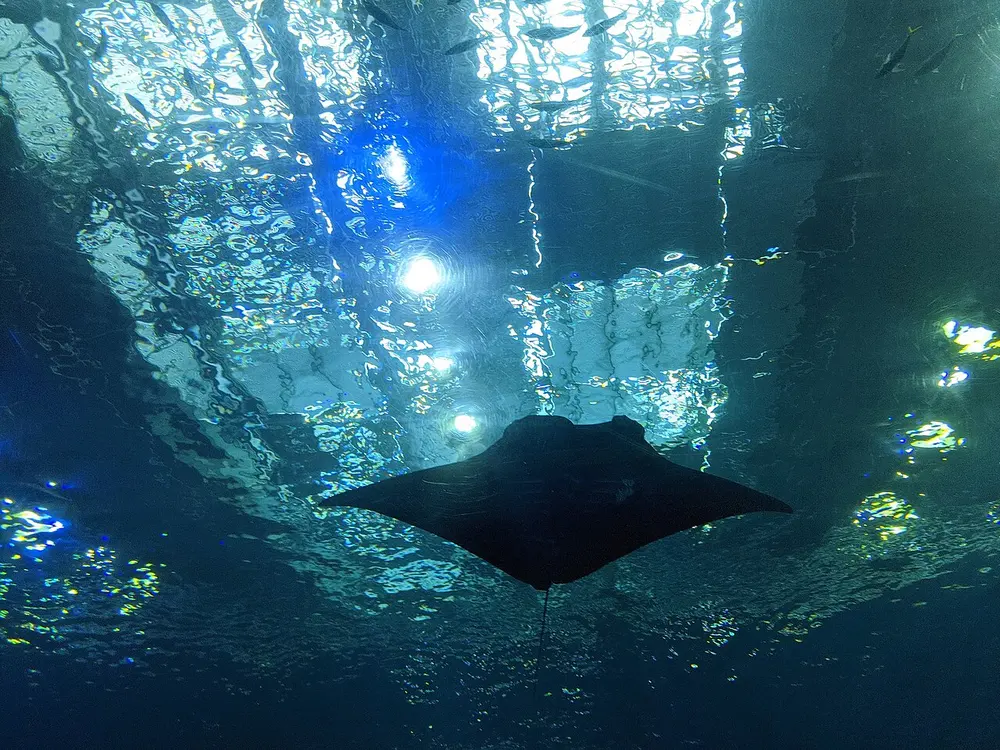
- Okinawa Churaumi Aquarium — in Ocean Expo Park on the Motobu Peninsula, with whale sharks and manta rays in the Kuroshio Sea tank. Open from 8:30 every day of the season; adult admission ¥2,180 (official site, as checked November 2026).
- Kouri Island and Nakijin — a 1,960 m bridge to a small island of white beaches, and the long curving walls of Nakijin castle.
- The Blue Cave at Cape Maeda — Okinawa's most popular snorkelling and diving trip, best in calm, sunny weather.
- Cape Manzamo — the elephant-trunk cliff on the Onna coast.
- Sefa-utaki — the kingdom's holiest site, among rocks and forest above the east coast, with a view to Kudaka Island.
- The Peace Memorial Park and Himeyuri — museums and memorials of the Battle of Okinawa.
- Yanbaru — waterfalls, karst and cape walks in the subtropical forest of the north.
Okinawa: Churaumi Aquarium, Kouri Island and Manzamo tour
Day tour from Naha to the Churaumi Aquarium, the Kouri Island bridge and Cape Manzamo.
Check availabilityBook via GetYourGuideBlue Cave snorkelling with boat ride
Snorkel the Blue Cave at Cape Maeda, reached by boat from the Onna coast.
Check availabilityBook via GetYourGuide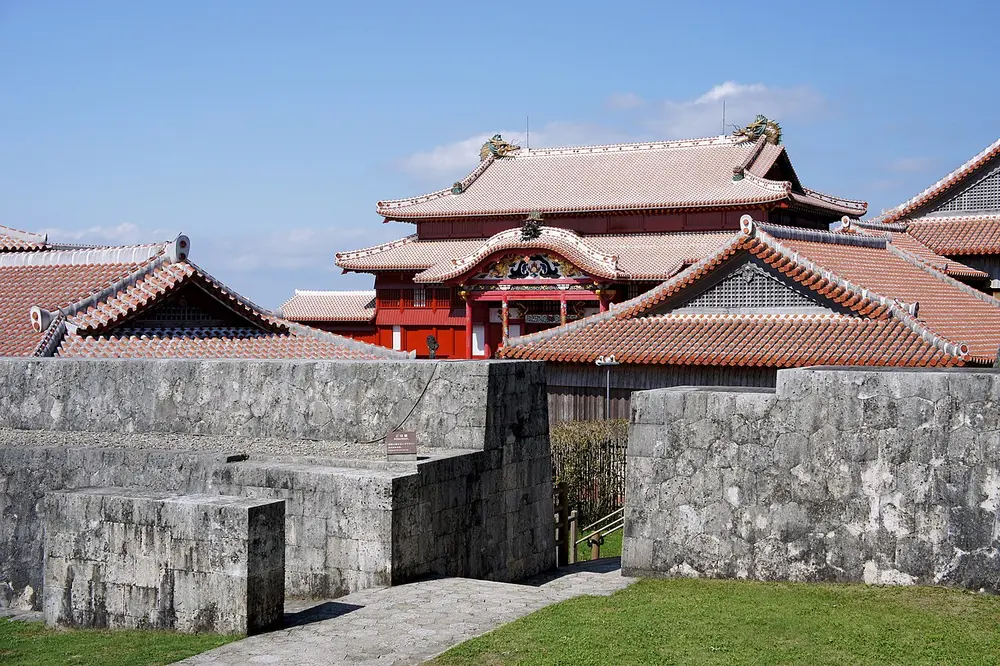
Shurijo Castle and Tamaudun guided tour
A guided tour of two UNESCO sites in Shuri: the royal castle and the royal mausoleum of Tamaudun.
Check availabilityBook via GetYourGuideTour listings are on GetYourGuide. Prices, times and cancellation terms are shown live on each listing and can change; Ryukyu.com may earn a commission at no extra cost to you.
Beaches, reefs and the sea
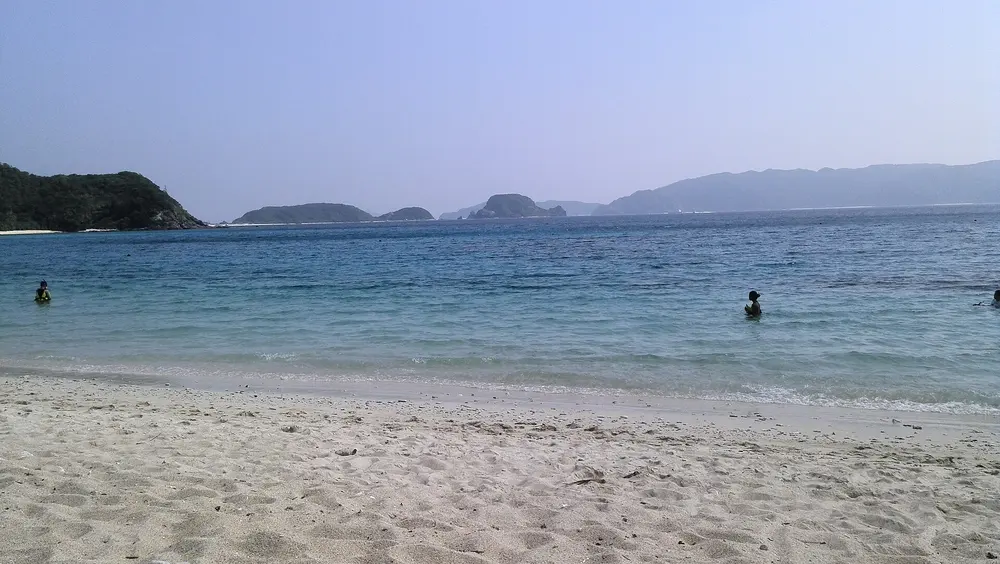
Okinawa's west coast is lined with fringing reef. Many beaches are managed swimming beaches with lifeguards, toilets and showers, and in summer a net against box jellyfish (habu-kurage). Outside the nets and outside the managed season, swim with care: currents run along reef edges and channels, and stonefish and cone shells live on the reef flats. Reef shoes, a rash guard and a mask go a long way.
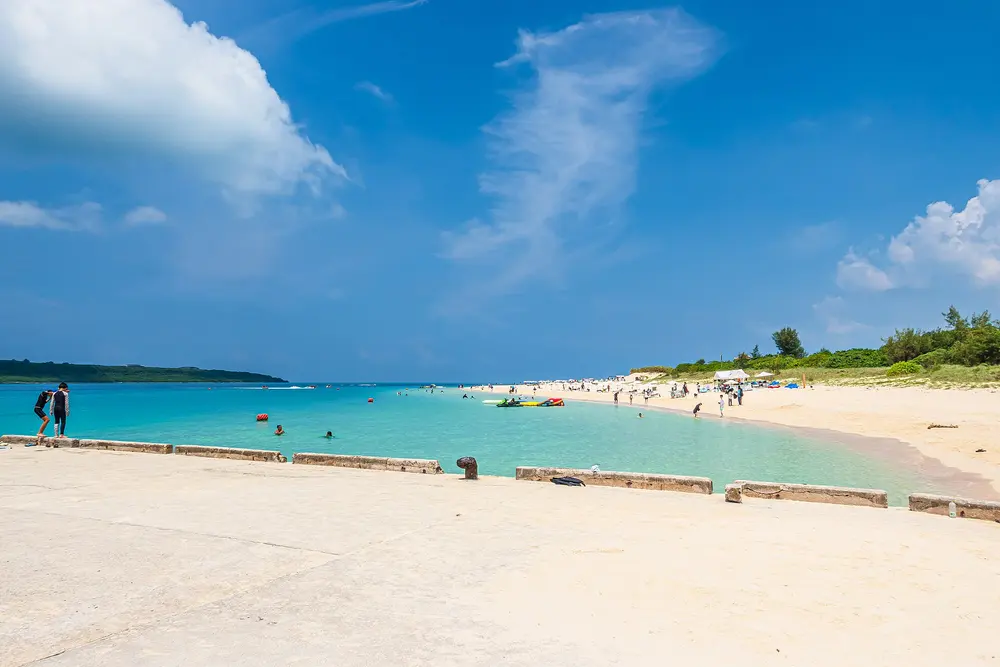
The best-known beaches on the main island are the Emerald Beach in Ocean Expo Park, Kouri and Sesoko in the north, Manza and the Onna coast in the middle, Sunset Beach at Chatan, and Naminoue beach in central Naha. For colour and clarity the Kerama Islands are in a different league, and a day trip from Naha is easy. The beaches and diving page lists beaches by area, the dive and snorkel sites, the jellyfish season and the rules for protecting coral; the cross-island beaches and diving and snorkelling guides compare Okinawa with Miyako and the Yaeyama Islands.
From about late December to March, humpback whales winter between Okinawa and the Kerama Islands. Whale-watching boats run from Naha, Chatan and Zamami.
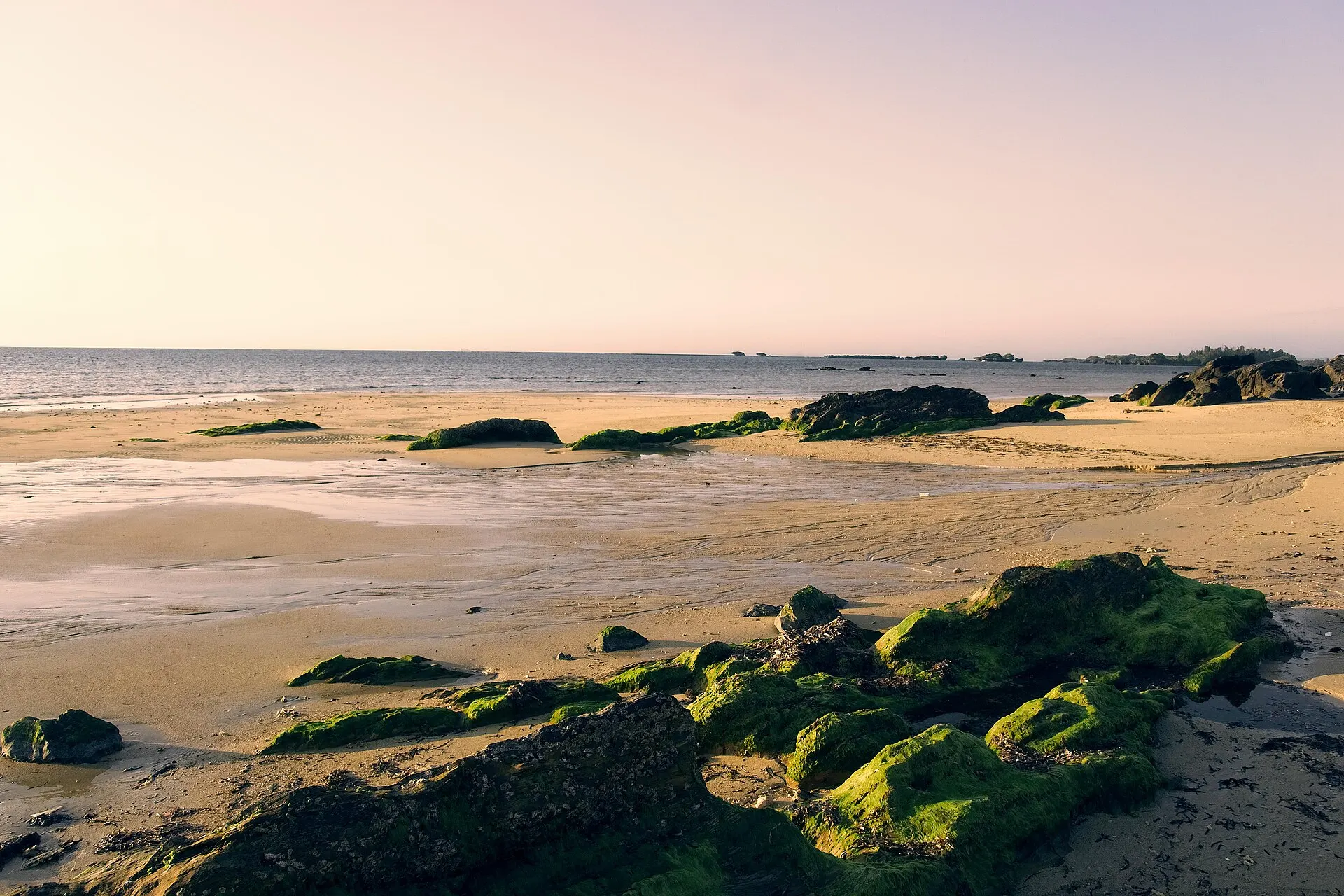
Tancha Beach on the Onna coast at sunset.
Culture, food and music
Okinawan culture is visible everywhere once you know what to look for: shisa lion-dogs on roofs and gateposts, utaki (sacred groves) marked by a few stones and incense burners, red-tiled houses behind coral-stone walls, Eisa drum dances in summer, and the three-stringed sanshin in every bar with live music. The culture, music and karate pages go deeper; karate grew out of Ryukyuan martial arts, and Okinawa has dojo that accept visitors.
Okinawan food is its own cuisine: Okinawa soba (wheat noodles in pork broth), gōyā champurū (bitter-melon stir-fry), rafute (braised pork belly), umibudō (sea grapes), jīmāmi tofu, taco rice, awamori spirit and Orion beer. Naha's Makishi market and the izakaya around Sakaemachi and Kokusai-dōri are the easiest place to start. See food.
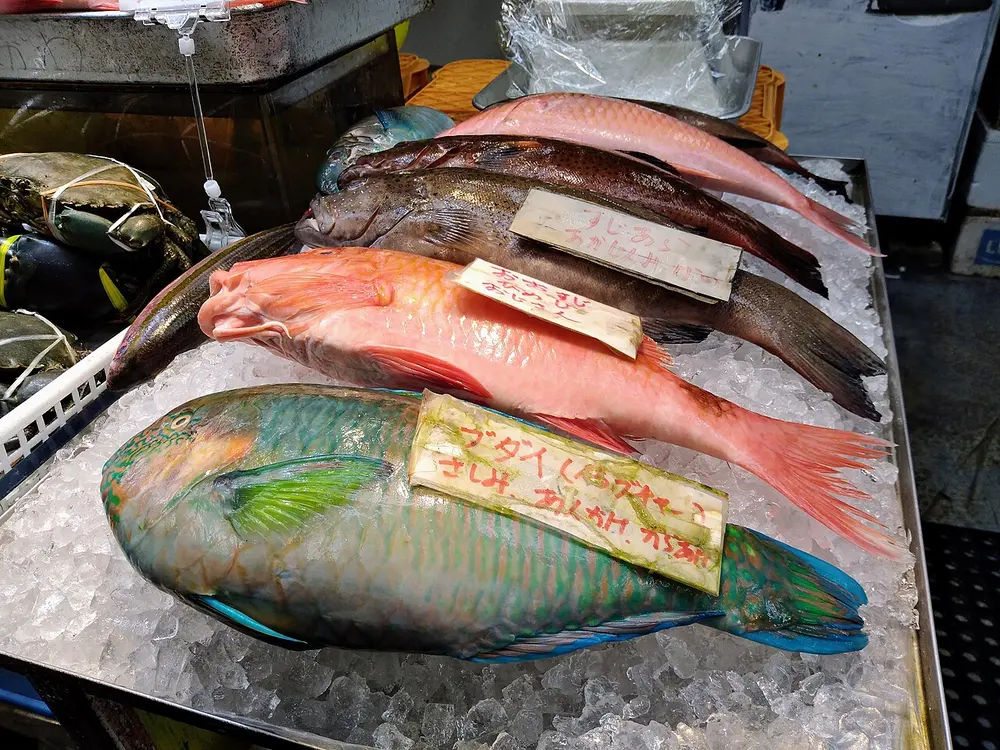
Daiichi Makishi Public Market guided food tour
A guided food tour of Naha's Makishi Public Market and its stalls.
Check availabilityBook via GetYourGuideNaha: Ryusou dress-up and sanshin lesson
Dress in Ryūsō, traditional Ryukyuan clothing, and take a sanshin lesson in Naha.
Check availabilityBook via GetYourGuideTour listings are on GetYourGuide. Prices, times and cancellation terms are shown live on each listing and can change; Ryukyu.com may earn a commission at no extra cost to you.
When to go
March to early May is warm, mostly dry and good for everything; the sea is cool for swimming until April. Japan's Golden Week holidays (late April to early May) fill hotels, flights and ferries. Mid-May to late June is the rainy season, often with long dry spells between showers. July to September is peak beach season, hot and humid, with the summer holidays and Obon bringing Japanese crowds and with typhoon risk. October and November are still warm, with clear water and fewer people. December to February is mild and windy, with humpback whales offshore and cherry blossom in Yanbaru and Motobu from late January.
Typhoons usually cause a day or two of cancelled flights and ferries rather than ruining a whole trip, but leave slack before an onward flight in summer and early autumn, especially if your trip includes a ferry. See typhoons.
Getting there and getting around
Naha Airport is served by flights from across Japan and by international routes from East Asia; the getting there page summarises arrivals, ferries and on-island transport, and the portal pages on arriving internationally and from mainland Japan list the airlines.
On the island, the Yui Rail monorail links the airport, central Naha and Shuri. Beyond Naha, a rental car gives you most freedom; the Okinawa Expressway runs from Naha to Nago, and the drive from Naha to the Churaumi Aquarium takes about two hours. Route and express buses reach the main resorts and Motobu, and many visitors use guided day tours for the north and the south. The car rental page covers licences (an International Driving Permit or, for some countries, an official Japanese translation) and road rules; getting around Okinawa covers the monorail, buses and taxis.
Ferries from Naha's Tomari Port go to the Kerama Islands, Tonaki and Kumejima; ferries from Motobu Port go to Ie Island, and boats from Azama in Nanjō to Kudaka. The ferries and island-hopping pages connect the whole archipelago.
How long to stay, and sample plans
Three nights: Naha and Shuri on day one, a north tour (Churaumi, Kouri, Manzamo) on day two, and the south (Sefa-utaki, Peace Memorial Park) or a Kerama snorkel trip on day three.
Five nights: two nights in Naha, three on the Onna coast or in Motobu with a rental car; add the Blue Cave, a day in Yanbaru, and Bise and Nakijin.
Seven to ten nights: as above plus two nights on Zamami or Tokashiki, a day on Kudaka or Ie Island, and time to do nothing on a beach. Fly on to Miyako or Ishigaki to see more of the archipelago: see itineraries and island hopping.
Practical notes
- Money: cards and IC cards are widely accepted in Naha and at resorts, but small restaurants, island ferries and village shops often take cash only. Japan Post and convenience-store ATMs accept most foreign cards. See tips.
- Driving: traffic in and around Naha is heavy at rush hour, and Route 58 has bus-only lanes at peak times on weekdays. Allow extra time to reach the airport.
- Sun: the UV index is very high from spring to autumn. Reef-safe sunscreen, a hat and a rash guard are standard local practice.
- Habu: the venomous habu snake lives in forest, grass and old stone walls. Stay on paths in Yanbaru and at gusuku sites, especially at dusk, and do not reach into crevices.
- Sacred places: utaki and gusuku are places of worship. Do not cross ropes, step onto altars or move stones and offerings.
- Entry to Japan: see visa for entry rules as checked November 2026.
Okinawa observes the same national holidays as the rest of Japan, plus Okinawa Memorial Day on 23 June, when some public facilities close and memorial ceremonies take place at Mabuni. Big events, such as the Naha Tug-of-War in October and the summer Eisa festivals, are on the events page.
Where to stay
Naha is the practical base: the monorail, the most restaurants, all price levels, and the ferry port for the Kerama Islands. Chatan combines sunset beach, shops and easy expressway access. The Onna coast is the classic resort strip with beachfront hotels. Motobu and Nago put you next to the aquarium, Kouri and Yanbaru. The where to stay page compares the areas with Booking.com picks.
Book a day out
Without a car, a guided day tour is the efficient way to see the north or the south in one day, and the Kerama Islands are an easy boat trip from Naha. The tours page ranks the options by type.
Areas of Okinawa Main Island
- Naha & ShuriVisiting Shuri Castle now its main hall has reopened, plus Kokusai-dōri, the Makishi…
- Central OkinawaChatan's American Village and sunsets, the bars of Koza, Yomitan's potters and Zakimi…
- Onna coastOkinawa's resort coast: the Blue Cave at Cape Maeda, the cliffs of Cape Manzamo, lagoon…
- Motobu PeninsulaThe Churaumi Aquarium, Bise's Fukugi lanes, Nakijin castle, Kouri and Sesoko islands,…
- YanbaruOkinawa's wild north: World Heritage forest, Hiji Falls, the karst of Daisekirinzan,…
- Southern OkinawaSefa-utaki and Kudaka, Gyokusendō cave, the Peace Memorial Park and the Himeyuri…
Plan your visit to Okinawa Main Island
- Things to doThe sights to plan around: Shuri Castle, Naha's market, the Churaumi Aquarium, Nakijin,…
- Beaches & divingOkinawa's best beaches by area, the Blue Cave and other dive sites, jellyfish season…
- ToursThe best Okinawa tours on GetYourGuide by type: north-island days, the Blue Cave,…
- Getting thereFlights to Naha, the Kagoshima ferries, the Yui Rail, buses, rental cars and the ports…
- Where to stayWhere to stay on Okinawa Main Island, area by area, with Booking.com picks from Naha…
Frequently asked questions
Is Shuri Castle open?
Yes. The grounds and the paid area are open, and the reconstructed main hall (Seiden) opened to the public on 23 November 2026. Entry to the inside of the Seiden needs a timed reservation on the official Shurijo Castle Park website; adult admission to the paid area is ¥1,000 (as checked November 2026).
Do I need a car on Okinawa Main Island?
Not for Naha and Shuri, which the Yui Rail monorail covers. For the north, the west-coast beaches and the south, a rental car is the most flexible option; buses and guided day tours are the alternatives.
How far is the Churaumi Aquarium from Naha?
About two hours by car via the Okinawa Expressway, longer in traffic. Express buses and many day tours run from Naha.
When is the sea warm enough to swim?
Managed beaches usually open between March and April and the main season runs to October. In summer, swim inside jellyfish nets where provided.
How many days do I need?
Five to seven nights for the main island, plus one or two on the Kerama Islands if you can.
Sources and official information
Facts were checked against these official sources in November 2026. Opening hours, prices and timetables change, so confirm before you go.
- oki-park.jp
- oki-park.jp
- churaumi.okinawa
- churaumi.okinawa
- pref.okinawa.jp
- pref.okinawa.jp
- env.go.jp
- whc.unesco.org
- whc.unesco.org
- data.jma.go.jp
Ryukyu.com is an independent guide, not the official site of any tourism board, government, airline, port or ferry operator. Some links are affiliate links: tours go to GetYourGuide and stays go to Booking.com, and we may earn a commission at no extra cost to you.