In short
- How this list was made: only people born in Okinawa Prefecture or in the Amami Islands are included, each birthplace checked against newspaper reports, official profiles and cited reference works (see sources).
- Pop: Okinawa gave Japan Namie Amuro, SPEED, MAX, DA PUMP, Rina Chinen and the Okinawa Actors School generation of the 1990s, and bands from BEGIN and Kiroro to MONGOL800, HY and ORANGE RANGE.
- Song: Rimi Natsukawa and BEGIN from Ishigaki, Shoukichi Kina from Koza, and the Amami voices of Hajime Chitose and Kousuke Atari, the latter well known in Taiwan.
- Screen and sport: Yui Aragaki, Yukie Nakama, Ryoko Kuninaka; boxer Yoko Gushiken, golfer Ai Miyazato and Olympic karate champion Ryo Kiyuna.
- Often mistaken: Hikari Mitsushima grew up in Okinawa but was born in Kagoshima; Chiaki Kuriyama, Chihiro Onitsuka and Ai Otsuka are not from Okinawa.
An island prefecture with an outsized cast
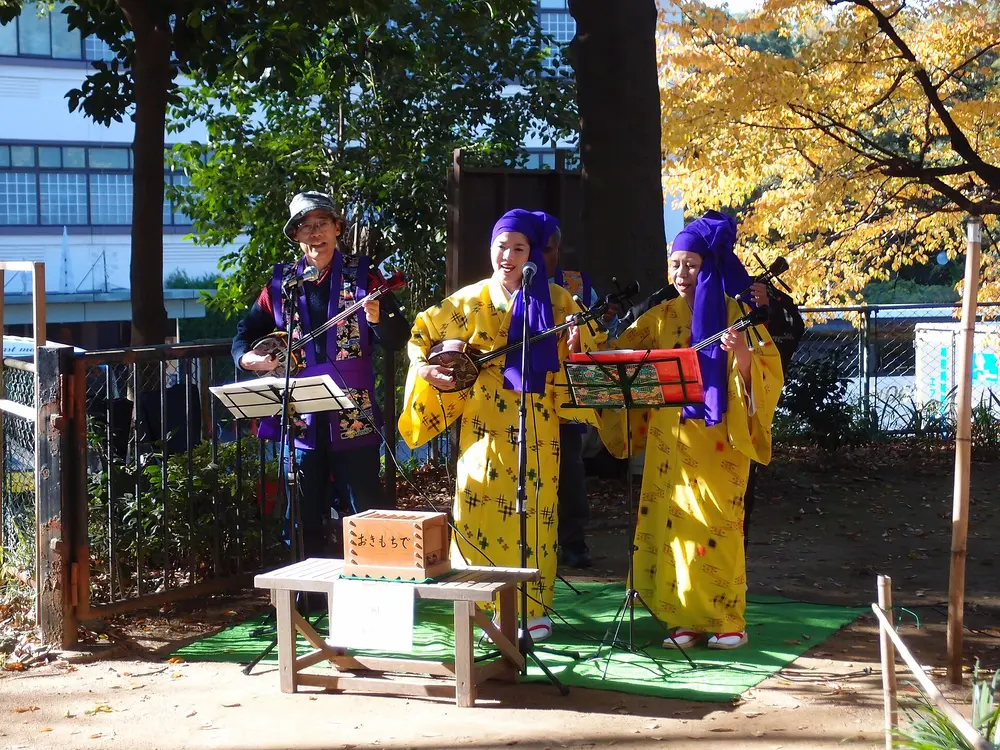
Okinawa has about 1.5 million people, a little over 1% of Japan's population, yet in the 1990s it seemed to supply half the country's pop charts. Part of the reason was one institution, the Okinawa Actors School in Naha, which trained Namie Amuro, SPEED, MAX and DA PUMP. Part of it is older: a culture in which almost every family had a sanshin, every village had its Eisa troupe and singing at gatherings is expected. The Amami Islands, which share much of that culture though they belong to Kagoshima Prefecture, have their own line of singers whose high, cracked shima-uta voices are instantly recognisable.
This page lists people born in Okinawa Prefecture or the Amami Islands. Birthplaces were checked against Okinawan newspapers (Ryukyu Shimpo), official artist profiles and cited reference works, and are given at municipality level where sources agree. People who grew up in Okinawa but were born elsewhere are noted separately at the end. The page deals with public careers only.
Pop stars of the Okinawa Actors School generation
Namie Amuro (born 1977, Naha). The defining Japanese pop star of the late 1990s, she debuted at 14 as lead singer of the Super Monkey's and went on to sell millions of records, influencing fashion across Japan and East Asia. She retired on 16 September 2018 after a final performance in her home prefecture, at Ginowan, the day before; fans travelled from across Asia for it. She was born in Naha's Shuri district.
SPEED, the four-girl group that debuted in 1996 with an average age of about 13, were all from Okinawa and the Actors School: Hiroko Shimabukuro (born 1984, Ginowan), Eriko Imai (born 1983, Naha; later elected to the House of Councillors), Takako Uehara (born 1983, in what is now Tomigusuku) and Hitoe Arakaki (born 1981, in former Gushikami village, now Yaese).
MAX, the dance-vocal group, and DA PUMP, whose leader ISSA was born in Okinawa City in 1978, came from the same school; all of MAX's members and all of DA PUMP's original members are from Okinawa. Rina Chinen (born 1981, Shuri, Naha) was another Actors School star of the period who later moved into musical theatre.
A generation earlier, Saori Minami (born 1954, Kadena; raised in Ginowan) became one of the first Okinawan pop idols in mainland Japan when she debuted in 1971, while Okinawa was still under US administration. Her early publicity wrongly gave Amami as her birthplace; she was born and raised in Okinawa.
Bands and singer-songwriters
BEGIN, a trio of childhood friends from Ishigaki (Eishō Higa, Masaru Shimabukuro, Hitoshi Uechi), formed in Tokyo in 1988 and debuted in 1990 with 'Koishikute'. Their later island songs, including 'Shimanchu nu Takara' and 'Oji Jiman no Orion Beer', are sung at every Okinawan party, and they co-wrote 'Nada Sōsō', the song that made Rimi Natsukawa famous.
Kiroro, the duo of Chiharu Tamashiro and Ayano Kinjo from Yomitan, sold a small local release of 'Nagai Aida' in Okinawa in 1996 and broke nationally with it in 1998; it became a million-seller, and 'Best Friend' followed.
The 2000s rock wave came from central Okinawa. MONGOL800, from Urasoe, made an independent album, 'Message' (2001), whose 'Chiisana Koi no Uta' is still one of the most covered songs in Japan. HY, from Uruma, are a mixed band in which every member writes songs ('366 Nichi'). ORANGE RANGE, five musicians from Okinawa City, topped the charts in 2004 with 'Hana' and 'Locolotion' and are still based in Okinawa.
Cocco (born 1977, Naha) is a singer-songwriter known for intense, personal songs and for campaigns to clean up Okinawa's beaches. GACKT (born 1973 in Okinawa) is a singer and actor whom Ryukyu Shimpo describes as an Okinawa-born artist; he has appeared in Orion beer's advertising for Okinawa.
Island voices: Okinawan and Yaeyama song
Rimi Natsukawa (born 1973, Ishigaki) first recorded enka under another name in 1989 without success, returned as Rimi Natsukawa in 1999, and in 2001 released 'Nada Sōsō' ('tears well up'), written by BEGIN with lyrics by Ryoko Moriyama. It became one of the best-loved songs in Japan, and she appeared on NHK's Kōhaku Uta Gassen year-end show for the first time in 2002. Her clear, unforced voice is the sound many people outside Japan associate with Okinawa.
Shoukichi Kina (born 1948 in Goeku, now Okinawa City) fused Okinawan folk with rock in the 1970s with Champloose; 'Haisai Ojisan' and 'Hana' ('flowers for every heart') have been recorded by artists across Asia. Rinken Teruya (born 1949, Koza, now Okinawa City), son and grandson of musicians, leads the Rinken Band. Tetsuhiro Daiku (born 1948, Shinkawa, Ishigaki) is one of the leading singers of Yaeyama folk song.
The music page explains the traditions these artists come from and where to hear live music.
Amami Islands singers
Amami's shima-uta, with its falsetto breaks (guin), produced a run of national successes in the 2000s.
Hajime Chitose (born 1979, Setouchi, Amami Oshima) was already a prize-winning shima-uta singer as a teenager; her 2002 debut 'Wadatsumi no Ki' was a number one hit, and after years in Tokyo she moved back to her home island.
Kousuke Atari (born 1980, Naze, now Amami City) taught himself shima-uta, debuted in Japan and in Taiwan in 2006, had a long-running hit in 2007 with 'Hana' (written by Naotaro Moriyama and Futoshi Okachimachi), and appeared in the 2008 Taiwanese film Cape No. 7, one of the biggest box-office successes in Taiwan's history; he has performed there regularly since.
Minami Kizuki (born 1989, Naze), RIKKI (Ritsuki Nakano, born 1975, Setouchi) and Ikue Asazaki (born on Kakeroma), a senior singer of the Amami tradition, complete a remarkable roll-call for islands of about 100,000 people.
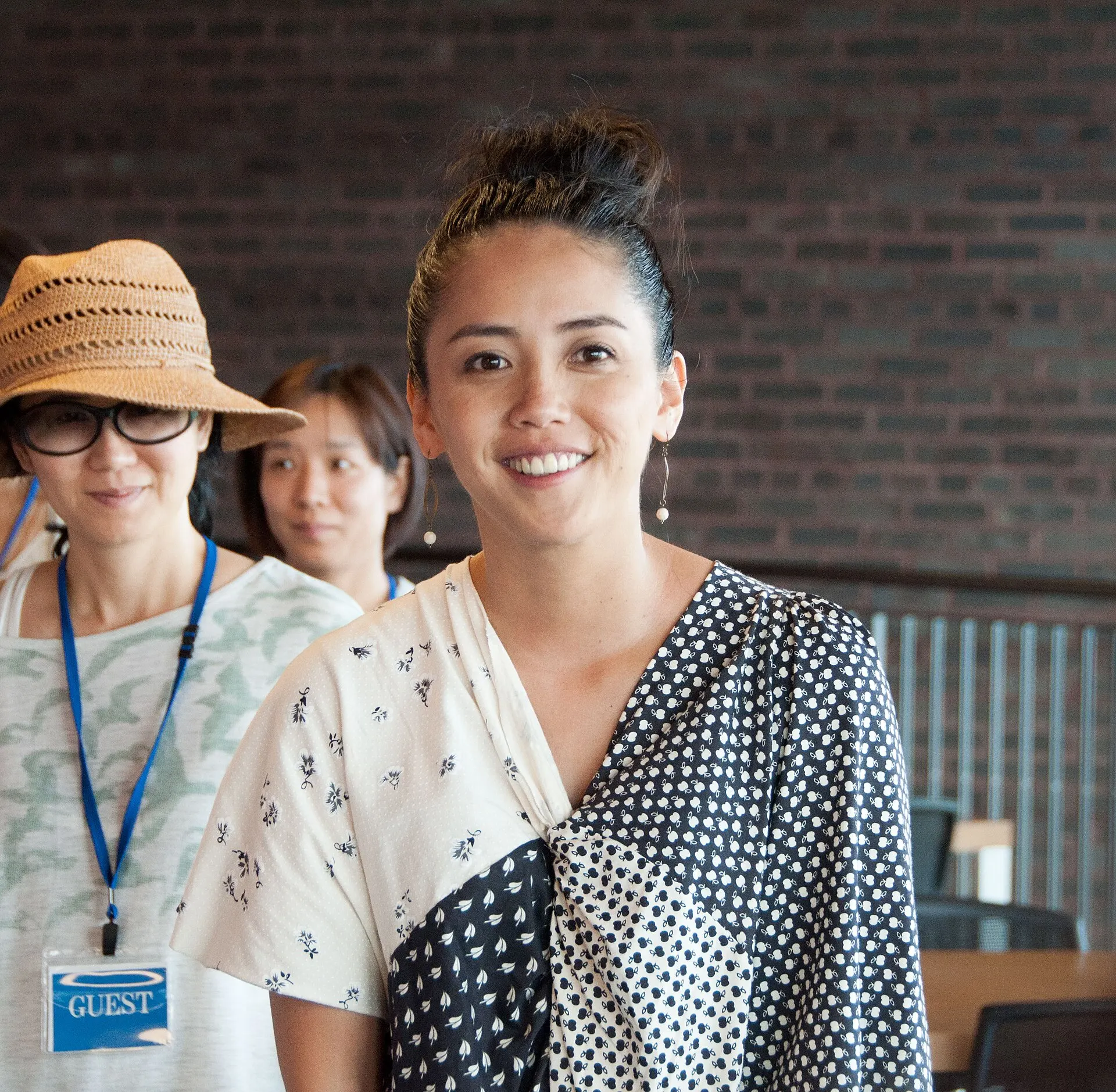
Hajime Chitose, the shima-uta singer from Setouchi on Amami Oshima.
Actors and television
Yui Aragaki (born 1988, Naha) is one of Japan's most popular actresses, known for the medical drama 'Code Blue' and the 2016 romantic comedy 'Nigeru wa Haji da ga Yaku ni Tatsu', whose dance went viral across Asia. Yukie Nakama (from Urasoe) starred in 'Gokusen' and 'Trick' and played the lead in the NHK drama 'Tempest', set in the Ryukyu Kingdom.
Ryoko Kuninaka (from Naha) became a household name as the heroine of NHK's morning drama 'Churasan' (2001), set in Okinawa and Kohama, which did much to make Okinawa a dream destination for mainland viewers. Meisa Kuroki (from Nago) and Manami Higa (from former Gushikawa, now Uruma) are other Okinawan actresses with long careers in film and television; Ryukyu Shimpo has profiled them as part of a striking group of Okinawa-born actresses.
The comedian and film director Gori of the duo Garage Sale was born in Naha in May 1972, a week after Okinawa returned to Japan.

Yui Aragaki at the Tokyo International Film Festival, 2023.
Sport
Yoko Gushiken (born 1955, Ishigaki) won the WBA light-flyweight world title in 1976 and defended it 13 times, a Japanese record; with his trademark afro and Okinawan humour he later became a well-known television personality. A small museum on Ishigaki is dedicated to him.
Ai Miyazato (born 1985, Higashi village, northern Okinawa) won Asian Games team gold as a high-school student, turned professional in 2003, won nine times on the US LPGA Tour and was ranked world number one in 2010, a star in Korea and Taiwan as well as Japan. Her brother Yusaku Miyazato (also from Higashi) topped the Japan Golf Tour money list in 2017. Mika Miyazato (born 1989, Naha, no relation) also won on the LPGA Tour.
Ryo Kiyuna (born 1990, Okinawa City) won the men's kata gold medal when karate made its Olympic debut at Tokyo 2020, the first Okinawa-born athlete to win an Olympic gold.
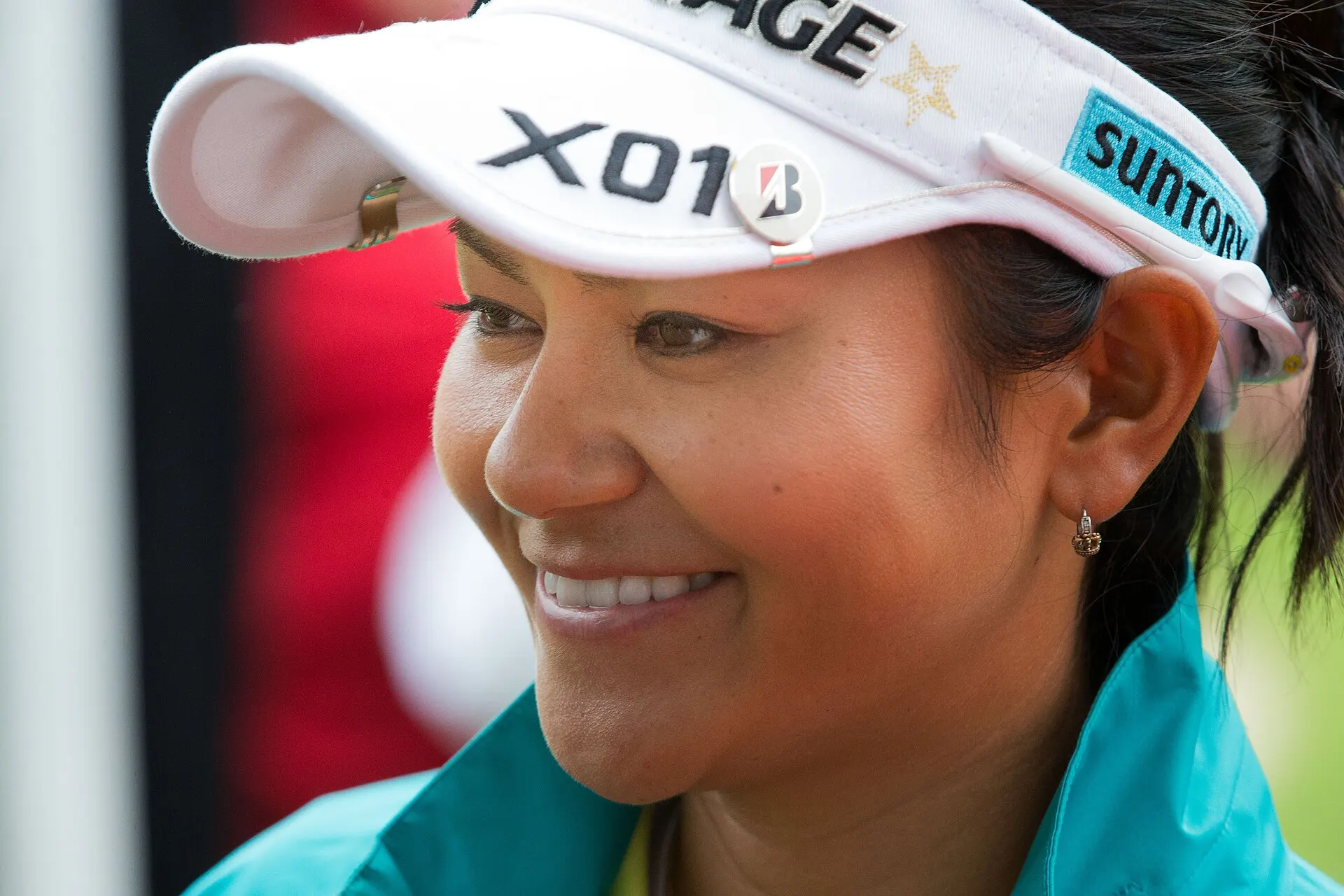
Ai Miyazato, from Higashi in northern Okinawa, on the LPGA Tour.
Karate masters
Okinawa is the birthplace of karate, and the masters who systematised it in the late 19th and early 20th centuries were born in Naha and Shuri. Kanryō Higaonna (1853–1915, Naha) studied in Fuzhou and became the leading teacher of Naha-te. His student Chōjun Miyagi (1888–1953, born in Higashi-machi, Naha) founded Goju-ryu and taught in Hawaii in 1934.
Gichin Funakoshi (1868–1957, born in Yamagawa, Shuri) was a schoolteacher who introduced karate to Tokyo in 1922 and stayed to teach; his line became Shotokan, the style most practised worldwide. Chōtoku Kyan (1870–1945, born in Gibo, Shuri) was one of the great Shuri-te masters and a teacher of many later founders. See karate in Okinawa for dojo visits and the Karate Kaikan.
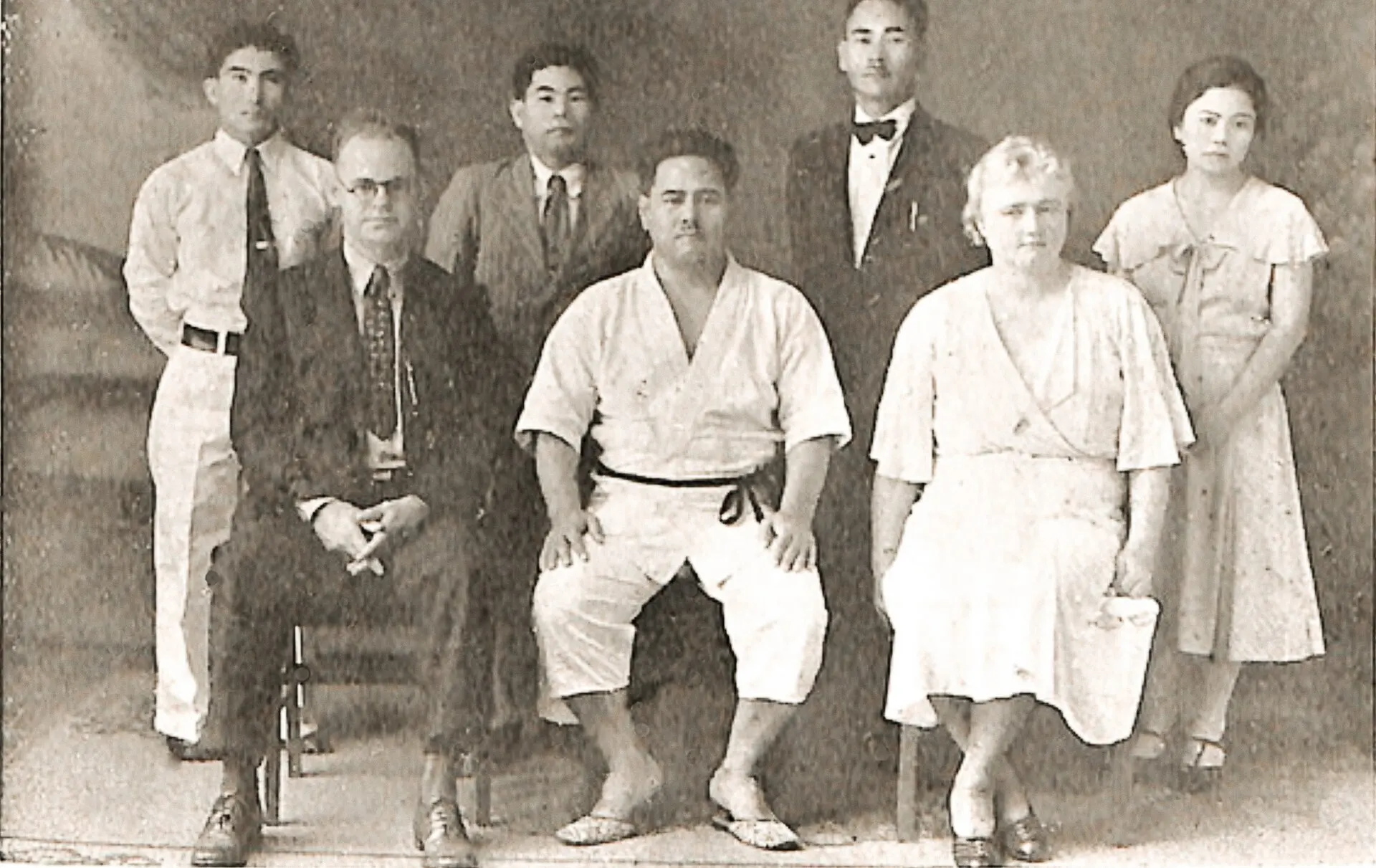
Chōjun Miyagi, founder of Goju-ryu, in Hawaii in 1934 or 1935.
Statesmen, scholars and writers
Shō Hashi (1372–1439), born at Sashiki in the south, united Okinawa in 1429 and founded the Ryukyu Kingdom. Sai On (1682–1762), born in Kume village in Naha, was the kingdom's great reforming minister. Iha Fuyū (1876–1947), born in Naha, is called the father of Okinawan studies for his work on the Omoro Sōshi song anthology and Ryukyuan language and history.
Two Okinawan writers have won Japan's Akutagawa Prize with books about Okinawa's postwar experience: Tatsuhiro Ōshiro (1925–2020, Nakagusuku) in 1967 for 'Cocktail Party', the first Okinawan winner, and Shun Medoruma (born 1960, Nakijin) in 1997 for 'Suiteki' ('Droplets'). Both are available in English translation.
Often called Okinawan, but born elsewhere
Several well-known names regularly appear in lists of Okinawan celebrities but were not born there, or not born there at all:
- Hikari Mitsushima, actress: born in Kagoshima City, grew up in Okinawa City. She belongs to Okinawa by upbringing, not birth.
- Chiaki Kuriyama, actress: from Tsuchiura, Ibaraki Prefecture.
- Chihiro Onitsuka, singer: from Nichinan, Miyazaki Prefecture.
- Ai Otsuka, singer: from Osaka.
- Ryoko Moriyama, singer and lyricist of 'Nada Sōsō': from Shibuya, Tokyo.
- THE BOOM, whose 1992 hit 'Shima Uta' many visitors think of as an Okinawan song: a Tokyo band; the song was written by its singer after visiting Okinawa.
- Seijin Noborikawa, the celebrated Okinawan folk singer: born in Amagasaki, Hyogo, and raised in Okinawa.
Following in their footsteps
Fans visit Ishigaki for BEGIN and Rimi Natsukawa, Koza for its live-music streets, the Okinawa Karate Kaikan for the masters, and the Kohama locations of 'Churasan'. A sanshin lesson is a good way to feel how these songs work; the Koza night walk includes the city's music history.
Naha: Ryusou dress-up and sanshin lesson
Dress in Ryūsō, traditional Ryukyuan clothing, and take a sanshin lesson in Naha.
Check availabilityBook via GetYourGuideSanshin experience at a traditional house in Nakijin
Play the sanshin, Okinawa's three-stringed instrument, in a traditional house in Nakijin.
Check availabilityBook via GetYourGuideKoza nightlife and city-pop walking tour
An evening walking tour of Koza (Okinawa City), its bars and its music.
Check availabilityBook via GetYourGuidePilgrimage to the home of Goju-ryu karate
A visit to the places in Naha connected with the origins of Gōjū-ryū karate.
Check availabilityBook via GetYourGuideTour listings are on GetYourGuide. Prices, times and cancellation terms are shown live on each listing and can change; Ryukyu.com may earn a commission at no extra cost to you.
Frequently asked questions
Is Namie Amuro from Okinawa?
Yes. She was born in Naha (Shuri district) in 1977 and gave her final performance before retiring in Ginowan, Okinawa, in September 2018.
Where is Rimi Natsukawa from?
Ishigaki, in the Yaeyama Islands. She was born there in 1973.
Is Yui Aragaki Okinawan?
Yes, she was born in Naha in 1988.
Is Hikari Mitsushima from Okinawa?
She grew up in Okinawa City, but was born in Kagoshima City.
Which Amami singers are famous in Taiwan?
Kousuke Atari, from Naze on Amami Oshima, debuted in Taiwan in 2006 and appeared in the 2008 Taiwanese film Cape No. 7.
Sources and official information
Facts were checked against these official sources in November 2026. Opening hours, prices and timetables change, so confirm before you go.
- english.ryukyushimpo.jp
- japantimes.co.jp
- ja.wikipedia.org
- ja.wikipedia.org
- ja.wikipedia.org
- ja.wikipedia.org
- ja.wikipedia.org
- ja.wikipedia.org
- ja.wikipedia.org
- ryukyushimpo.jp
- ryukyushimpo.jp
- ryukyushimpo.jp
- ryukyushimpo.jp
- sonymusic.co.jp
- sonymusic.co.jp
- ja.wikipedia.org
- ja.wikipedia.org
- ja.wikipedia.org
- ja.wikipedia.org
- ja.wikipedia.org
- ja.wikipedia.org
- ja.wikipedia.org
- ja.wikipedia.org
- ja.wikipedia.org
- ryukyushimpo.jp
- ja.wikipedia.org
- pref.okinawa.jp
- ja.wikipedia.org
- ja.wikipedia.org
- ja.wikipedia.org
- ja.wikipedia.org
- ja.wikipedia.org
- ja.wikipedia.org
- ja.wikipedia.org
Ryukyu.com is an independent guide, not the official site of any tourism board, government, airline, port or ferry operator. Some links are affiliate links: tours go to GetYourGuide and stays go to Booking.com, and we may earn a commission at no extra cost to you.