In short
- Three ways to drive legally as a visitor: an International Driving Permit issued under the 1949 Geneva Convention (1968 Vienna IDPs are not valid); a licence from Taiwan, Switzerland, Germany, France, Belgium or Monaco with an official Japanese translation; or a Japanese licence.
- Taiwanese drivers need the Japanese translation (日文譯本) of their licence, issued by an authority Japan recognises – the issuing authority or a designated body, or JAF in Japan – carried together with the original licence.
- Mainland Chinese licences are not valid for driving in Japan on a short visit: China does not issue Geneva-convention IDPs and is not on the translation list.
- Both IDP and translation are valid for up to one year from entry (or until the licence expires). Carry your passport: police may check your entry date.
- Okinawa specifics: weekday bus lanes on Route 58 (07:30–09:00 and 17:30–19:00), child seats compulsory under age 6, ETC cards for the Okinawa Expressway, and no free street parking.
Do you need a car in Okinawa?
On Okinawa Main Island outside Naha, on Miyako and on Ishigaki, a car turns a difficult trip into an easy one. Public transport covers the main roads, but beaches, viewpoints, the Yanbaru forest, the bridges to the small islands and most restaurants outside town are far from the bus routes. On the smallest islands – Taketomi, Kohama, Kuroshima, Hateruma, the Kerama Islands – you need no car at all: bicycles, scooters and the occasional taxi are enough.
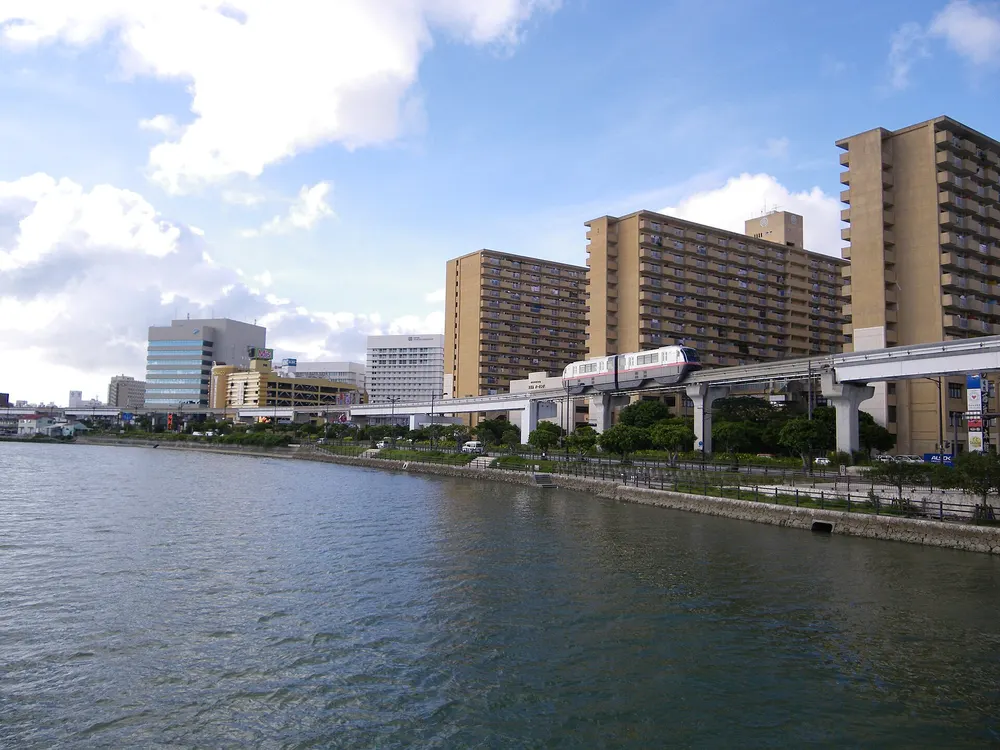
If you cannot or do not want to drive, see getting around Okinawa for the monorail, buses and day tours.
- Drive on the
- Left
- Valid for visitors
- 1949 Geneva IDP; or licence of Taiwan, Switzerland, Germany, France, Belgium, Monaco plus official Japanese translation
- Not valid
- 1968 Vienna-convention IDPs; mainland Chinese licences
- Maximum period
- 1 year from entry to Japan (or licence expiry if sooner)
- Rental age
- Usually 18+ with a full licence; some companies require longer driving experience
- As checked
- JAF and National Police Agency guidance, November 2026
Which licence documents are valid: by country
Japan recognises only certain documents. Rental companies in Okinawa must see one of them, together with the original licence and your passport; without them they will refuse the rental, and driving without them is driving without a licence.
| Where your licence is from | What you need | Notes |
|---|---|---|
| Taiwan | Taiwanese licence + official Japanese translation | Translation issued by a body recognised by Japan (the issuing authority or a designated organisation) or by JAF; carry both documents and your passport |
| Korea | Korean licence + International Driving Permit (1949 Geneva) | Get the IDP in Korea before travelling |
| Hong Kong | Hong Kong licence + IDP (1949 Geneva) | Issued by the Transport Department in Hong Kong |
| Mainland China | Not possible on a visitor stay | China does not issue 1949 Geneva IDPs and is not on the translation list; a residence-based conversion to a Japanese licence is the only route |
| Switzerland, Germany, France, Belgium, Monaco | Licence + official Japanese translation | Translation from JAF or the country's embassy/consulate in Japan |
| USA, UK, Australia, Canada, Singapore, Thailand, Philippines and other 1949 Geneva countries | Licence + IDP (1949 Geneva) | IDP must be issued in the country that issued your licence |
| Countries that issue only 1968 Vienna IDPs | Not valid | Japan is not party to the 1968 convention |
Taiwan: the Japanese translation of your licence
Taiwan is the only Asian place on Japan's translation list, alongside Switzerland, Germany, France, Belgium and Monaco. A Taiwanese driver does not use an International Driving Permit in Japan; instead the Taiwanese licence is valid when carried with an official Japanese translation (日文譯本). Japanese police guidance lists who may make it: the authority that issued the licence or a designated body (for Taiwan, Japanese prefectural police pages name organisations such as the Taiwan–Japan Relations Association or the Taipei Economic and Cultural Representative Office in Japan), or JAF, which translates foreign licences at its offices in Japan (applications online only).
In practice most Taiwanese visitors arrange the translation in Taiwan before travelling. Check the current procedure with your local motor-vehicle office or the Taipei Economic and Cultural Representative Office, and remember:
- the translation is valid only together with the original Taiwanese licence;
- you may drive for up to one year from entering Japan, and the period restarts only after a proper stay outside Japan;
- if your Taiwanese licence is renewed or its details change, you need a new translation;
- rental companies in Okinawa are used to Taiwanese customers, but still require both documents at the counter – a photo on your phone is not enough.
Korea, Hong Kong and mainland China
Korean visitors drive in Okinawa with their Korean licence plus an International Driving Permit issued in Korea under the 1949 Geneva Convention. Get it before you travel; it cannot be issued in Japan.
Hong Kong visitors likewise need a Hong Kong licence plus a 1949 Geneva IDP issued in Hong Kong.
Mainland Chinese visitors cannot drive in Japan on a Chinese licence during a tourist stay. Plan on buses, taxis, private transfers and day tours instead; Okinawa has plenty of Chinese-speaking tour options, and private tours with a driver avoid the problem altogether.
Whatever your nationality, the one-year limit applies from the date you entered Japan, and police may ask to see your passport stamp or landing sticker as well as the licence documents.
Full Okinawa private tour: castle, aquarium, Manza and Kouri
Private tour covering a castle, the aquarium, Cape Manzamo and Kouri.
Check availabilityBook via GetYourGuideOkinawa your way: private tour with a local guide
Private tour of Okinawa planned around your interests, with a local guide.
Check availabilityBook via GetYourGuideOkinawa classic highlights: private tour with flexible routes
Private tour of Okinawa’s classic highlights on a flexible route.
Check availabilityBook via GetYourGuideTour listings are on GetYourGuide. Prices, times and cancellation terms are shown live on each listing and can change; Ryukyu.com may earn a commission at no extra cost to you.
Renting: where, how and what to ask for
- Book ahead, especially for Golden Week, July–September and New Year, and on Miyako and Ishigaki, where cars sell out.
- At Naha Airport, follow signs to the rental-car shuttle area; almost all companies take you by minibus to an office near the airport. Allow 45–60 minutes in busy periods; some companies offer pickup in Naha city instead.
- Ask for an ETC card if you will use the Okinawa Expressway – tolls are then paid automatically at the gate.
- Ask for a child seat for any child under 6: it is compulsory in Japan and must be reserved.
- Take the full insurance: the collision damage waiver plus non-operation charge (NOC) cover, which pays the company's loss-of-use charge after an accident.
- Check the fuel policy (normally full-to-full) and where the nearest petrol station to the return office is.
- Never take a rental car on a ferry to another island unless the contract allows it; rent a new car on the island instead.
Okinawa road rules and local quirks
- Bus lanes on Route 58 and other Naha roads: on weekdays from 07:30 to 09:00 and 17:30 to 19:00, the kerbside lane on sections of Route 58 is reserved for buses; ordinary cars must keep out (Okinawa Prefectural Police, rules valid from 2 May 2025; weekends and holidays excluded). Lanes are marked on the road and on overhead signs.
- Drink-driving: zero tolerance in practice. Japan's legal limit is 0.15 mg per litre of breath, and passengers who knowingly ride with a drunk driver are also punished.
- Speed: limits are low – 40–60 km/h on most roads, 80 km/h on parts of the Okinawa Expressway – and enforced.
- Rental 'wa' plates: rental cars carry a わ (wa) or れ (re) hiragana on the number plate; local drivers know you may be a visitor.
- US military vehicles use the same roads around the bases in central Okinawa; drive defensively.
- Wildlife: in Yanbaru and on Iriomote, slow down for the endangered Okinawa rail (yanbaru kuina) and the Iriomote cat; there are signed speed limits and warning signs for them.
- Parking: street parking is generally not allowed. Use coin car parks, hotel car parks and sightseeing car parks; in Naha these fill up at weekends.
Expressway, fuel and EVs
The Okinawa Expressway runs from the Naha interchange north to Kyoda in Nago and is the quickest way from Naha to the Motobu Peninsula and Churaumi. It is tolled; with an ETC card the charge is taken automatically, otherwise pay cash at the booth. Rest areas (for example Igei) have toilets and food.
Petrol stations are plentiful on the main island but thinner in Yanbaru and on the small islands, where many close early in the evening. Electric and hybrid rental cars are common; charging points exist at many hotels and convenience stores, but check before taking an EV into the far north.
Island-by-island driving notes
- Okinawa Main Island: heavy traffic in and around Naha and along Route 58; quieter in the north and on the east coast. See bridges for Kouri and the Kaichu-doro.
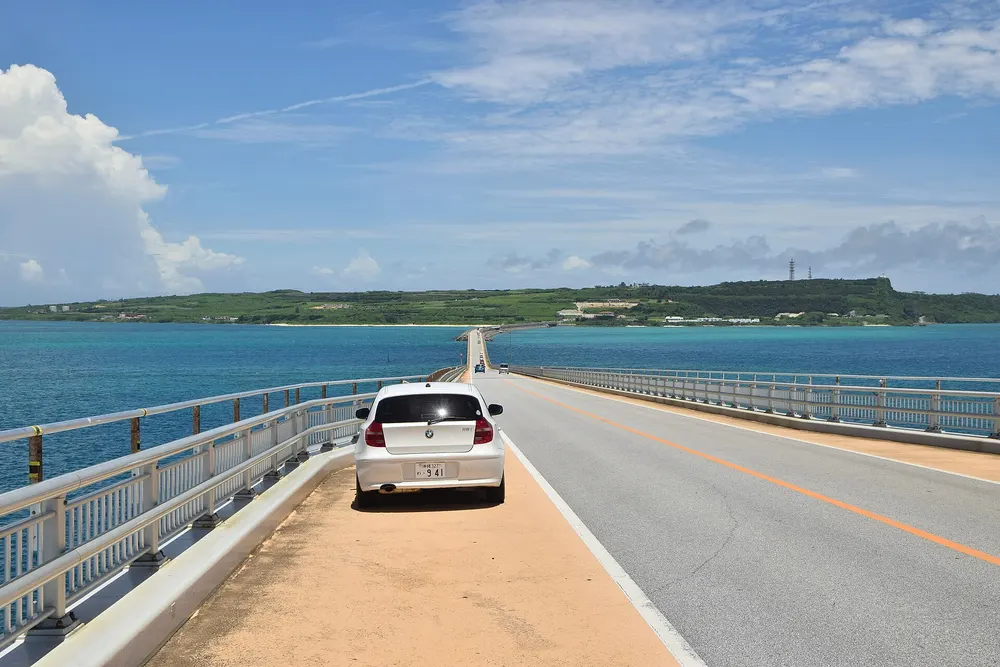
- Miyako: a car is the best way to cross the Irabu, Ikema and Kurima bridges; rental offices at both airports and in Hirara.
- Ishigaki: one ring road and a road to Hirakubo at the northern tip; about an hour from town to the far north.
- Iriomote: a single coastal road between Ohara and Shirahama; drive slowly – it is Iriomote cat habitat.
- Kumejima, Yonaguni, Tarama: small rental fleets – book before you fly.
Frequently asked questions
Can I drive in Okinawa with a Taiwanese licence?
Yes, if you carry the original licence together with an official Japanese translation from a recognised body or JAF. An International Driving Permit is not the route for Taiwanese licences. You may drive for up to one year from entry.
Can Chinese tourists rent a car in Okinawa?
Not on a mainland Chinese licence during a visitor stay: China does not issue 1949 Geneva IDPs and is not on Japan's translation list. Use buses, taxis, private transfers or tours.
Is a Korean International Driving Permit valid in Japan?
Yes. Korean licence holders drive in Japan with a Korean licence plus an IDP issued in Korea under the 1949 Geneva Convention.
When are the Route 58 bus lanes in force?
Weekdays 07:30–09:00 and 17:30–19:00 on the signed sections (Okinawa Prefectural Police, valid from 2 May 2025). Weekends and public holidays are excluded.
Do I need a child seat in a rental car?
Yes, for children under six. Reserve one when you book.
Sources and official information
Facts were checked against these official sources in November 2026. Opening hours, prices and timetables change, so confirm before you go.
- english.jaf.or.jp
- english.jaf.or.jp
- npa.go.jp
- pref.kyoto.jp
- pref.shizuoka.jp
- police.pref.okinawa.jp
- police.pref.okinawa.jp
Ryukyu.com is an independent guide, not the official site of any tourism board, government, airline, port or ferry operator. Some links are affiliate links: tours go to GetYourGuide and stays go to Booking.com, and we may earn a commission at no extra cost to you.