In short
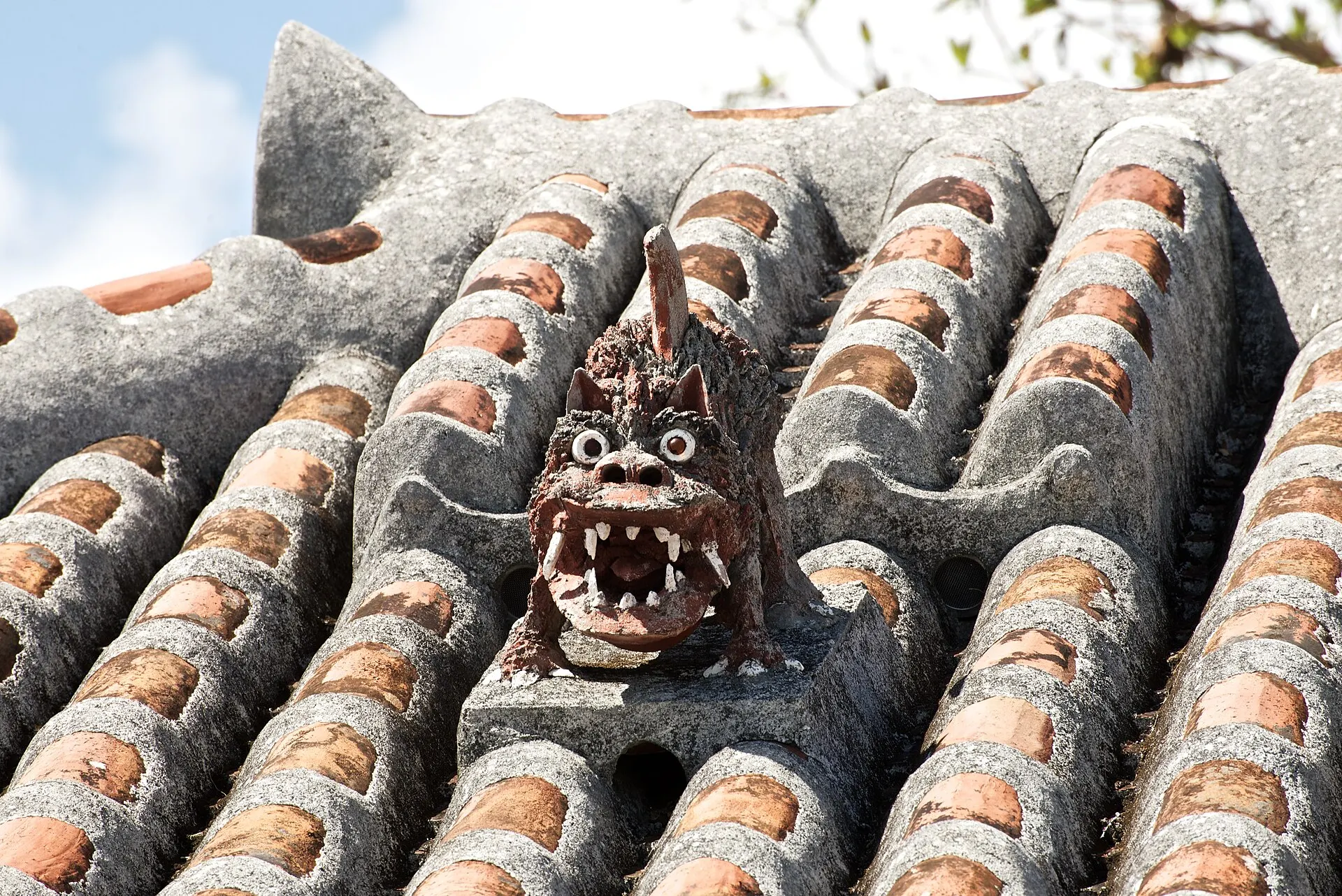
- Shisa are the lion-dog guardians on roofs and gates: one with mouth open, one closed, keeping evil out and luck in.
- Utaki are sacred groves and rock places, the heart of a native religion led by women priestesses. Many are still active: stay on paths, take nothing, and respect closures.
- Languages: Okinawan (Uchinaaguchi), Amami, Kunigami, Miyako, Yaeyama and Yonaguni are separate Ryukyuan languages, all listed as endangered by UNESCO. A few greetings go a long way.
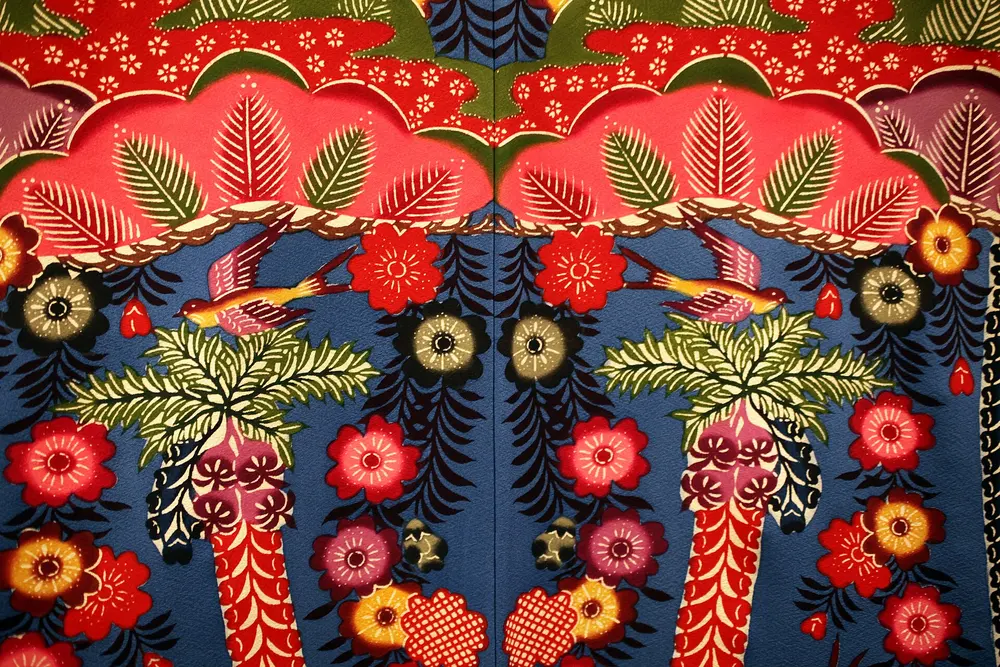
- Crafts: bingata stencil-dyeing, Ryukyu glass, Tsuboya and Yomitan pottery (yachimun), bashōfu and the silk tsumugi of Kumejima, Miyako, Yaeyama and Amami; all can be seen being made, and several can be tried.
A culture of its own
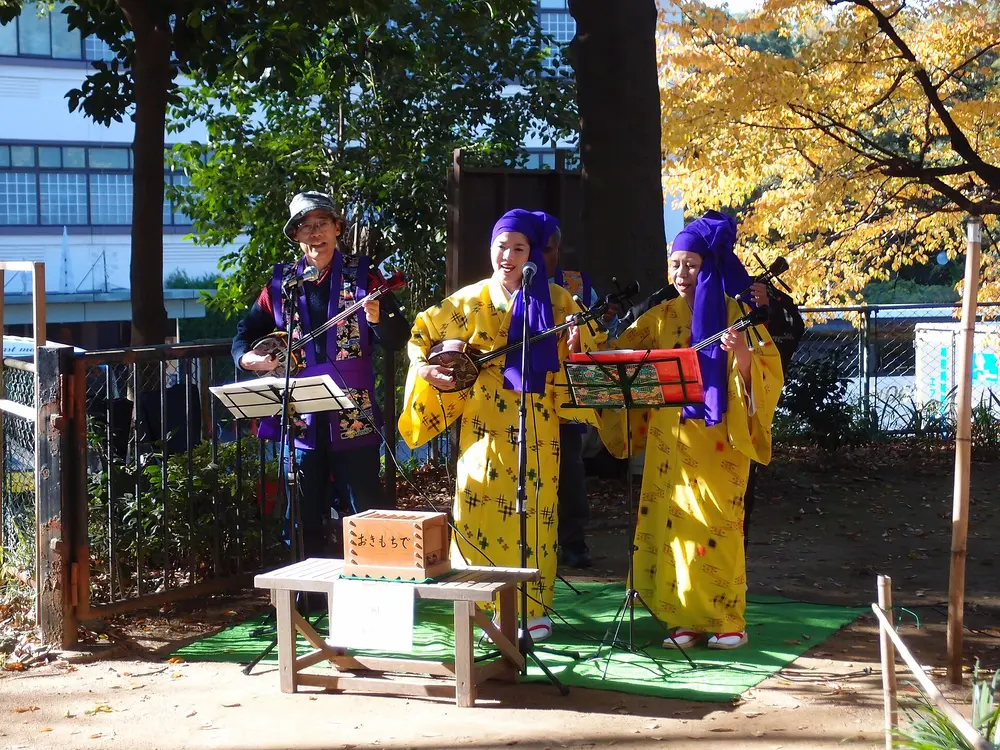
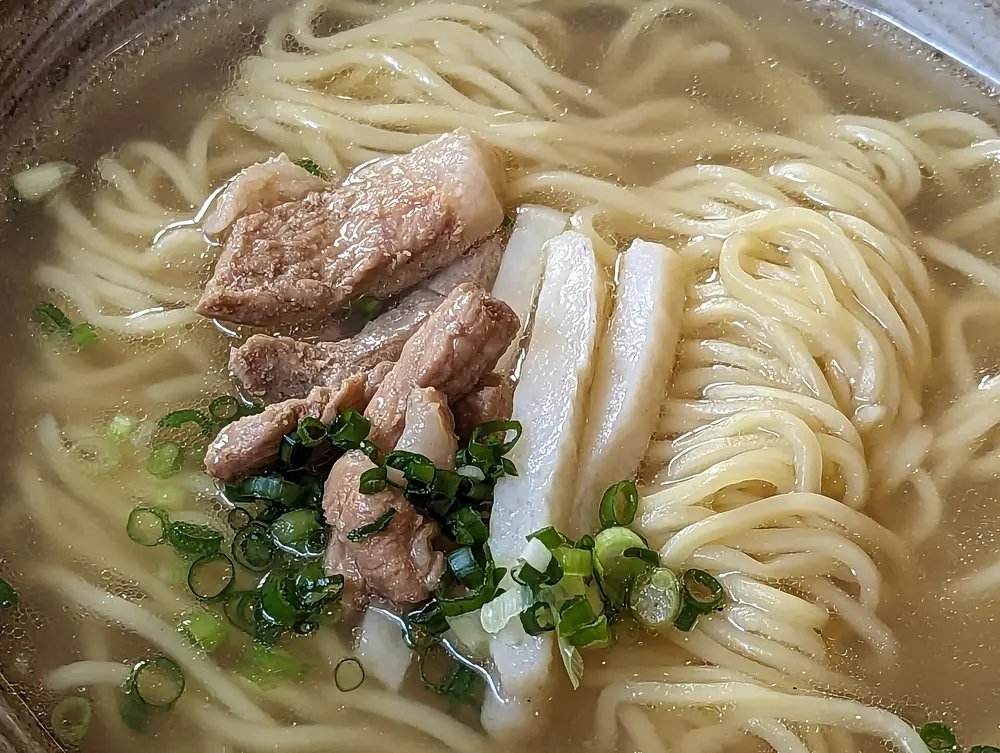
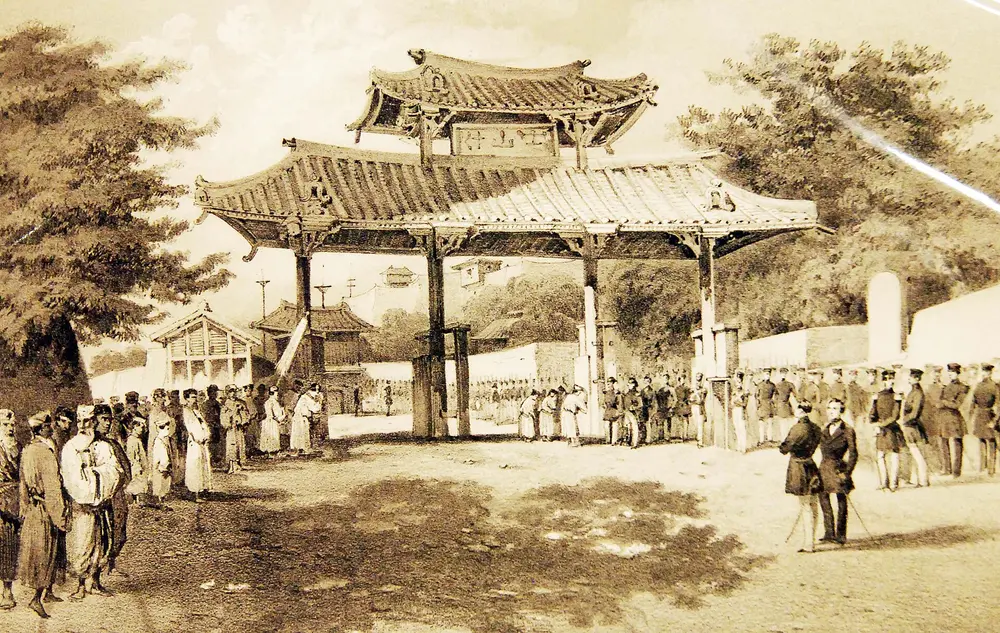
The Ryukyu Islands shared Japan's language family and much of its material culture, but more than four centuries as an independent kingdom trading with China and Southeast Asia, and a native religion that never merged with Shinto or Buddhism, gave them a distinct way of life. It shows in the architecture, the food, the music and the calendar, which still follows the lunar year for many family and village rites. The history page explains how; this page is about what you see and how to respect it.
Shisa, ishigantō and the protected house
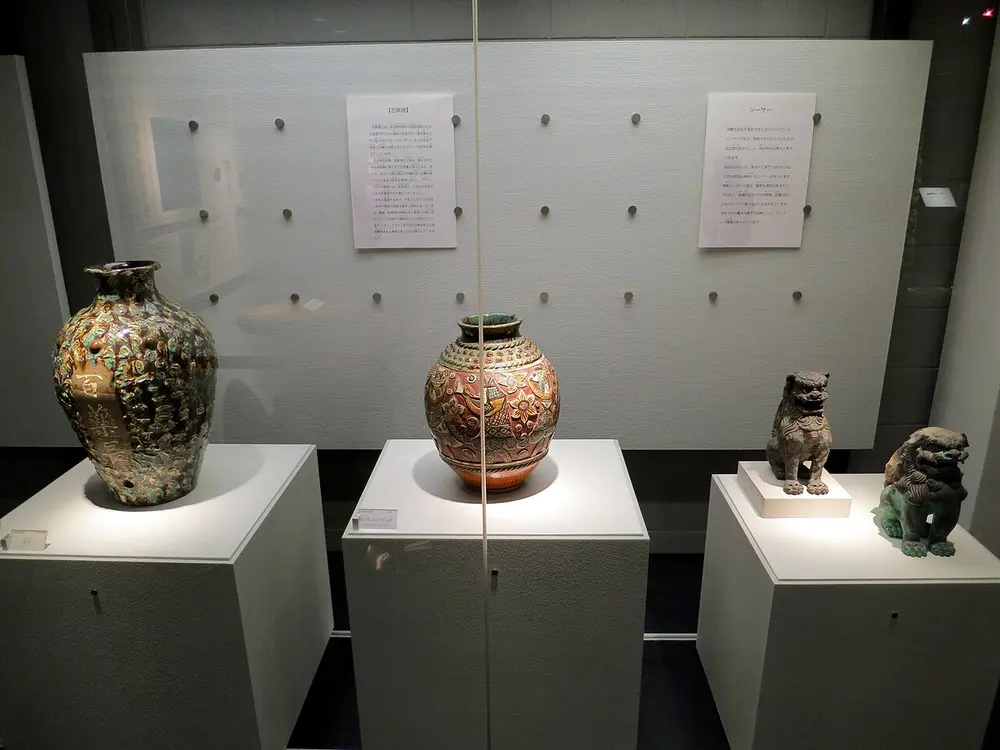
Shisa (シーサー) are the lion-dog figures that sit on red-tiled roofs, gateposts and shop entrances everywhere in the islands. The idea came from Chinese guardian lions; village shisa were placed facing a source of fire or misfortune, and the household pairs you see today have one with an open mouth and one closed, often explained as one to frighten away evil and one to keep good fortune in. The Taketomi village houses, Tsuboya's pottery shisa and the giant shisa at many town entrances are all photographed endlessly.
Look also for ishigantō (石敢當), small stone plaques at the ends of T-junctions: evil spirits, majimun, are believed to travel in straight lines and break against them. Traditional houses are surrounded by coral-stone walls, have a screen wall (hinpun) behind the gate so that spirits cannot see straight in, and are shaded by fukugi trees, as on Bise in Motobu and on Taketomi.
Making your own shisa from clay is one of the most popular hands-on experiences in Okinawa, and a good rainy-day plan with children.
Naha: make your own shisa guardian
Make a shisa, the lion-dog guardian of Okinawan roofs, in a workshop in Naha.
Check availabilityBook via GetYourGuideMake your own shisa guardian in northern Okinawa
A hands-on workshop in Nakijin where you model a traditional shisa guardian.
Check availabilityBook via GetYourGuideTour listings are on GetYourGuide. Prices, times and cancellation terms are shown live on each listing and can change; Ryukyu.com may earn a commission at no extra cost to you.
Utaki, priestesses and the ancestors
Ryukyuan religion has no great temples. Its sacred places, utaki (御嶽, also on or wan in the outer islands), are groves, springs and rock outcrops where the gods descend, often marked only by an incense burner of stones. Rites were and still are led by women: in the kingdom, a hierarchy of priestesses (noro) served under the king's sister or a high-ranking royal woman, the Kikoe-ōgimi. Separately, yuta, spirit mediums, are consulted by many families on matters of health and ancestors.
The most important utaki is Sefa-utaki in Nanjō, a World Heritage site, with its triangular cleft rock looking out to Kudaka Island, the 'island of the gods' where the creator goddess is said to have first descended. Many village utaki are closed to outsiders, and some are closed to everyone except priestesses on ritual days.
Ancestor veneration is central. The large tombs on hillsides, some shaped like a turtle's back (kamekō-baka), house generations of a family. At Shīmī in April, families gather at the tombs to clean them, make offerings and picnic with the ancestors; at Obon, on the lunar calendar in August or September, ancestors are welcomed home and sent off with Eisa dancing.
Sacred Sefa-utaki walk
A guided walk through Sefa-utaki, the holiest site of the Ryukyu Kingdom, in Nanjō.
Check availabilityBook via GetYourGuideSacred island tour to Kudaka's Ryukyuan holy sites
A guided visit to Kudaka Island and its Ryukyuan holy places, off the Nanjō coast.
Check availabilityBook via GetYourGuideNanjo Ozato spiritual and utaki hike
A hike to sacred groves (utaki) and spiritual sites in the Ōzato area of Nanjō.
Check availabilityBook via GetYourGuideTour listings are on GetYourGuide. Prices, times and cancellation terms are shown live on each listing and can change; Ryukyu.com may earn a commission at no extra cost to you.
The island languages and a few useful words
The traditional languages of the islands are not dialects of Japanese in the everyday sense: they are separate Ryukyuan languages, related to Japanese but mutually unintelligible with it. UNESCO's Atlas of the World's Languages in Danger (2009) lists six: Amami, Kunigami, Okinawan (Uchinaaguchi), Miyako, Yaeyama and Yonaguni, the last two as severely endangered. Their decline was caused largely by 20th-century school policies that punished children for speaking them. Today most people speak Japanese with an Okinawan accent and vocabulary (sometimes called Uchinaa-yamatoguchi), and there is a strong revival movement, with radio programmes, school classes and a prefectural Shimakutuba Day on 18 September.
Visitors see the language every day in place names, shop signs and songs. A few words are worth knowing:
| Word (Okinawan) | Meaning | Where you hear it |
|---|---|---|
| Haisai / haitai | Hello (said by men / women) | Greetings, the song 'Haisai Ojisan' |
| Mensōre | Welcome | Airport and hotel signs |
| Nifē dēbiru | Thank you | Markets, older people (in Yaeyama: mīfaiyū) |
| Chibariyō | Do your best, go for it | Sports, banners |
| Nankuru naisa | It will work out | T-shirts, everyday optimism |
| Ichariba chōdē | Once we meet, we are siblings | A saying about island hospitality |
| Yuimāru | Mutual help, working together | Village life, cooperative names |
| Uchinānchu / Yamatunchu | Okinawan person / mainland Japanese person | Conversation, the World Uchinanchu Festival |
Crafts: bingata, glass, pottery and textiles
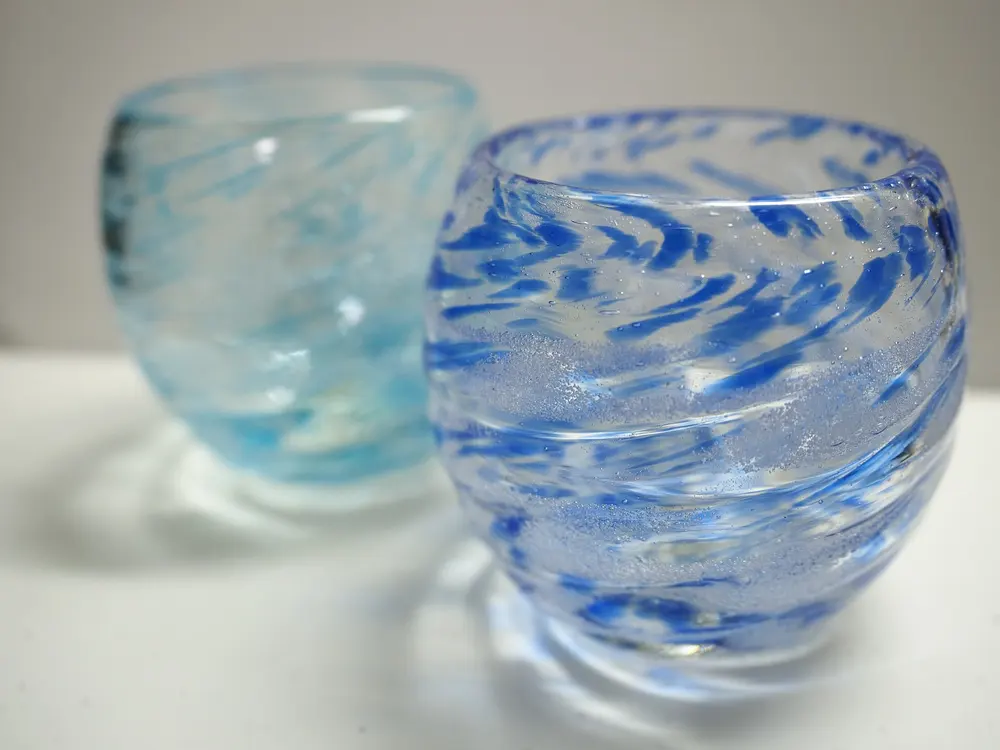
Bingata (紅型) is the stencil-dyed cloth of the Ryukyu court, in brilliant yellows, reds and blues with motifs of flowers, birds and waves; colours and patterns once marked rank. Workshops in Naha and Shuri produce it today and some offer short dyeing sessions. Ryukyu glass began after the war, when craftsmen melted down discarded soft-drink and beer bottles from the US bases; the bubbles and greens of those early pieces became the style, and glass studios in Yomitan, Itoman and Naha welcome visitors.
Yachimun is the Okinawan word for pottery. In 1682 the royal government gathered the kilns of the kingdom in Tsuboya in Naha, where the stone-paved Tsuboya Yachimun Street, its old climbing kiln and the Tsuboya Pottery Museum still are. In the 1970s several potters moved to Yomitan, where the Yachimun no Sato village of studios and shared climbing kilns is now the best place to buy.
Each island group has its own textile: bashōfu, cloth woven from banana fibre, made in Kijoka in Ōgimi village; Kumejima tsumugi silk (Kumejima); Miyako jōfu ramie; Yaeyama minsa belts with their five-and-four square pattern; and Ōshima tsumugi from Amami, a silk dyed with a tannin from the sharinbai tree and then with iron-rich mud, among Japan's most prized kimono fabrics.
Kariyushi wear, the Okinawan answer to the aloha shirt, is the standard summer business wear of the prefecture, and a good souvenir that will actually be worn.
Tsuboya yachimun pottery class with a master potter
A pottery class in Naha's Tsuboya district with an experienced potter.
Check availabilityBook via GetYourGuideRyusou dress-up and furoshiki workshop in Naha
Dress in ryusou, traditional Ryukyuan robes, and learn the art of furoshiki cloth wrapping, in Naha.
Check availabilityBook via GetYourGuideRyuso kimono rental with optional hair and makeup
Rent Ryukyuan-style dress in Naha, with hair styling and make-up as an option.
Check availabilityBook via GetYourGuidePrivate shore excursion: Amami-Oshima tsumugi
A private shore excursion on Amami-Oshima focused on Ōshima tsumugi silk.
Check availabilityBook via GetYourGuideTour listings are on GetYourGuide. Prices, times and cancellation terms are shown live on each listing and can change; Ryukyu.com may earn a commission at no extra cost to you.
Festivals, the lunar calendar and island time
Many festivals follow the old lunar calendar, so their dates move each year. The fishermen's Haarii boat races take place on the fourth day of the fifth lunar month (8 June in 2027) in Itoman and many harbours, while Naha's is held during Golden Week; Eisa follows lunar Obon; the great village tug-of-war festivals, from Naha's in October to Yonabaru's and Itoman's, are prayers for harvest and good fortune. The Miyako Islands have their own festivals, such as Shimajiri's Pāntu, when mud-covered spirit figures bless houses and people. The events page lists dated events for 2026 and 2027.
Okinawans joke about Uchinā time, a relaxed attitude to start times, but buses, ferries and tours run to schedule; social gatherings are where the clock relaxes. Another tradition worth knowing is the moai, a group of friends who meet monthly and pool money, a form of mutual support often cited in studies of Okinawan longevity.
The worldwide Okinawan family
Poverty in the early 20th century sent tens of thousands of Okinawans to Hawaii, Brazil, Peru, Argentina, Bolivia and beyond; their descendants are often called the 'Uchinanchu of the world'. Every five years or so they gather in Naha for the Worldwide Uchinanchu Festival; the prefecture has announced the 8th festival for 27–31 October 2027, which will make late October 2027 an especially lively time in Naha.
Try it yourself
Hands-on workshops are among the best things to do on a rainy day or a hot afternoon. Our pick from GetYourGuide:
Frequently asked questions
Why are there two shisa at the gate?
Household shisa usually come in pairs: one with an open mouth and one closed, commonly explained as frightening away evil and keeping good fortune in.
Can I visit utaki?
Public ones such as Sefa-utaki, yes, with respect: stay on paths, take nothing and note closure days. Many village utaki are private and not for visitors.
Do people in Okinawa speak Japanese?
Yes, everyone speaks Japanese. The traditional Ryukyuan languages are spoken mainly by older people and are being revived.
What is Ryukyu glass?
Hand-blown glass that began after 1945 using recycled bottles from the US bases; studios in Yomitan, Itoman and Naha can be visited.
Sources and official information
Facts were checked against these official sources in November 2026. Opening hours, prices and timetables change, so confirm before you go.
- pref.okinawa.jp
- pref.okinawa.jp
- pref.okinawa.jp
- unesdoc.unesco.org
- edu.city.naha.okinawa.jp
- whc.unesco.org
- city.nanjo.okinawa.jp
- ryukyushimpo.jp
Ryukyu.com is an independent guide, not the official site of any tourism board, government, airline, port or ferry operator. Some links are affiliate links: tours go to GetYourGuide and stays go to Booking.com, and we may earn a commission at no extra cost to you.