In short
- Must-eats: Okinawa soba, goya champuru, rafute (braised pork belly), umibudo (sea grapes), jimami tofu, taco rice and sata andagi doughnuts.
- Drinks: awamori, the rice spirit distilled with black koji (kusu means aged at least three years, with no younger spirit blended in since 2015), and Orion beer, brewed in Nago since 1959.
- Amami is different: keihan, a chicken-and-rice dish served with hot broth, and kokutō shōchū, a brown-sugar spirit that may only be made in the Amami Islands.
- Longevity, carefully: Okinawa was once famous for the longest lives in Japan, but by 2020 Okinawan men ranked 43rd of 47 prefectures in life expectancy and women 16th (national figures). The traditional diet and today's diet are not the same thing.
How Okinawan food came to be
Okinawan cooking is unlike anything else in Japan, and the reasons are historical. The royal court of Shuri entertained Chinese envoys for months at a time, so court cooks learned Chinese techniques with pork and lard. Pigs, raised in every farmyard, became the centre of the diet, and the saying goes that every part of the pig is eaten except its squeal. Sweet potatoes arrived from China in the early 17th century and kept people alive through typhoons and famines. Island vegetables, seaweed, tofu and dried bonito filled out daily meals.
Then came 27 years of American administration, which added canned luncheon meat, steak houses, hamburgers, root beer and taco rice. The result is a cuisine in which a bowl of soba with stewed pork, a plate of stir-fry with Spam and a pot of eighty-year-old rice spirit all count as tradition. The history page gives the background.
Okinawa soba
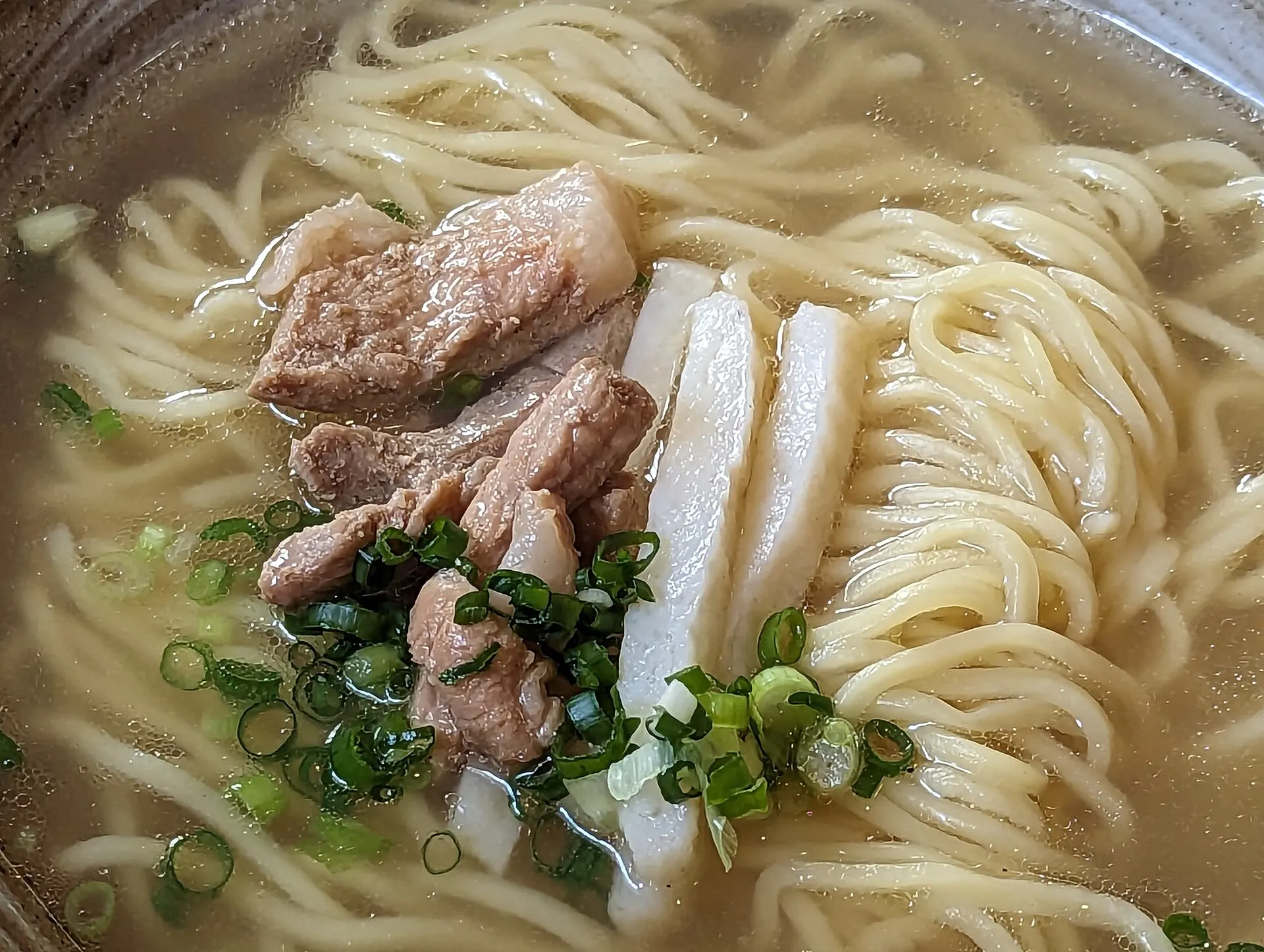
Okinawa soba (沖縄そば, sōki soba when topped with spare ribs) contains no buckwheat: the noodles are thick wheat noodles, chewy and slightly yellow, in a clear broth of pork bones and bonito. The classic toppings are sanmai-niku (slices of pork belly stewed in soy and sugar) or sōki (spare ribs), with fish cake, green onion and pickled red ginger. On the table you will find kōrēgusu, small chillies steeped in awamori, a few drops of which transform the broth.
The name itself has a history: in 1978 the noodle makers' cooperative won official approval to keep calling the dish 'soba' despite national labelling rules, and 17 October, the day of that decision, is celebrated as Okinawa Soba Day. Each island group has its own version: Yaeyama soba on Ishigaki has thin, round noodles and shredded pork; Miyako soba famously hides its meat under the noodles. Soba shops are everywhere and inexpensive, with many of the most loved in old houses in the countryside.
Ramen and Okinawa soba tasting tour
A guided tasting tour of ramen and Okinawa soba shops.
Check availabilityBook via GetYourGuideTour listings are on GetYourGuide. Prices, times and cancellation terms are shown live on each listing and can change; Ryukyu.com may earn a commission at no extra cost to you.
Champuru, rafute and the home dishes
Champuru means 'mixed' in Okinawan and is the name for a family of stir-fries made with firm island tofu (shima-dōfu), egg and pork or luncheon meat. Gōyā champuru, with sliced bitter melon, is the national dish: bitter, crisp and very good with rice and beer. Variants use somen noodles (sōmen chanpurū), wheat gluten (fu chanpurū) or papaya.
Rafute is pork belly braised for hours in awamori, soy sauce and brown sugar until it falls apart; it began as court cuisine. Ashitibichi is a slow-simmered soup of pig's trotters, and nakamijiru a clear soup of pork offal traditionally served at New Year. Inamuduchi is a sweet-savoury miso soup with pork and konnyaku.
From the sea come mozuku, a slippery seaweed served in vinegar, of which Okinawa produces most of Japan's harvest, and umibudo ('sea grapes'), a seaweed with tiny bead-like fronds that pop in the mouth, eaten raw with a vinegar or ponzu dip. Buy umibudo on the day you eat it and do not refrigerate it, or the beads shrivel. Jīmāmi dōfu is not really tofu: it is a soft, savoury pudding of peanuts and sweet-potato starch, served with a sweet soy sauce.
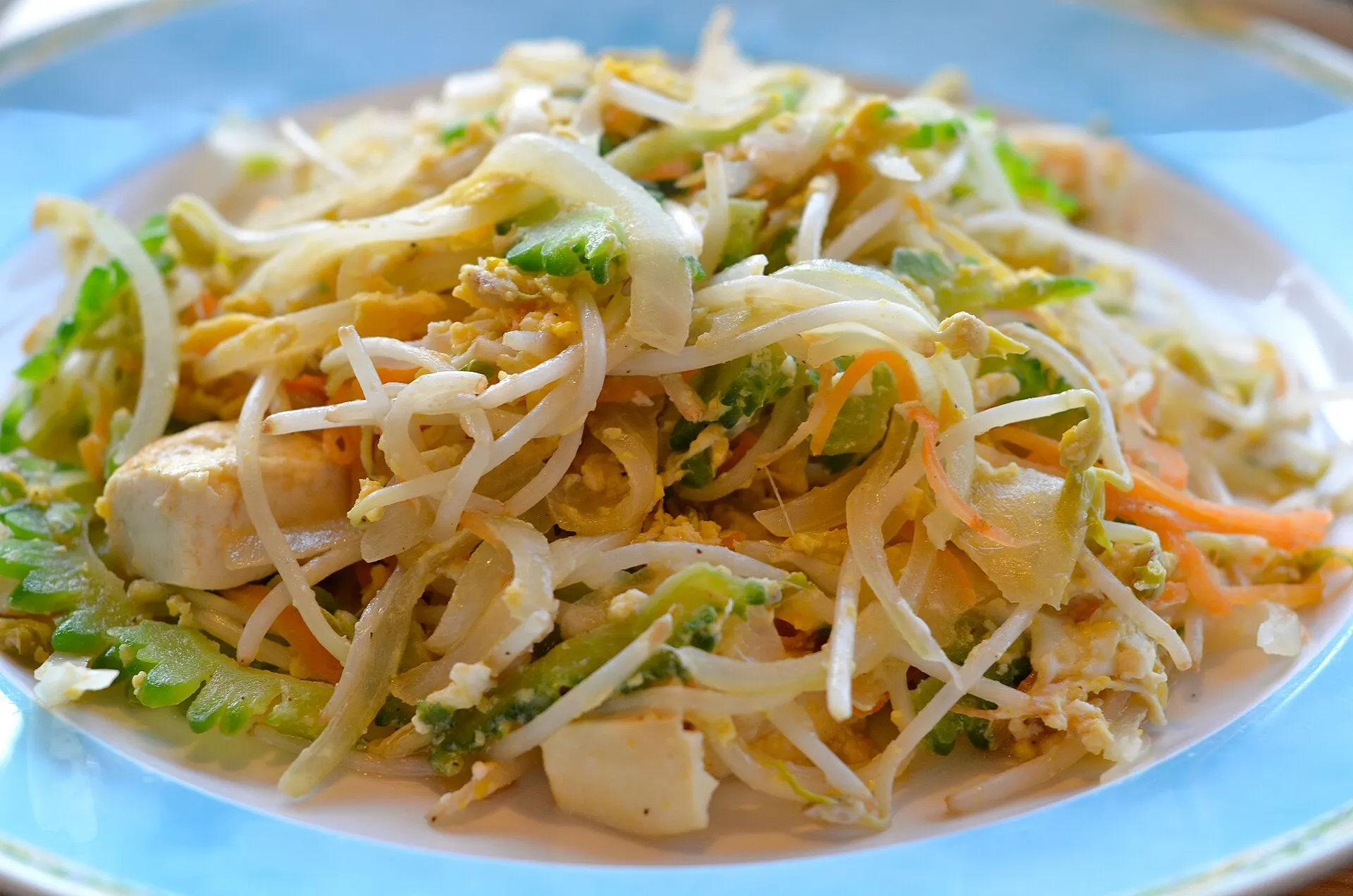
Gōyā champuru: bitter melon stir-fried with island tofu, egg and pork.
American Okinawa: taco rice, steak and Blue Seal
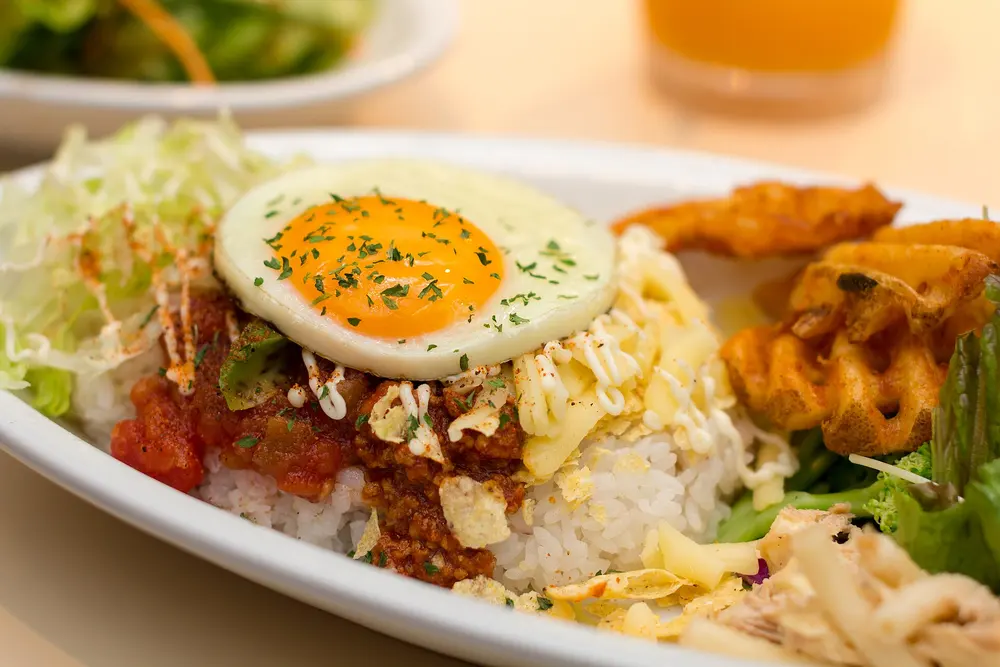
Taco rice was created in 1984 at Parlor Senri in Kin, outside the US Marine Corps' Camp Hansen, by its owner Matsuzō Gibo, who wanted a cheap, filling meal for young servicemen: taco-seasoned minced meat, cheese, lettuce and tomato on a plate of rice. The King Tacos chain descends from that shop, and the dish is now on school lunch menus across Okinawa.
Luncheon meat, introduced with the US forces, is fried in champuru, sliced into pork tamago onigiri (luncheon meat and omelette in a rice sandwich, a breakfast staple) and sold in tins at every supermarket. Okinawa also has a long tradition of steak houses that opened for American customers, and A&W drive-ins have operated on the island since the 1960s.
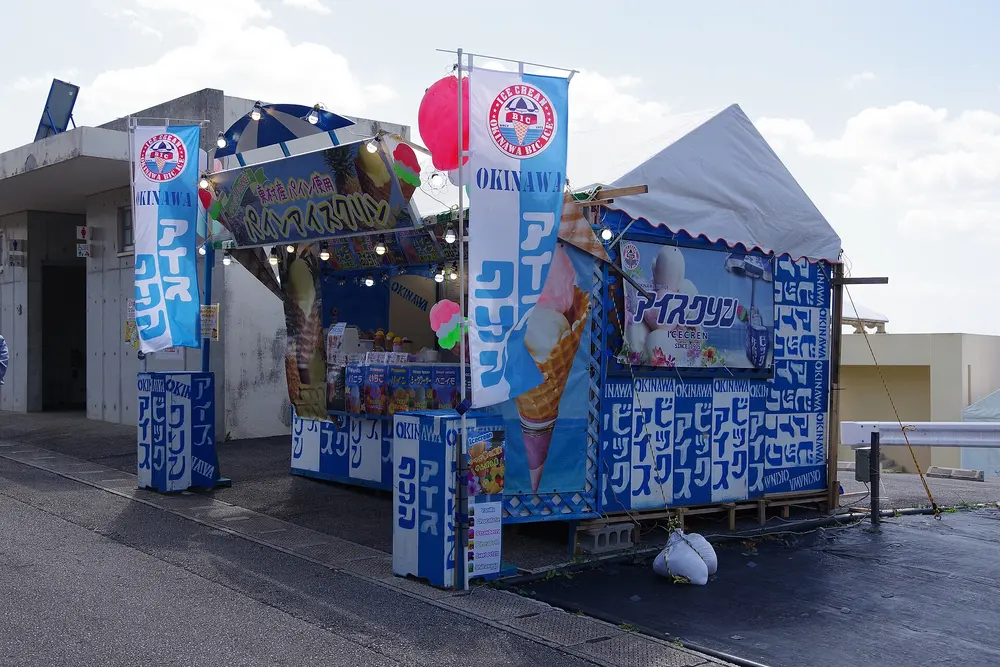
Blue Seal ice cream began in 1948 in what is now Uruma, under a contract with the United States, and moved to Urasoe in 1963 as an affiliate of a California dairy company, according to the company's own history. Its island flavours, purple sweet potato (beni-imo), shikuwasa citrus and salt cookie, are a fixture of every beach day.
Sweets: sata andagi and more
Sātā andāgī ('sugar deep-fried') are dense, round doughnuts that crack open as they fry, sold warm from market stalls and made at home for celebrations. Chinsukō are crumbly lard-and-flour biscuits, a court sweet now sold in every souvenir shop in salt, brown-sugar and beni-imo versions. Beni-imo tarts made from purple sweet potato are the other classic souvenir.
Okinawa zenzai is not the hot bean soup of mainland Japan but shaved ice over sweet red kidney beans and mochi, eaten in summer. Kokutō, unrefined brown sugar from sugar cane, is made on islands such as Hateruma, Iriomote, Tarama and Yonaguni and eaten in chunks as a snack.
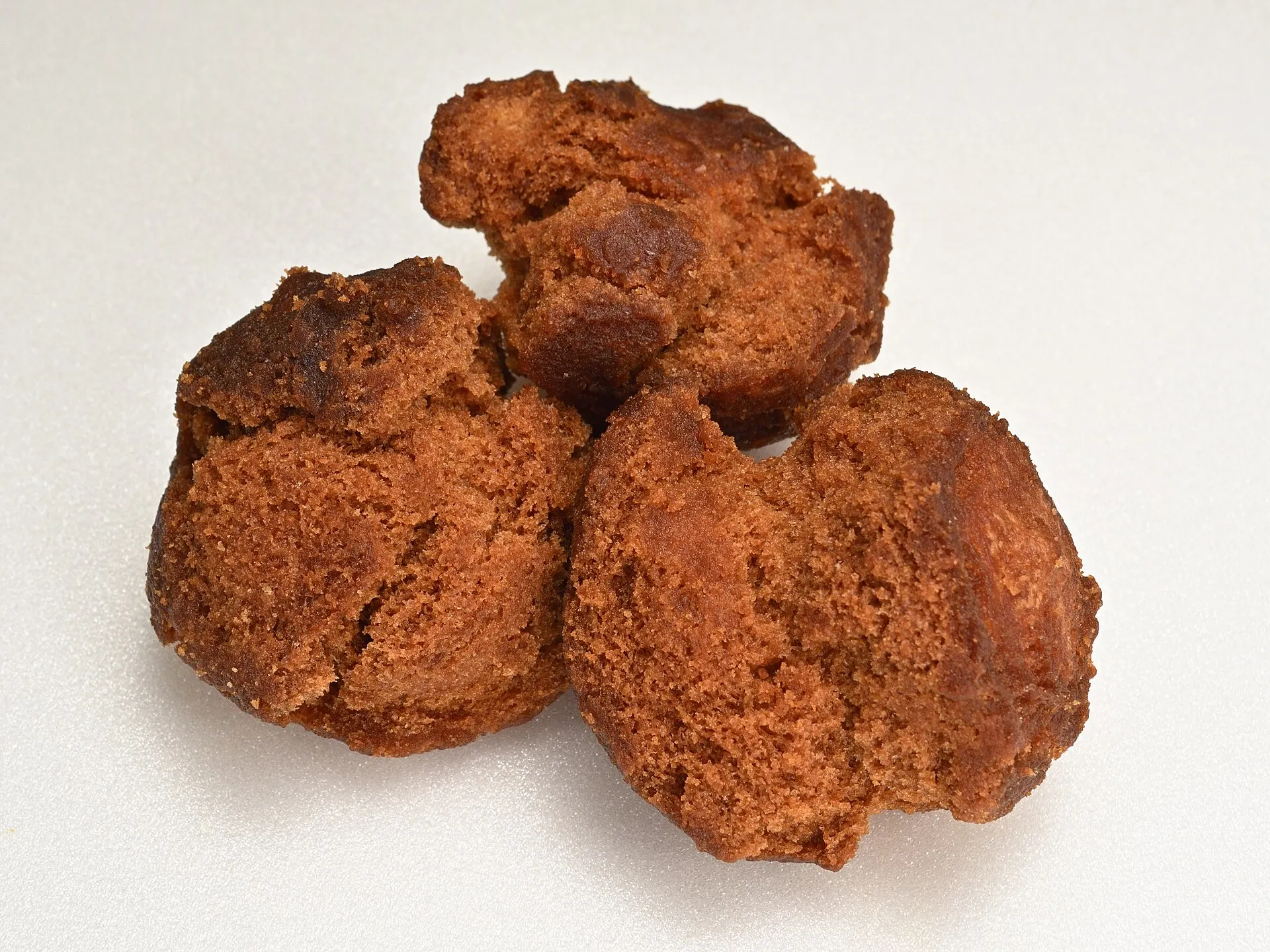
Sata andagi, Okinawa's fried doughnuts.
Awamori: the Ryukyu spirit
Awamori is Japan's oldest distilled spirit, made in Okinawa for some 500 years. It differs from mainland shōchū in its ingredients and method: long-grain (indica) rice, traditionally imported from Thailand, is fermented entirely with black kōji mould, and the whole mash is distilled once. The result is fragrant and strong, typically 25–43% alcohol; Yonaguni is allowed to produce hanazake at up to 60%.
Awamori improves with age in clay jars. Kusu (古酒, kūsu) is aged awamori, and under the industry's labelling code revised in 2015, a bottle may be called kusu only if all of the spirit has been aged for at least three years; when kusu of different ages is blended, the label must show the youngest. Families traditionally age a jar for decades, topping it up from younger jars in a method called shitsugi. Most people drink it diluted with water and ice (mizuwari).
Many of the dozens of distilleries across the islands, from Naha to Kumejima, Miyako, Ishigaki and Yonaguni, welcome visitors; a tasting tour in Naha is the easiest introduction.
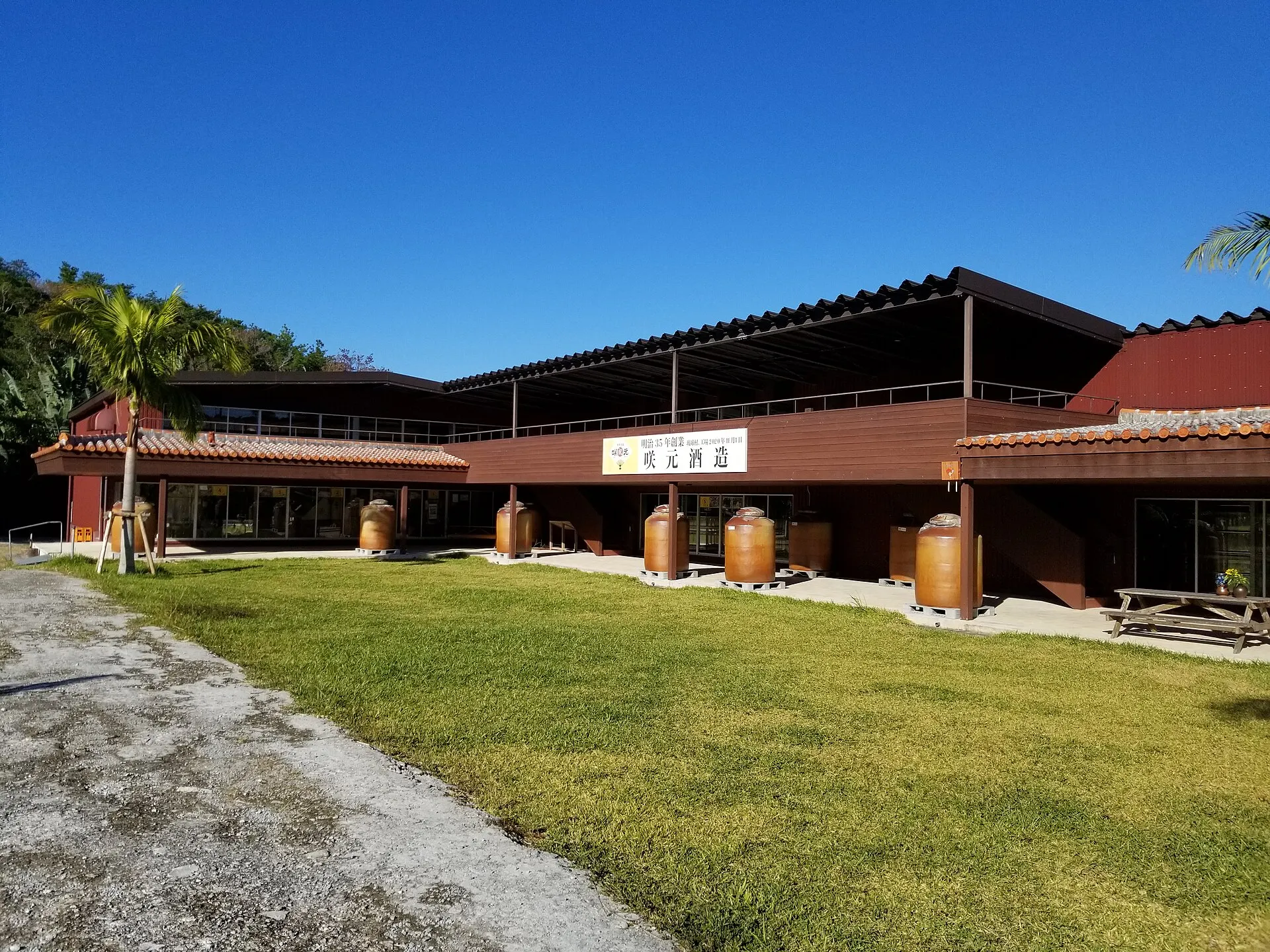
Ageing jars at an awamori distillery on Yonaguni.
Naha awamori tasting and liquor culture tour
Taste awamori, Okinawa's rice spirit, and learn how it is made and drunk, in Naha.
Check availabilityBook via GetYourGuideTour listings are on GetYourGuide. Prices, times and cancellation terms are shown live on each listing and can change; Ryukyu.com may earn a commission at no extra cost to you.
Orion beer
Orion is Okinawa's own beer. The company was founded in 1957 as Okinawa Beer by Gushiken Sōsei, a businessman from Naha; the brewery in Nago was completed in 1958, the name Orion was chosen from public suggestions, and the beer went on sale across the island in May 1959. Its light draft is made for heat, and on a beach terrace or with a plate of champuru it is hard to beat. BEGIN's song 'Oji Jiman no Orion Beer' (Grandpa's favourite Orion beer) is an island anthem.
Amami: keihan and kokutō shōchū
The Amami Islands, part of Kagoshima Prefecture, share many ingredients with Okinawa but have their own signature dishes. Keihan (鶏飯, chicken rice) is the best known: a bowl of rice topped with shredded chicken, strips of thin omelette, shiitake, pickled papaya, citrus peel and nori, over which you pour a hot, clear chicken broth. It is said to have begun as a dish for officials from Satsuma during the period of the domain's rule; today keihan restaurants on Amami Oshima are the first stop for most visitors.
Kokutō shōchū is made from brown sugar and rice kōji. Under Japan's tax rules, shōchū from brown sugar may be produced only in the Amami Islands, a special arrangement that dates from Amami's return to Japan in 1953, so every bottle comes from one of the distilleries on Amami Oshima, Kikai, Tokunoshima, Okinoerabu or Yoron. It is smooth and slightly sweet-smelling but not sweet. A tasting bar in Naze with some 200 varieties is bookable on GetYourGuide.
Amami-Oshima brown-sugar shochu tasting
Taste kokutō (brown-sugar) shochu at a bar with around 200 varieties on Amami-Oshima.
Check availabilityBook via GetYourGuideTour listings are on GetYourGuide. Prices, times and cancellation terms are shown live on each listing and can change; Ryukyu.com may earn a commission at no extra cost to you.
The longevity question
Okinawa became internationally famous in the late 20th century for long lives and many centenarians, studied since the 1970s by researchers including the Okinawa Centenarian Study and later popularised as one of the world's 'Blue Zones'. The traditional diet credited with this was based on sweet potatoes, vegetables, tofu, seaweed and small amounts of pork, eaten in modest portions (the saying 'hara hachi bu' advises stopping when 80% full), combined with an active life.
The picture today is different. According to Japan's prefectural life tables for 2020, as reported by Ryukyu Shimpo, Okinawan men's life expectancy (80.73 years) ranked 43rd of 47 prefectures and women's (87.88 years) 16th, down from 36th and 7th in 2015. Health researchers and the prefecture point to the spread of a high-fat, car-dependent lifestyle since the US era. So the old diet may well be healthy, but eating in Okinawa today does not automatically mean eating like the centenarians did. Some GetYourGuide tours visit villages in the north to cook and eat in the traditional way.
Blue Zone private tour in a longevity village
A private tour of a village in northern Okinawa associated with long life, its food and way of living.
Check availabilityBook via GetYourGuideTraditional Okinawan cooking class at Ufuyaa
Learn to cook Okinawan home dishes at Ufuyaa, an old-house restaurant in the north of the island.
Check availabilityBook via GetYourGuideTour listings are on GetYourGuide. Prices, times and cancellation terms are shown live on each listing and can change; Ryukyu.com may earn a commission at no extra cost to you.
Where to eat and how to taste more
Daiichi Makishi Public Market in Naha, the city's kitchen since the postwar black-market days, reopened in a new building in 2023: buy fish downstairs and have it cooked upstairs. The streets around Kokusai-dōri, Sakaemachi market near Asato station and the Tsuboya pottery quarter are full of izakaya serving island dishes. Outside Naha, look for soba shops in old houses, roadside stands selling sata andagi and fruit, and the farm stalls (yasai chokubaijo) selling island vegetables.
Food tours and cooking classes are a quick way to learn what to order. Our picks:
Frequently asked questions
Is Okinawa soba made from buckwheat?
No. It is a wheat noodle in a pork-and-bonito broth; the name 'soba' was officially approved in 1978, and 17 October is Okinawa Soba Day.
What is kusu awamori?
Aged awamori. Since 2015 the label kusu may only be used when all of the spirit has been aged for at least three years.
Where was taco rice invented?
In Kin, central Okinawa, in 1984, at Parlor Senri near Camp Hansen.
Where can I eat keihan?
On Amami Oshima, where keihan restaurants are found around Naze and Kasari. It is the Amami Islands' signature dish.
Is the Okinawan diet still the secret of long life?
The traditional diet is widely studied, but Okinawa's life-expectancy ranking has fallen: in 2020 men ranked 43rd and women 16th of Japan's 47 prefectures.
Sources and official information
Facts were checked against these official sources in November 2026. Opening hours, prices and timetables change, so confirm before you go.
- blueseal.co.jp
- ryukyushimpo.jp
- edinetdb.jp
- jetro.go.jp
- ryukyushimpo.jp
- rurubu.jp
- ryukyushimpo.jp
- mhlw.go.jp
- nta.go.jp
- okinawa-awamori.or.jp
Ryukyu.com is an independent guide, not the official site of any tourism board, government, airline, port or ferry operator. Some links are affiliate links: tours go to GetYourGuide and stays go to Booking.com, and we may earn a commission at no extra cost to you.