In short
- Best all-round months: April, late October and November. Warm (Naha mean 21.5 °C in April, 22.5 °C in November), fewer typhoons, no box-jellyfish advisory and no rainy season – but the sea is still cool in April for some swimmers.
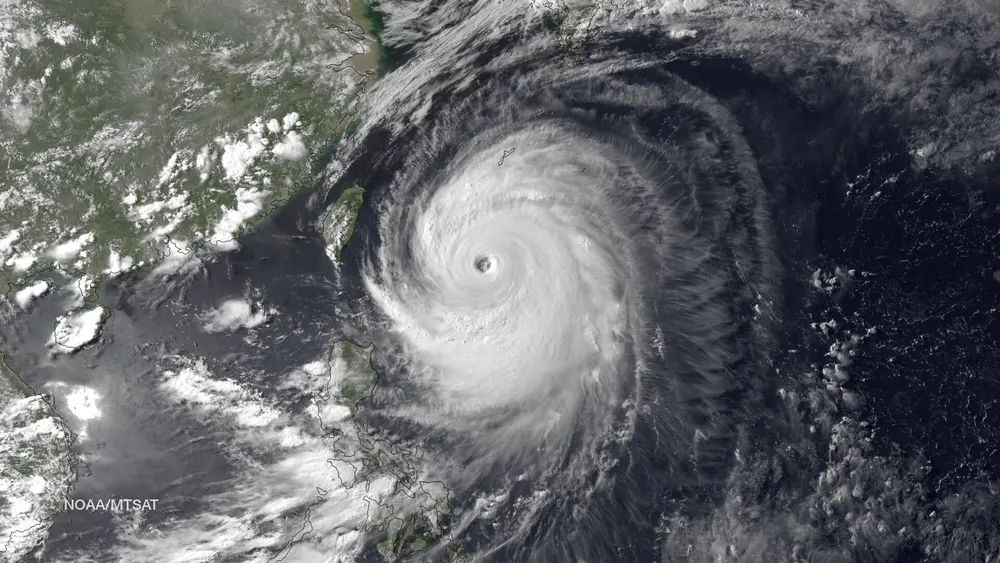
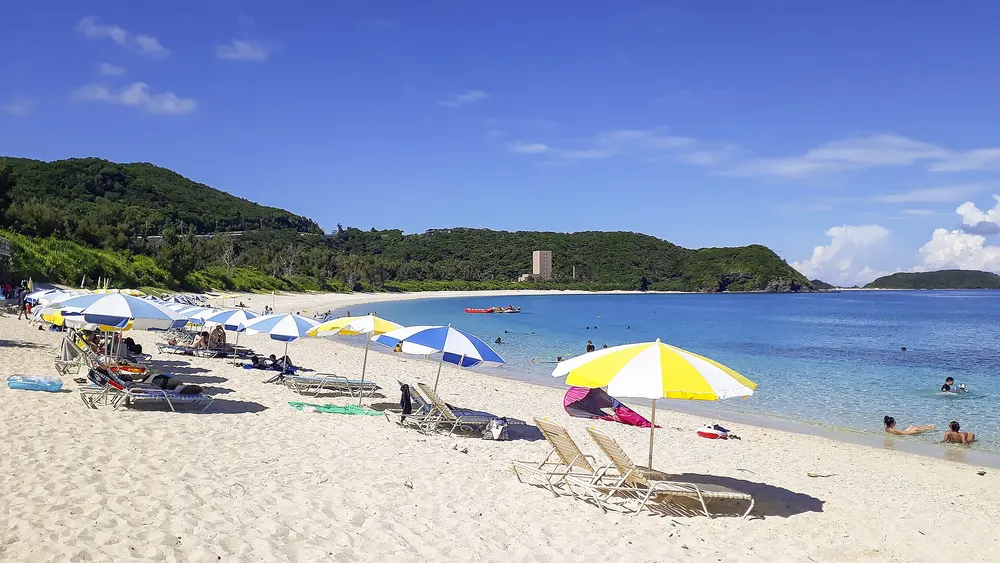
- Beach season is May–October. The sea is warmest in July–September, which is also peak typhoon season: the Okinawa region averages 1.5 typhoon approaches in July, 2.2 in August and 1.9 in September (JMA, 1991–2020).
- Rainy season (tsuyu) normally 10 May – 21 June in Okinawa; in 2026 it ran from about 4 May to about 29 June (JMA preliminary).
- Winter (December–February) is mild, windy and cloudy: Naha averages 17–19 °C, Ishigaki 19–20 °C. It is humpback-whale season in the Kerama Islands (roughly late December to early April).
- Avoid the crowds of Golden Week (29 April–5 May), Obon (mid-August), Lunar New Year (6 February in 2027, busy with Taiwanese, Korean and Chinese visitors), Chuseok and Taiwan's long weekends.
Okinawa's climate in one paragraph
Okinawa has a humid subtropical climate: no real winter, a long hot summer and rain spread through the year. JMA's 1991–2020 normals give Naha an annual mean temperature of 23.3 °C and 2,161 mm of rain; Ishigaki, 400 km further south-west, averages 24.5 °C and 2,096 mm. The year has four practical seasons for travellers – a pleasant spring (March–April), a wet early summer (the rainy season in May–June), a hot, sunny but typhoon-prone summer (July–October) and a mild, windy winter (November–February). Temperatures differ little between the islands; the further south you go the warmer the winter, and Yaeyama in January is about 1.5 °C warmer than Naha.
- Naha annual mean
- 23.3 °C; 2,161 mm rain; 1,727 hours of sunshine
- Ishigaki annual mean
- 24.5 °C; 2,096 mm rain
- Miyako annual mean
- 23.8 °C; 2,076 mm rain
- Rainy season (normal)
- About 10 May – 21 June (Okinawa region)
- Typhoon approaches
- 7.7 a year on average, peak August
- Source
- Japan Meteorological Agency, normals 1991–2020
Month by month: temperature, rain and typhoons
Mean daily maximum and minimum for Naha, monthly mean for Ishigaki, monthly rainfall in Naha and the average number of typhoons approaching within 300 km of a weather station in the Okinawa region.
| Month | Naha high / low | Ishigaki mean | Naha rain | Typhoon approaches | In short |
|---|---|---|---|---|---|
| Jan | 19.8 / 14.9 °C | 18.9 °C | 102 mm | 0 | Mild, cloudy, windy; whales; cherry blossom in the north late in the month |
| Feb | 20.2 / 15.1 °C | 19.4 °C | 115 mm | 0 | As January; Lunar New Year crowds |
| Mar | 21.9 / 16.7 °C | 20.9 °C | 143 mm | 0 | Warming; beach openings start; whales until early April |
| Apr | 24.3 / 19.1 °C | 23.4 °C | 161 mm | 0.0 | Pleasant; quiet until Golden Week |
| May | 27.0 / 22.1 °C | 25.9 °C | 245 mm | 0.4 | Golden Week, then rainy season |
| Jun | 29.8 / 25.2 °C | 28.4 °C | 284 mm | 0.6 | Rainy season ends late June; sea warm |
| Jul | 31.9 / 27.0 °C | 29.6 °C | 188 mm | 1.5 | Hot, sunny, peak beach time; typhoons begin |
| Aug | 31.8 / 26.8 °C | 29.4 °C | 240 mm | 2.2 | Hottest and busiest (Obon); typhoon peak |
| Sep | 30.6 / 25.8 °C | 28.2 °C | 275 mm | 1.9 | Hot, warm sea, typhoons, fewer crowds |
| Oct | 28.1 / 23.5 °C | 26.0 °C | 179 mm | 1.1 | Still beach weather; Chinese Golden Week early in month |
| Nov | 25.0 / 20.4 °C | 23.6 °C | 119 mm | 0.3 | Comfortable, drier; north wind starts |
| Dec | 21.5 / 16.8 °C | 20.5 °C | 110 mm | 0 | Mild, often grey; quiet until New Year |
The sea: swimming, jellyfish and whales
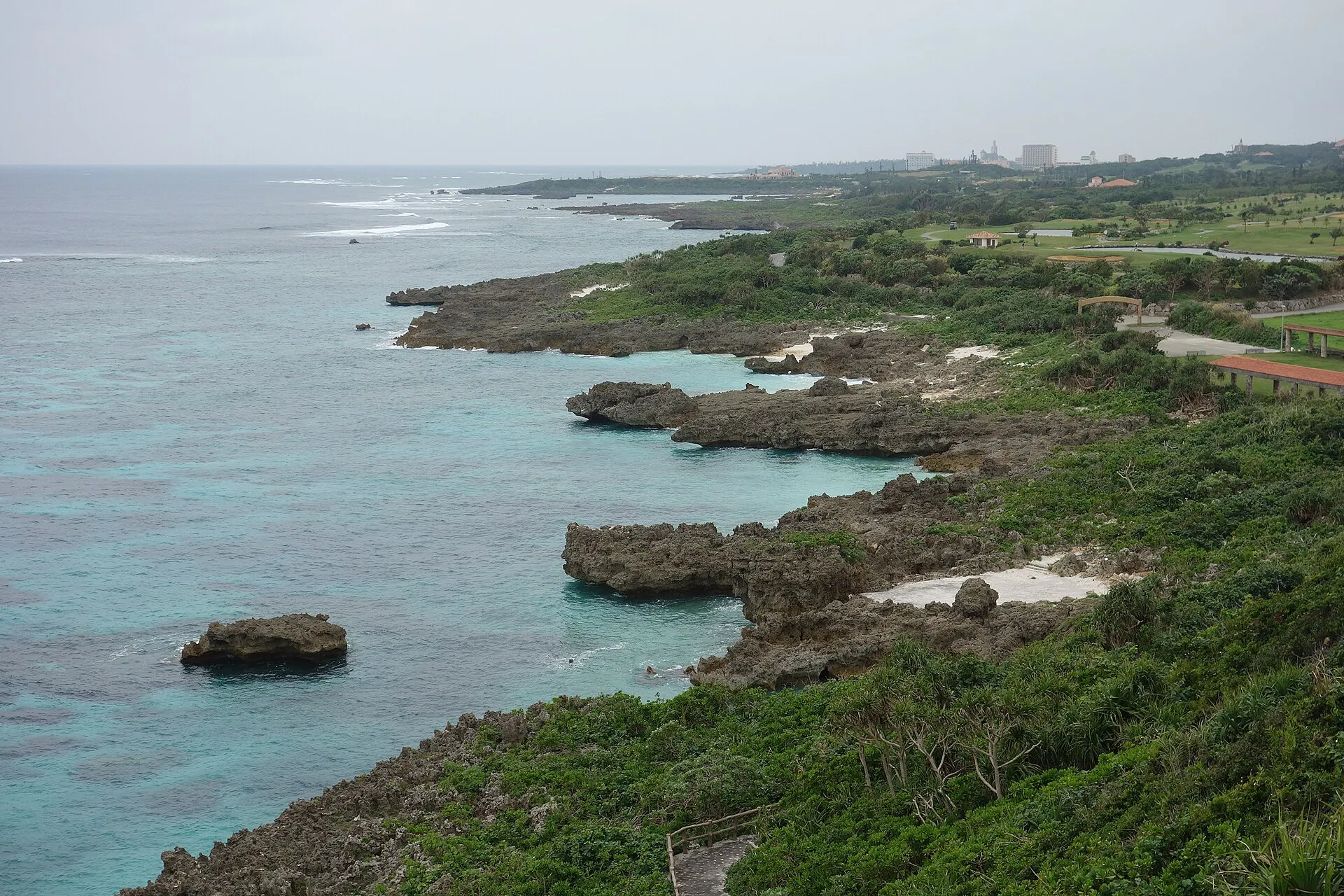
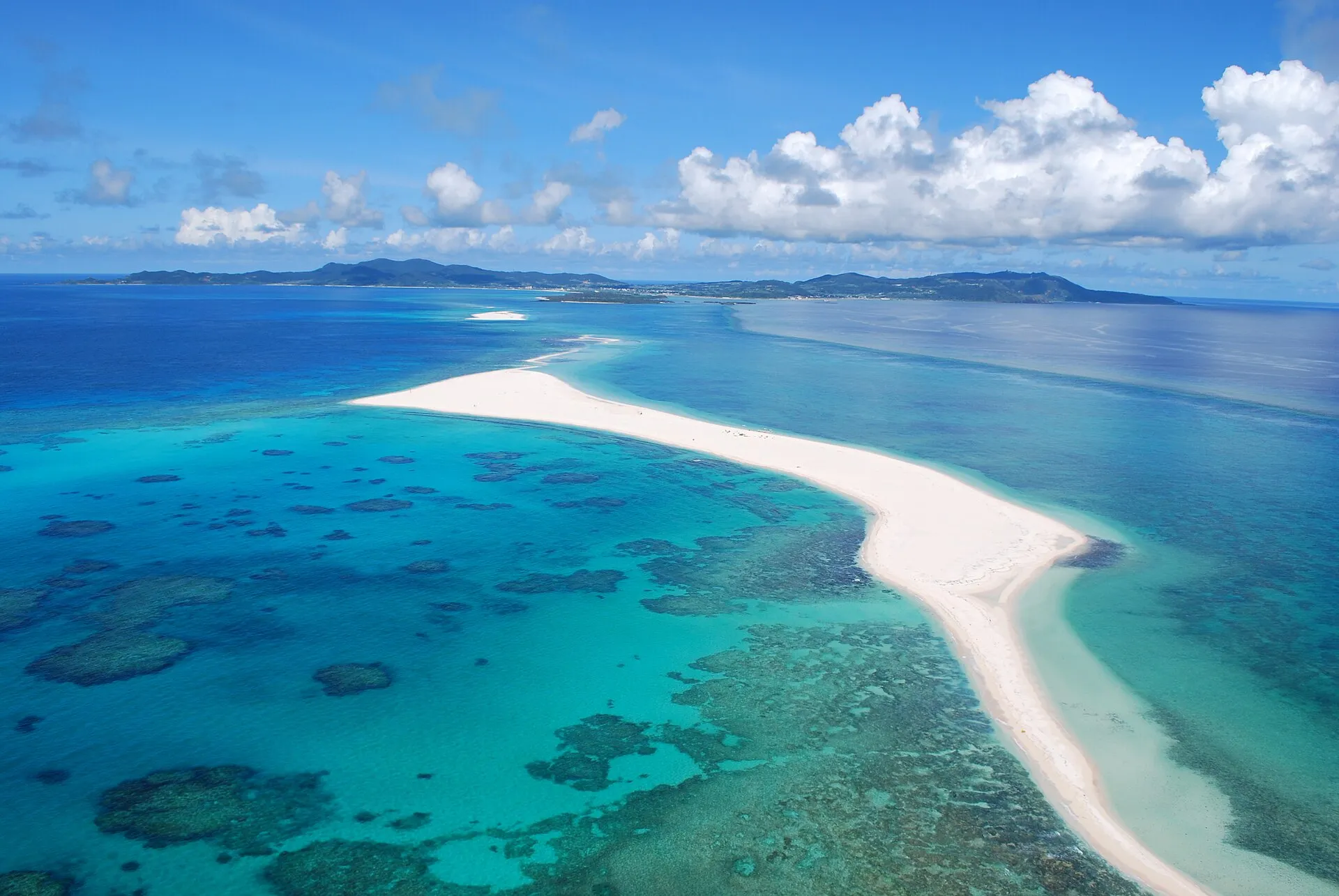
Okinawa's sea stays warm enough for snorkelling with a wetsuit all year, but most visitors swim from late April to October. JMA does not publish simple monthly sea-temperature normals for each island; as a guide, the sea is coolest in February and warmest in August, when JMA's normal for early August in the waters south of Okinawa is about 29 °C. Official beach seasons, with lifeguards and nets, usually run from spring to October.
- Box jellyfish (habu-kurage): Okinawa Prefecture issues a habu-kurage advisory every summer – in 2026 from June to 30 September. Most stings happen in July and August in shallow water near the shore. Swim inside the jellyfish nets at managed beaches, cover your skin with a rash guard or wetsuit, and know that vinegar (not fresh water) is the first-aid treatment; many beaches keep vinegar by the lifeguard post. See diving and snorkelling.
- Humpback whales: humpbacks come to the waters around the Kerama Islands to breed and calve from roughly late December to early April; Zamami's whale-watching season usually starts around New Year. Whale-watching boats leave from Naha and Zamami.
- Coral spawning and visibility: visibility is often best in winter and spring, when there is less plankton; summer brings calm, warm days between typhoons.
Holidays and crowds: Japanese, Chinese, Korean and Taiwanese
Okinawa's busiest weeks are set by holidays at home and abroad. Flights, ferries, rental cars and hotels sell out first in these periods, and prices rise:
| Period | Whose holiday | Effect in Okinawa |
|---|---|---|
| Late December – 3 January | Japanese New Year | Flights and hotels full around New Year's Day |
| Late January – February (6 February in 2027) | Lunar New Year: Taiwan, Korea (Seollal), Hong Kong, China | Many visitors from Taiwan and Korea; Naha and Ishigaki busy |
| Around 28 February and early April | Taiwan's long weekends (Peace Memorial Day, Tomb-Sweeping and Children's Day) | Busy flights from Taiwan |
| Mid-March to early April | Japanese university spring holidays | Popular with young domestic travellers |
| 29 April – 5 May | Japanese Golden Week | Busiest week of spring; ferries to Kerama sell out |
| July – August | Japanese school summer holidays | Peak season everywhere |
| Mid-August | Obon | The busiest days of the year for domestic travel |
| Mid-September (15 September in 2027) and Japanese 'Silver Week' holidays | Korean Chuseok; Mid-Autumn Festival (Taiwan, Hong Kong); Japanese three-day weekends | Short busy spells |
| 1–7 October | Chinese National Day Golden Week | Traditionally busy; fewer mainland Chinese flights in 2026–27 |
| Around 10 October | Taiwan's National Day long weekend | Busy flights from Taiwan |
Season by season: who each one suits
- Spring (March–April): best for sightseeing and hiking. Warm days, few typhoons, wildflowers and fresh green in Yanbaru. The sea is cool at first; from mid-April it is fine for most swimmers. Avoid Golden Week if you can.
- Rainy season (May–June): cheapest warm-weather period. Grey, humid days with heavy showers rather than constant rain; between showers the sun is strong. Ferries and flights mostly run normally. Good for diving and indoor sights such as the Churaumi Aquarium.
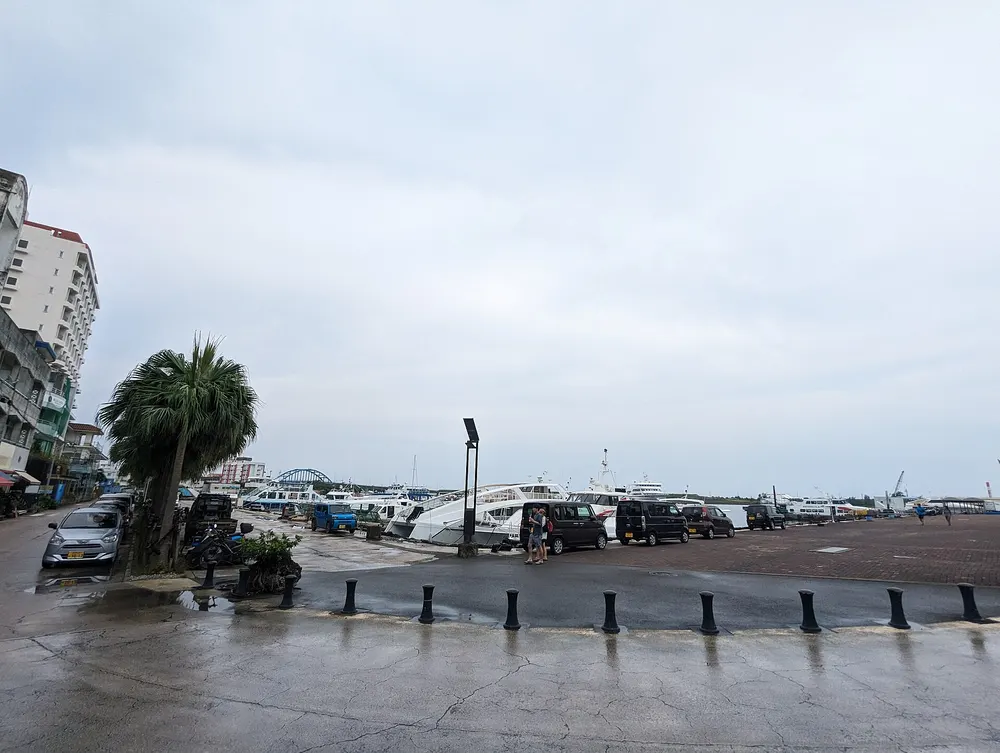
- Summer (July–September): best for beaches, worst for flexibility. Long sunny days and the warmest sea, but also typhoons, which can close airports and stop ferries for one to three days. Book flexible tickets and travel insurance, and leave buffer days before flights home. Read the typhoon guide.
- Autumn (October–November): the sweet spot. Warm sea in October, falling humidity and fewer typhoons by November. The north-east monsoon begins, which can cancel exposed ferries such as Uehara on Iriomote.
- Winter (December–February): best for whales, value and walking. Mild temperatures, few crowds outside New Year and Lunar New Year, humpbacks in Kerama. Expect cloud and wind; beaches are for walking rather than swimming.
Events worth timing a trip around
Okinawa's festival calendar is covered in detail in events. For planning transport, note that the Naha Tug-of-War weekend in October, the Eisa festivals of summer (including the Okinawa Zento Eisa Matsuri in Okinawa City) and the marathons in winter all fill hotels and rental cars locally. For the Shuri Castle reconstruction and visiting hours, see Shuri Castle.
Frequently asked questions
What is the best month to visit Okinawa?
For a balance of warm weather, swimmable sea and low typhoon risk, late April (after Golden Week), October and early November. For whales, January–March; for the warmest sea, July–September, with typhoon risk.
When is typhoon season in Okinawa?
Typhoons can affect Okinawa from May to November, but JMA's averages show the peak in July (1.5 approaches), August (2.2) and September (1.9), with 1.1 in October.
When is the rainy season in Okinawa?
Normally from about 10 May to 21 June. In 2026 JMA's preliminary dates were about 4 May to about 29 June.
Can you swim in Okinawa in winter?
Some people do, but the sea is at its coolest and the north wind makes it feel cold; most snorkellers and divers wear wetsuits from December to March. Official beach seasons usually start in spring.
When is box-jellyfish season?
Okinawa Prefecture's habu-kurage advisory ran from June to 30 September in 2026. Swim inside nets at managed beaches and wear a rash guard.
Sources and official information
Facts were checked against these official sources in November 2026. Opening hours, prices and timetables change, so confirm before you go.
- data.jma.go.jp
- data.jma.go.jp
- data.jma.go.jp
- data.jma.go.jp
- data.jma.go.jp
- data.jma.go.jp
- jma.go.jp
- pref.okinawa.jp
- ryukyushimpo.jp
- env.go.jp
Ryukyu.com is an independent guide, not the official site of any tourism board, government, airline, port or ferry operator. Some links are affiliate links: tours go to GetYourGuide and stays go to Booking.com, and we may earn a commission at no extra cost to you.