In short
- The instrument: the three-stringed sanshin, with a snakeskin-covered body, arrived from China centuries ago and became the ancestor of the Japanese shamisen. It is in almost every Okinawan home.
- Three layers: Ryukyu classical music from the royal court; min'yō and shima-uta (folk songs, with distinct Okinawan, Miyako, Yaeyama and Amami styles); and the pop and rock of the last fifty years.
- Eisa: the drum dance of the Obon season, performed by village youth groups; the biggest gathering is the Okinawa Zentō Eisa Festival in Okinawa City in early September (4–6 September in 2026).
- Hear it live: the National Theatre Okinawa in Urasoe for court music, dance and kumiodori; min'yō live houses and izakaya in Naha, Koza and Ishigaki for folk song; festivals all summer.
Music as everyday life
In Okinawa music is not a performance you buy a ticket for so much as something people do: a sanshin on the wall at home, a song at every wedding, birthday and family gathering, an Eisa troupe in every village. The ending of a party, when everyone gets up for the fast, hand-waving dance called kachāshī, is a scene most visitors who spend an evening in a min'yō bar will find themselves part of.
The music has distinct regional voices. Okinawa Main Island songs, Miyako's, Yaeyama's (Ishigaki, Taketomi, Iriomote) and Amami's differ in scales, rhythms, language and singing style, and islanders hear the difference immediately. Many of the people on our famous-people page came out of these traditions.
The sanshin
The sanshin (三線, 'three strings') is a long-necked lute with a small body covered in snakeskin, traditionally python, played with a plectrum worn on the index finger. It came from the Chinese sanxian, probably in the 14th or 15th century, and was adopted by the court of Shuri; in the 16th century it reached mainland Japan through the port of Sakai, where it became the larger, cat- or dog-skin shamisen. Music is written in kunkunshi, a notation of Chinese characters in vertical columns.
The neck matters most: the best are made of kuruchi, Ryukyu ebony, which grows slowly; local projects are now planting kuruchi forests so that sanshin makers will have wood a century from now. Okinawa celebrates 4 March as Sanshin Day ('san-shin' sounds like three-four), with simultaneous playing across the islands.
Amami's instrument is similar but strung with thinner strings, tuned higher and played with a long, thin bamboo plectrum, which gives the bright, light sound that suits Amami's falsetto singing.
A one-hour lesson is enough to play a simple song such as 'Tinsagu nu Hana', and it changes how you listen to everything else.
Naha: Ryusou dress-up and sanshin lesson
Dress in Ryūsō, traditional Ryukyuan clothing, and take a sanshin lesson in Naha.
Check availabilityBook via GetYourGuideSanshin experience at a traditional house in Nakijin
Play the sanshin, Okinawa's three-stringed instrument, in a traditional house in Nakijin.
Check availabilityBook via GetYourGuideTour listings are on GetYourGuide. Prices, times and cancellation terms are shown live on each listing and can change; Ryukyu.com may earn a commission at no extra cost to you.
Ryukyu classical music and court dance
Ryukyu classical music (koten ongaku) developed at the royal court in Shuri, where music and dance were part of statecraft: performances entertained the Chinese envoys who came to invest each new king, and Ryukyuan musicians accompanied the missions to Edo. Singers accompany themselves on the sanshin, slowly and with long, ornamented notes; the main schools today are Nomura-ryū and Afuso-ryū. Ryukyu classical music and Ryukyu dance are designated Important Intangible Cultural Properties of Japan.
Kumiodori, the court music-drama first staged in 1719, combines classical song, dance and chanted dialogue; it was added to UNESCO's Intangible Cultural Heritage list in 2010. Ryukyu buyō (dance) ranges from the slow, elegant women's dances in bingata robes to the energetic zō-odori folk-style dances developed after the kingdom ended.
The National Theatre Okinawa in Urasoe is the home of these arts and stages regular performances; its programme as checked in November 2026 included a kumiodori performance on 19 December 2026 and a Ryukyu dance gala on 16 January 2027. Hotels and restaurants in Naha also host short dance shows.
Folk song: min'yō and shima-uta
The folk songs of the islands, min'yō, include work songs, love songs, songs of departure and songs for festivals. Okinawans often call them shima-uta, island songs, a term that originally meant the village songs of Amami.
Okinawa Main Island min'yō uses a distinctive pentatonic Ryukyu scale (do-mi-fa-so-ti) and lively rhythms: think of 'Tanchamē' or 'Tōshin dōi', the classic kachāshī finale. Yaeyama songs, such as 'Asadoya Yunta' from Taketomi and 'Tubarāma' from Ishigaki, are often slower and more lyrical; Miyako has its own ancient chants (āgu). Amami shima-uta is sung with a characteristic falsetto break, called guin, and is closer to Japanese scales; singers trade verses in a kind of musical conversation.
Twentieth-century masters such as Rinshō Kadekaru and the Yaeyama singer Tetsuhiro Daiku kept the tradition alive through decades of change, and young singers still learn in the old way, by imitation. The tradition is alive in competitions run by local newspapers and broadcasters, which award ranks to young singers.
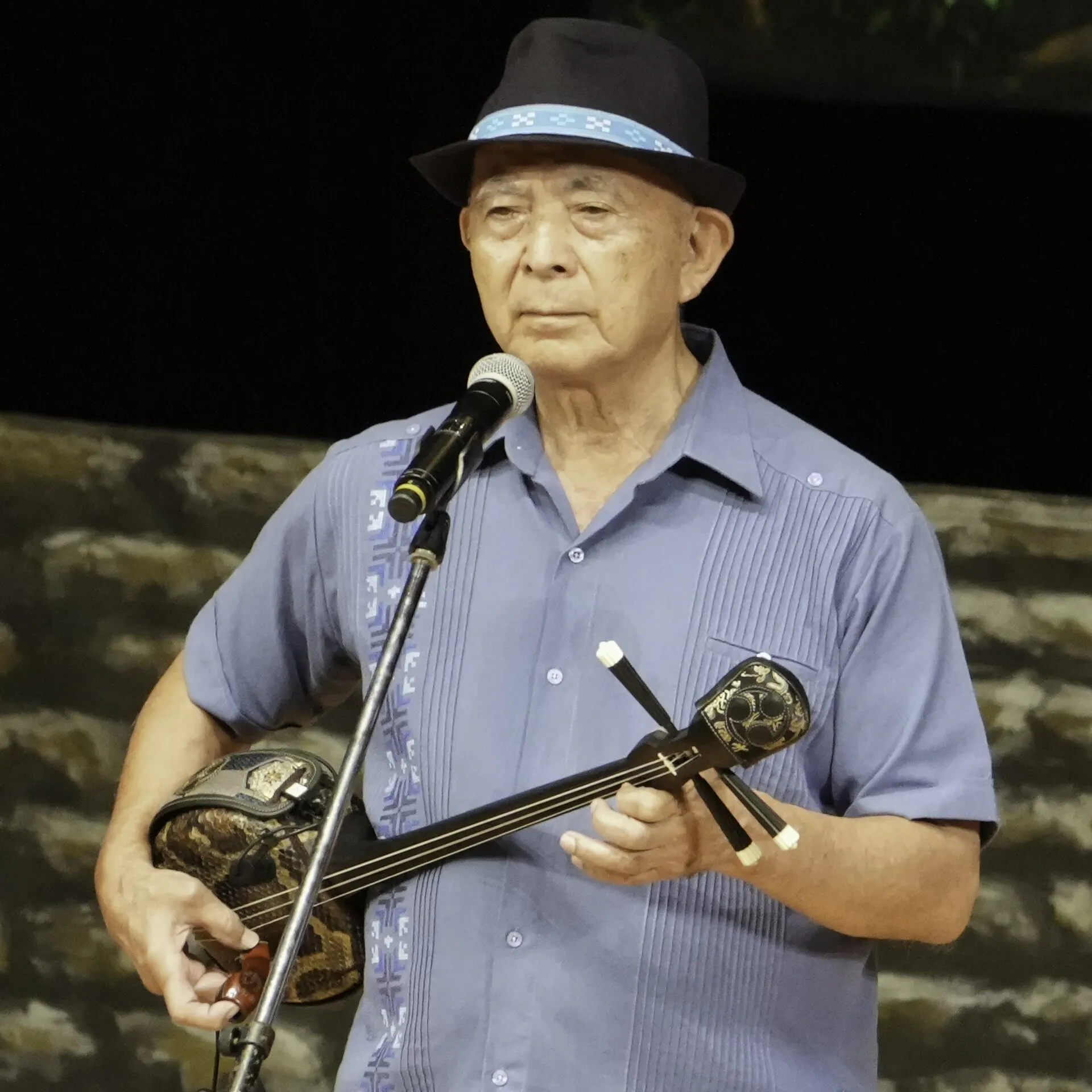
Tetsuhiro Daiku, the Yaeyama folk singer from Ishigaki, at a festival in October 2026.
Eisa: the drum dance of summer
Eisa is danced during and after Obon, the festival of the ancestors, which in Okinawa follows the old lunar calendar and falls in August or early September. Groups of young people from each neighbourhood (the seinenkai) parade through the streets with large and small drums (ōdaiko, shimedaiko and the hand drum pāranku), accompanied by sanshin, singers and a white-faced clown figure, chondarā, to send off the spirits of the ancestors. Originally rooted in Buddhist chants, it became the most visible symbol of Okinawan youth culture.
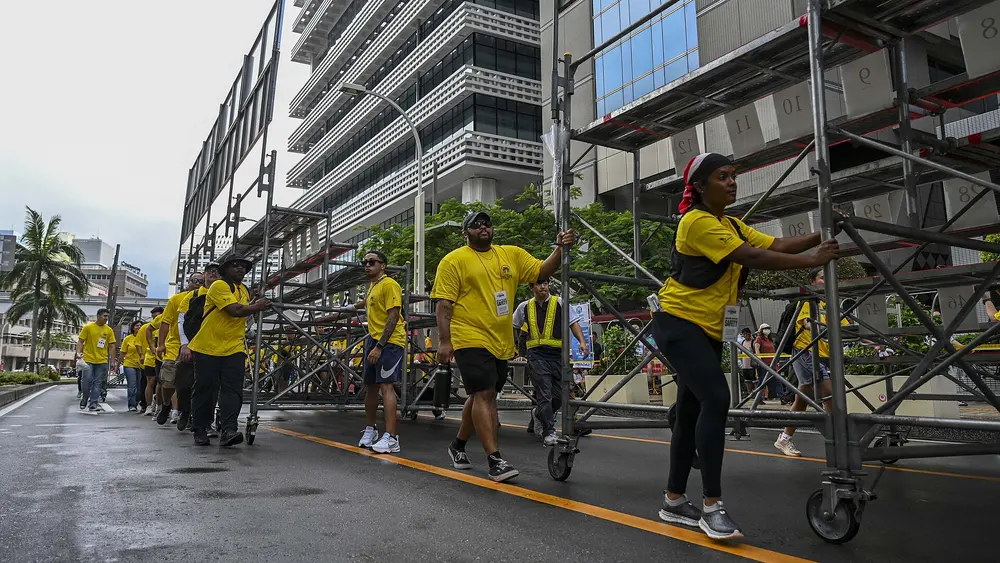
The biggest event is the Okinawa Zentō Eisa Matsuri in Okinawa City, held on 4–6 September in 2026 (its 71st edition), with a street parade (michijunē) on Gate 2 Street and performances at the Koza athletics stadium. In 2027 the lunar Obon falls on 14–16 August, so most village Eisa will be around those dates and the following weeks. Creative Eisa troupes, which mix in modern rhythms, perform year-round at events and hotels. See events for dates.
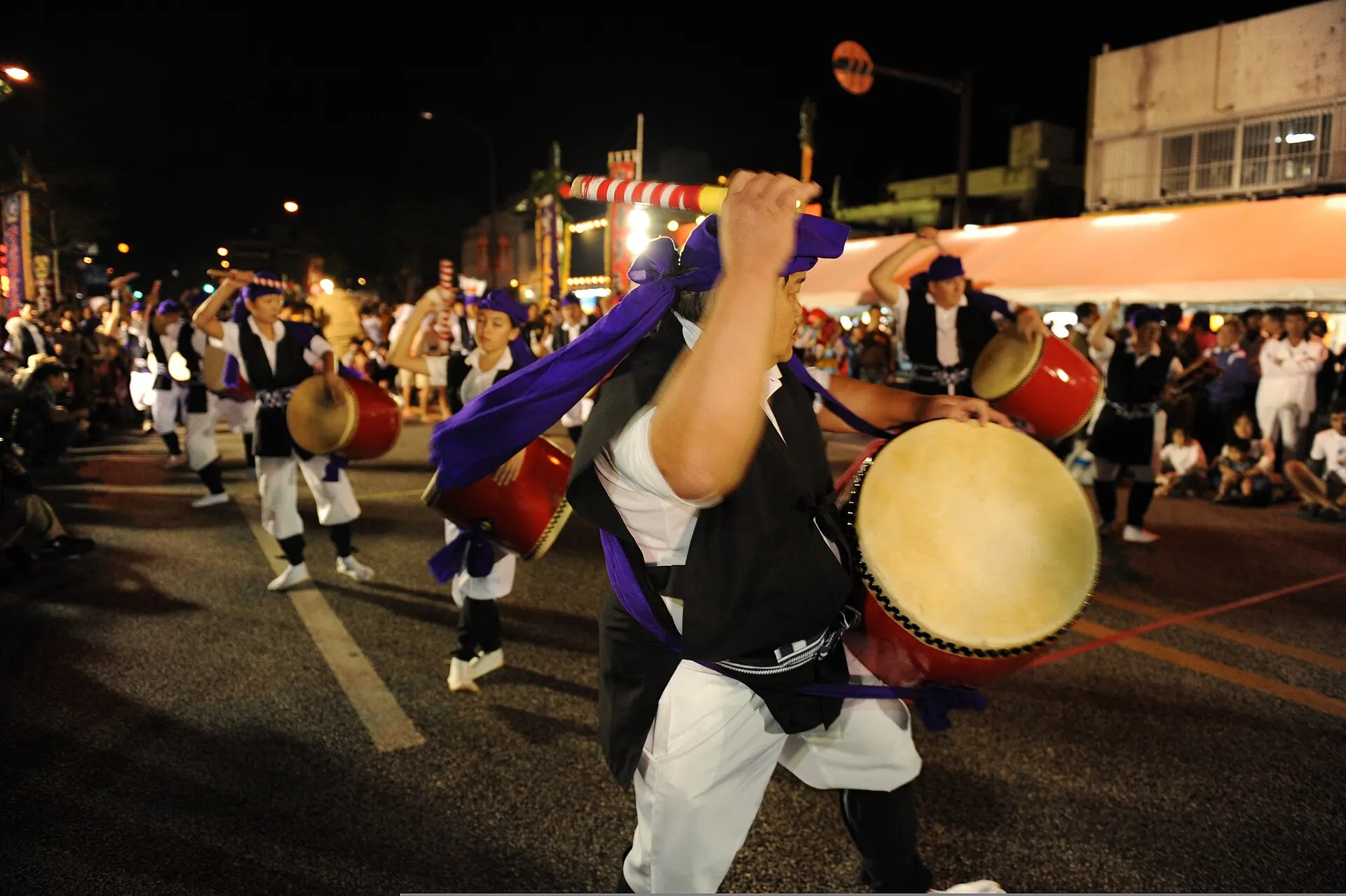
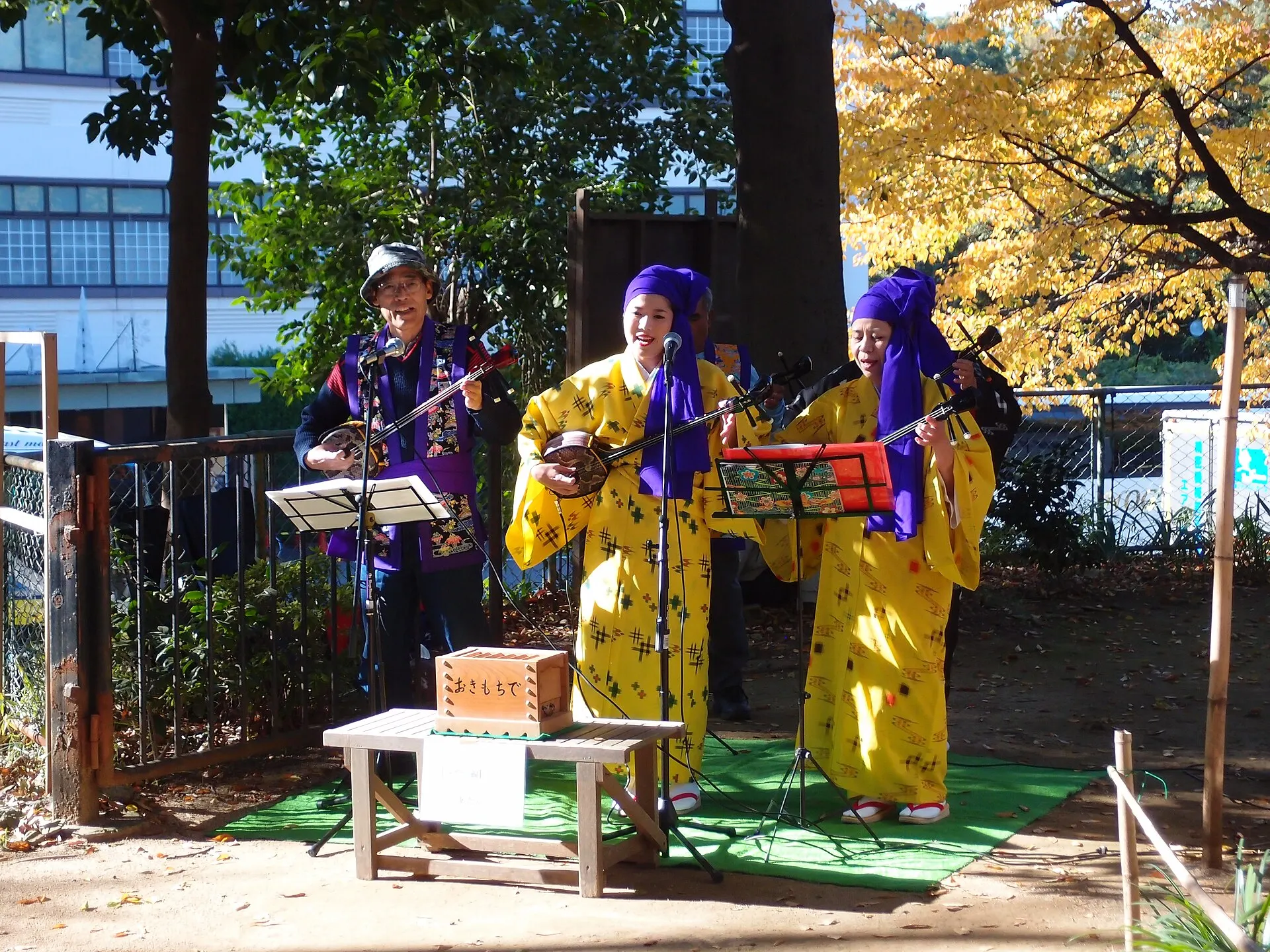
An Eisa troupe at the Okinawa International Carnival in Okinawa City.
From Koza rock to Okinawan pop
During the US administration, Koza (today Okinawa City), outside Kadena Air Base, became a rock town: bands played hard rock for American soldiers in bars along Gate 2 Street in the Vietnam war years. In the 1970s Shoukichi Kina & Champloose fused rock with min'yō in 'Haisai Ojisan' and 'Hana', and the Rinken Band, led by Rinken Teruya, built a modern Okinawan sound from sanshin and island rhythms.
In the 1990s Okinawa sent a generation of pop stars from the Okinawa Actors School into Japan's charts: Namie Amuro, SPEED, MAX, DA PUMP. BEGIN from Ishigaki and Kiroro from Yomitan brought island songs to the mainstream, and Rimi Natsukawa's 2001 'Nada Sōsō' became one of the best-loved songs in Japan. The 2000s added MONGOL800, HY and ORANGE RANGE, and Amami produced Hajime Chitose and Kousuke Atari. The famous people page has their stories, with birthplaces checked.
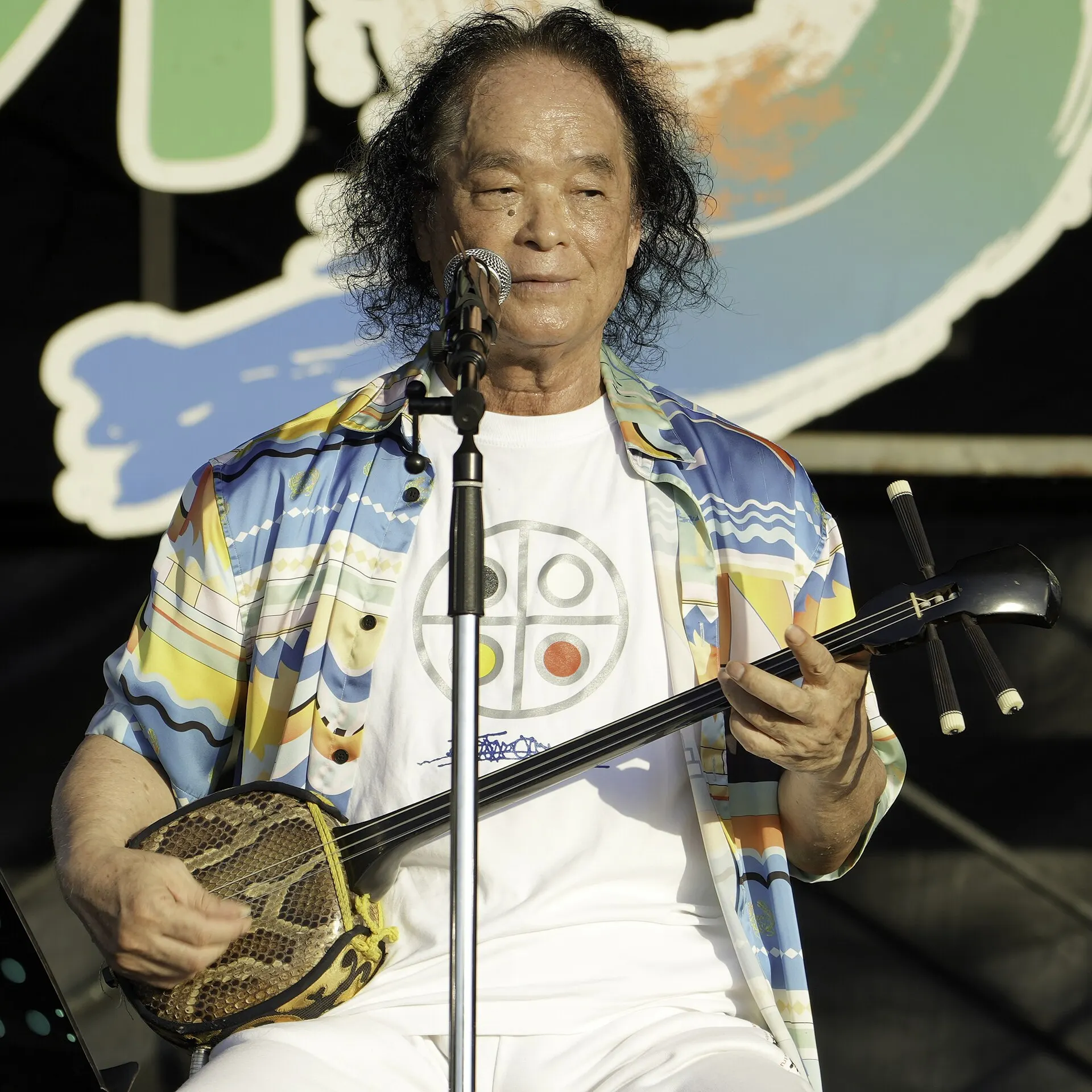
Shoukichi Kina, the musician from Koza who fused Okinawan folk with rock, on stage in October 2026.
Where to hear live music
Court music, dance and kumiodori: the National Theatre Okinawa in Urasoe (Serikyaku, near the Naha Port area) has a regular programme with English information on its website. Book ahead for kumiodori.
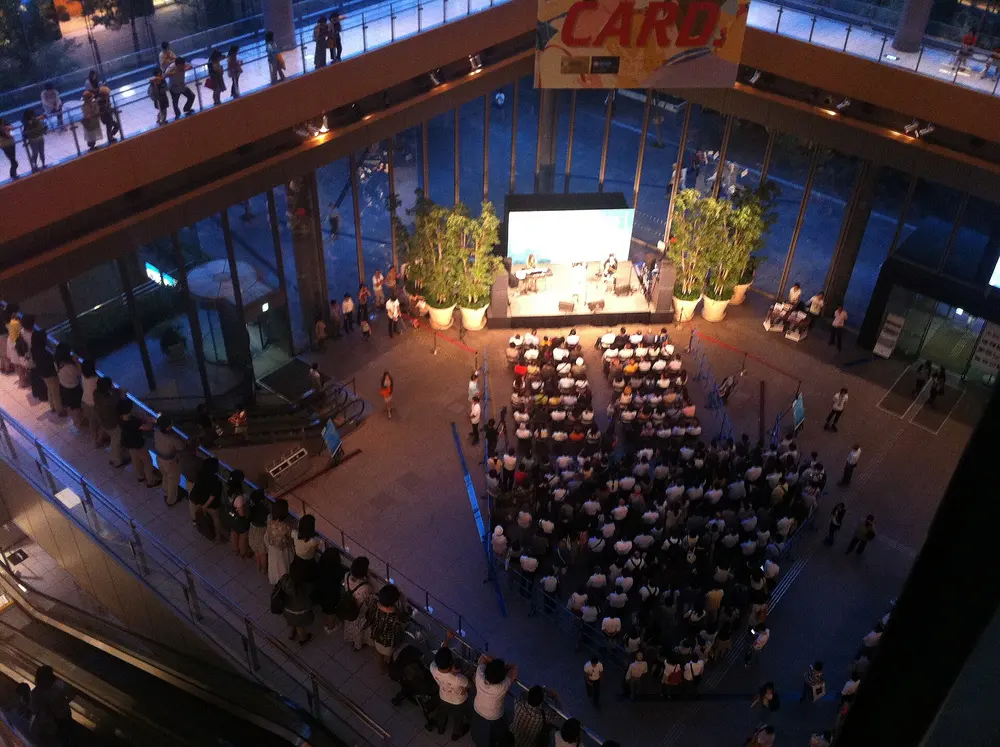
Min'yō live houses and izakaya in Naha: several restaurants on and around Kokusai-dōri and in Makishi and Matsuo stage folk-song sets every evening, typically two to four short sets between about 19:00 and 22:00, with dinner and drinks. Times and seat charges vary and change, so check the venue's own listing on the day. Expect to join the kachāshī at the end.
Koza (Okinawa City): the old base-town streets around Gate 2 Street and Park Avenue still have live houses, from rock and blues to min'yō; a guided night walk is a good introduction.
Ishigaki and Miyako: island-song bars in Ishigaki town and Hirara offer Yaeyama and Miyako songs; ask your accommodation which are playing that week.
Amami: in Naze, shima-uta is performed at some restaurants and at local events; the Amami Park cultural facility in Kasari presents Amami culture.
Festivals: the Okinawa Zentō Eisa Festival (September), village Eisa in the lunar Obon season, the Naha Great Tug-of-War (October) and the Shuri Castle festival events in autumn all have music. See events.
Koza nightlife and city-pop walking tour
An evening walking tour of Koza (Okinawa City), its bars and its music.
Check availabilityBook via GetYourGuideTour listings are on GetYourGuide. Prices, times and cancellation terms are shown live on each listing and can change; Ryukyu.com may earn a commission at no extra cost to you.
Learn, listen, take a sanshin home
Sanshin shops in Naha sell instruments from beginner models with synthetic skin to hand-made professional instruments; genuine python skin is regulated under the Washington Convention (CITES), so ask the shop about export papers if you plan to take one abroad. A lesson before you buy helps you choose.
Our pick of hands-on experiences on GetYourGuide:
Frequently asked questions
What is the difference between sanshin and shamisen?
The sanshin is the Okinawan instrument, smaller, with a snakeskin body, played with a finger plectrum. The Japanese shamisen developed from it in the 16th century and is larger, with cat or dog skin (today often synthetic) and a large plectrum.
When is Eisa season?
Around Obon on the lunar calendar, in August or early September. The Okinawa Zentō Eisa Festival in Okinawa City was held on 4–6 September 2026; lunar Obon in 2027 falls on 14–16 August.
Where can I see kumiodori?
At the National Theatre Okinawa in Urasoe, which stages kumiodori and Ryukyu dance regularly (a kumiodori performance was scheduled for 19 December 2026).
What is shima-uta?
Island song: originally the village folk songs of Amami, now used for the folk songs of all the Ryukyu Islands.
Sources and official information
Facts were checked against these official sources in November 2026. Opening hours, prices and timetables change, so confirm before you go.
- nt-okinawa.or.jp
- ich.unesco.org
- zentoeisa.com
- ryukyushimpo.jp
- pref.okinawa.jp
- bunka.nii.ac.jp
- env.go.jp
- ja.wikipedia.org
- ja.wikipedia.org
Ryukyu.com is an independent guide, not the official site of any tourism board, government, airline, port or ferry operator. Some links are affiliate links: tours go to GetYourGuide and stays go to Booking.com, and we may earn a commission at no extra cost to you.