In short
- A kingdom of its own: for more than four centuries, from the unification of 1429 to 1879, the Ryukyu Islands were an independent kingdom ruled from Shuri, a tributary of China and a hub of East Asian sea trade.
- Two masters: after the Satsuma invasion of 1609 the kingdom was controlled by a Japanese domain while it kept sending tribute to China.
- Annexation: Japan abolished the kingdom in 1879 and created Okinawa Prefecture; the king was taken to Tokyo.
- War and occupation: the Battle of Okinawa in 1945 killed some 200,000 people, around half of them Okinawan civilians, by the prefecture's count. The islands were then under US administration until 15 May 1972.
- Today: Okinawa hosts about 70% of the area of facilities used exclusively by US forces in Japan, a source of long-running political debate.
Why Ryukyu history feels different
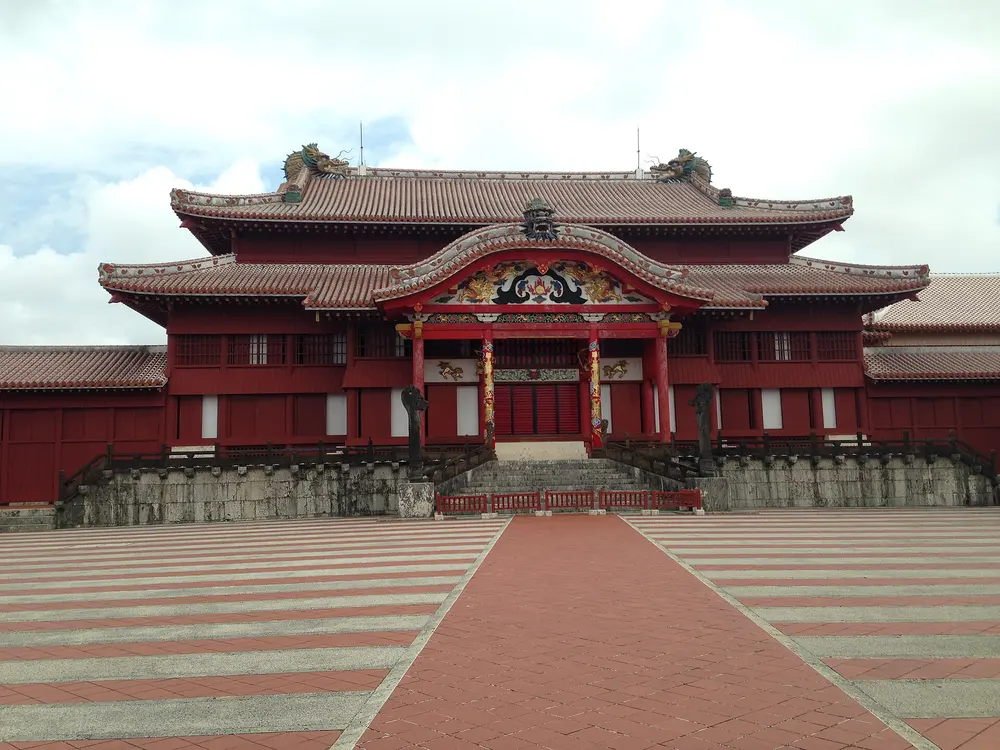
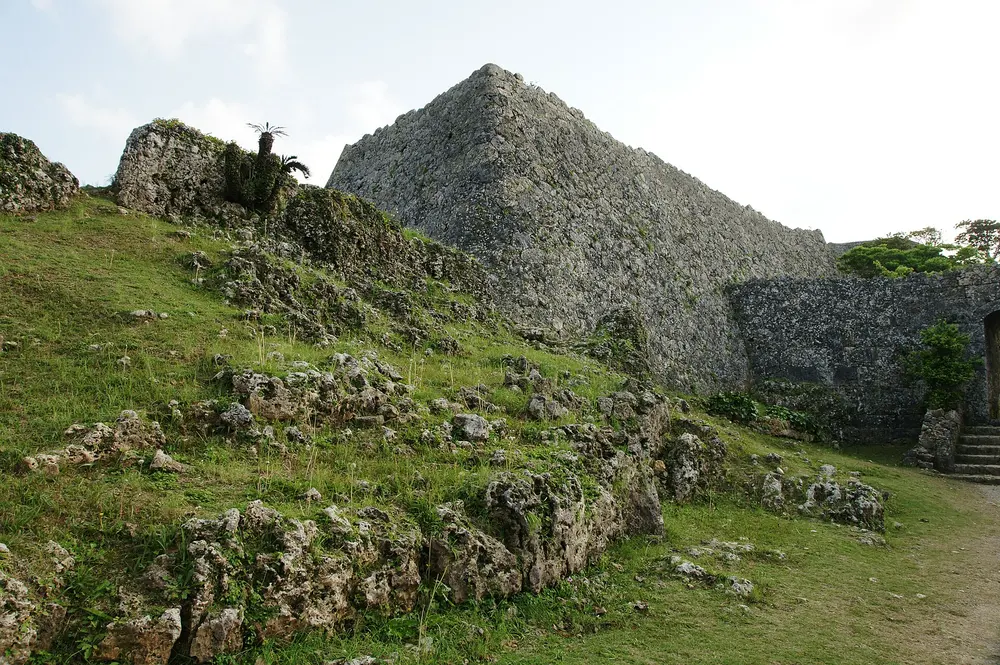
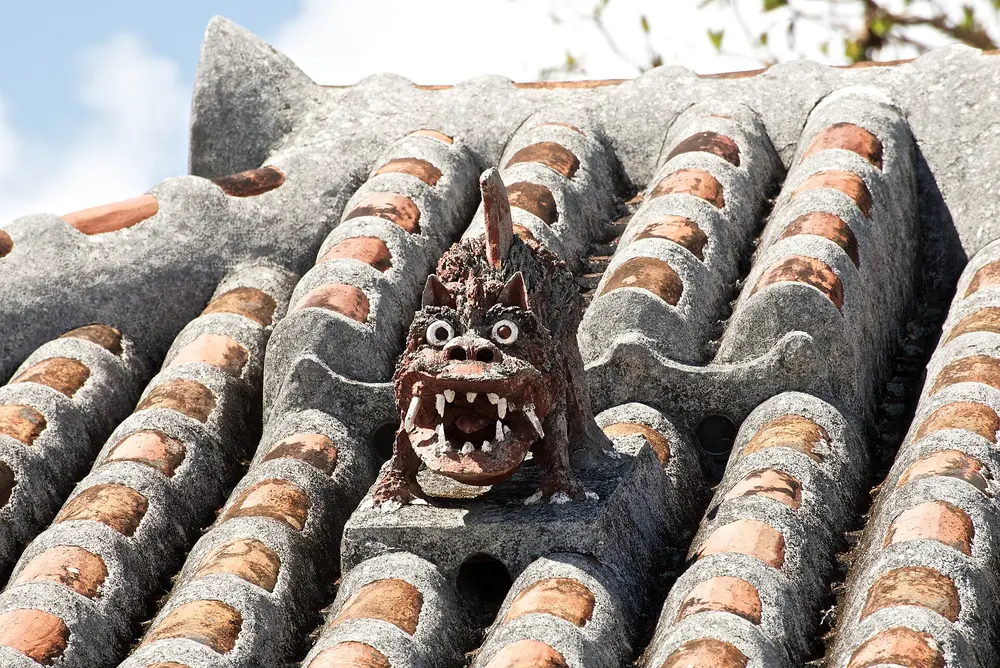
Travellers who arrive from Tokyo or Osaka notice it within hours: the castles are curving limestone walls rather than white keeps, the roofs are red tile with a guardian shisa on top, the old place names do not read like Japanese, and the museums tell a story in which Japan arrives late and not always as a friend. That is because for most of their recorded history the Ryukyu Islands (琉球) were not part of Japan at all.
This page gives the main line of that history, from the age of rival lords to the present, as neutrally as the evidence allows. Dates and figures come from the Okinawa Prefectural Government, UNESCO and the major Okinawan newspapers; where interpretations differ, the page says so. The Shuri Castle, World Heritage and culture pages go deeper into the places where you can see this history.
The age of the gusuku and the Three Kingdoms (12th–14th centuries)
People have lived on the islands for many thousands of years; the Minatogawa skeletons found in the south of Okinawa Main Island are among the oldest human remains in Japan. For a long time the islanders lived by fishing and gathering, in what archaeologists call the shell-mound period.
From around the 12th century farming spread, villages grew and local chieftains known as aji built stone-walled strongholds called gusuku on hilltops. By the 14th century three rival kingdoms had formed on Okinawa Main Island: Hokuzan in the north, centred on Nakijin; Chūzan in the middle, first at Urasoe and later Shuri; and Nanzan in the south. This is the Sanzan (Three Mountains) period.
In 1372 Satto, king of Chūzan, answered a summons from the founding emperor of China's Ming dynasty and sent tribute. The rulers of Hokuzan and Nanzan soon did the same. The tributary relationship gave Ryukyu access to Chinese trade, Chinese ships, and Chinese experts who settled at Kume village in Naha.
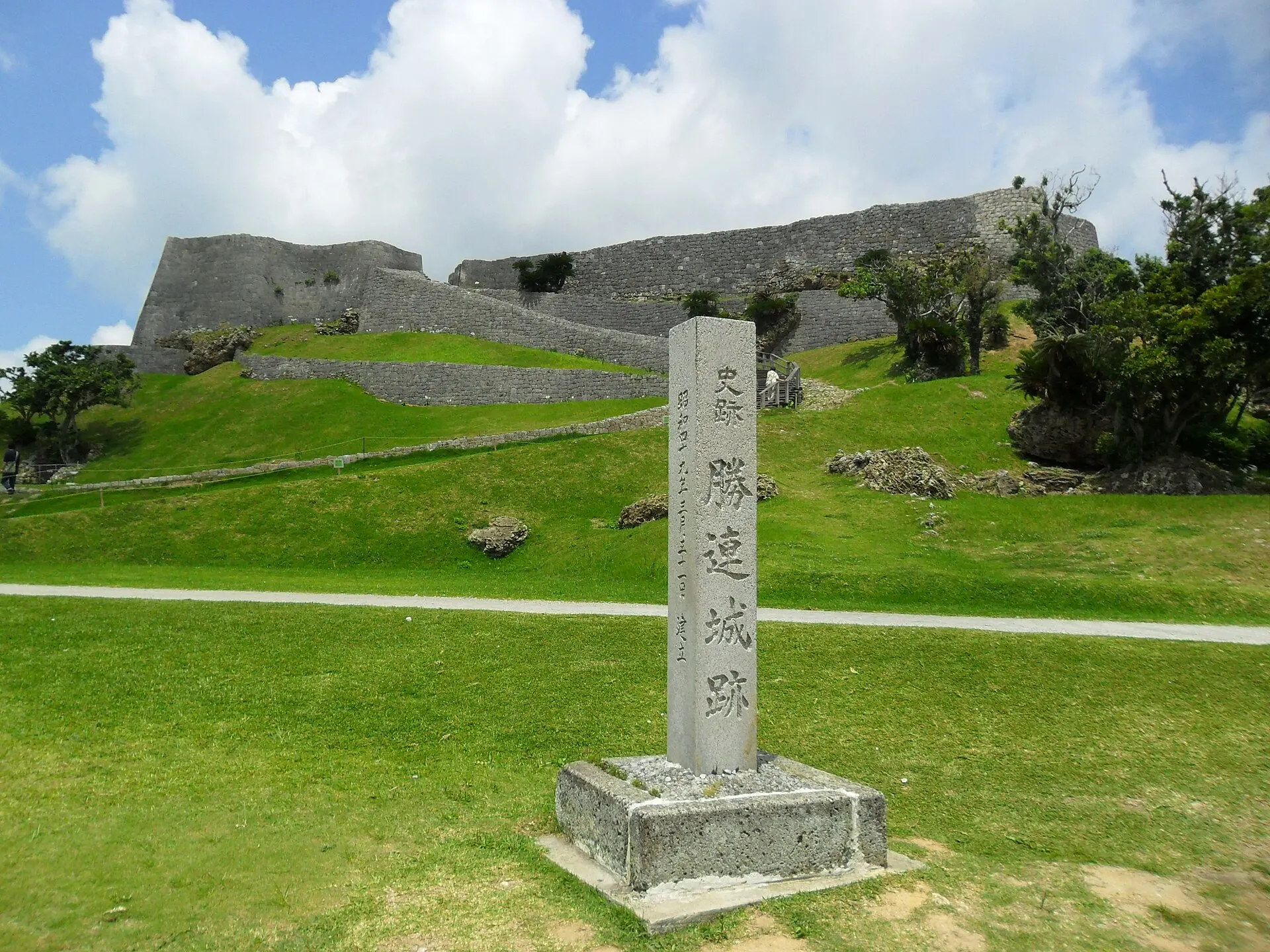
Katsuren Castle in Uruma, home of the 15th-century lord Amawari: a typical gusuku of curving limestone walls.
The Ryukyu Kingdom: unification and the age of trade (1429–1609)
Shō Hashi, a lord from Sashiki in the south, took Chūzan in the early 15th century, conquered Hokuzan and finally Nanzan, and by 1429 ruled the whole island from Shuri. His line, the First Shō dynasty, was overthrown in 1470 by an official named Kanemaru, who took the throne as Shō En and founded the Second Shō dynasty, which ruled until 1879.
Under Shō Shin (reigned 1477–1526) the kingdom was centralised: local lords were brought to live in Shuri, a ranked bureaucracy was created and a state religion was organised under a high priestess, the Kikoe-ōgimi, with priestesses (noro) in every village. Many of the sacred places you can visit today, from Sefa-utaki to the stone gate of Sonohyan-utaki, belong to this system.
The 15th and 16th centuries were the kingdom's golden age of trade. Ryukyu ships carried goods between China, Japan and Korea and as far as Siam, Malacca, Java and Sumatra: Chinese silk and porcelain, Japanese swords and lacquer, Southeast Asian spices and sappanwood. A bell cast for the Shuri Castle main hall in 1458 described the kingdom as a 'bridge between all nations' (bankoku shinryō), a phrase still quoted in Okinawa today.
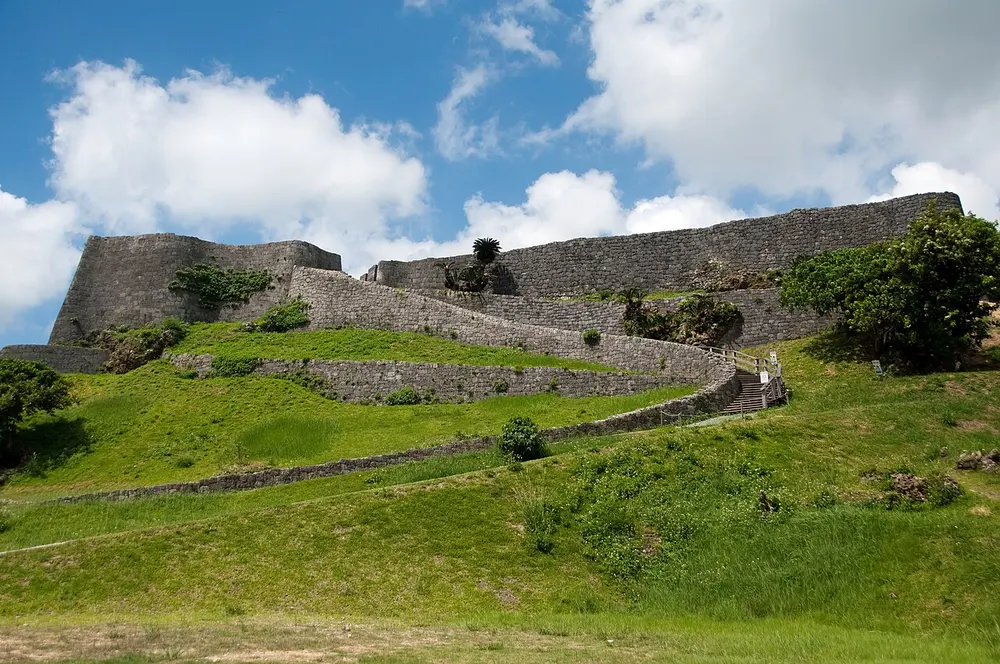
Katsuren Castle ruins and museum guided tour
A guided visit to the UNESCO-listed Katsuren castle ruins in Uruma and the museum at its foot.
Check availabilityBook via GetYourGuideUrasoe Castle, royal tomb and war history walk
A guided walk in Urasoe linking the castle ruins, the Urasoe royal tombs and the war history of the ridge.
Check availabilityBook via GetYourGuideTour listings are on GetYourGuide. Prices, times and cancellation terms are shown live on each listing and can change; Ryukyu.com may earn a commission at no extra cost to you.
Satsuma and the kingdom between two powers (1609–1872)
In 1609 the Shimazu clan of the Satsuma domain in southern Kyushu, with the approval of the Tokugawa shogunate, invaded with an army of about 3,000 men. Shuri surrendered within weeks, and King Shō Nei was taken to Kagoshima. Satsuma took the Amami Islands under its direct rule and imposed tribute and supervision on the rest of the kingdom.
The kingdom was not dissolved. Satsuma wanted Ryukyu's China trade to continue, so Shuri kept sending tribute missions to Beijing and receiving Chinese investiture envoys, while also sending missions to Edo and following Satsuma's instructions. The arrangement, often called dual subordination, lasted more than 250 years.
This period produced much of what is now seen as classical Ryukyuan culture. The statesman Sai On (1682–1762), from Kume village, reformed forestry, flood control and finance. Kumiodori, the court music-drama, was first performed in 1719 for Chinese envoys. Bingata textiles, lacquerware, Tsuboya pottery and the court music of the sanshin flourished. In Miyako and Yaeyama, by contrast, the period is remembered for a harsh per-head tax that was abolished only in 1903.
Western ships and the end of the kingdom (1853–1879)
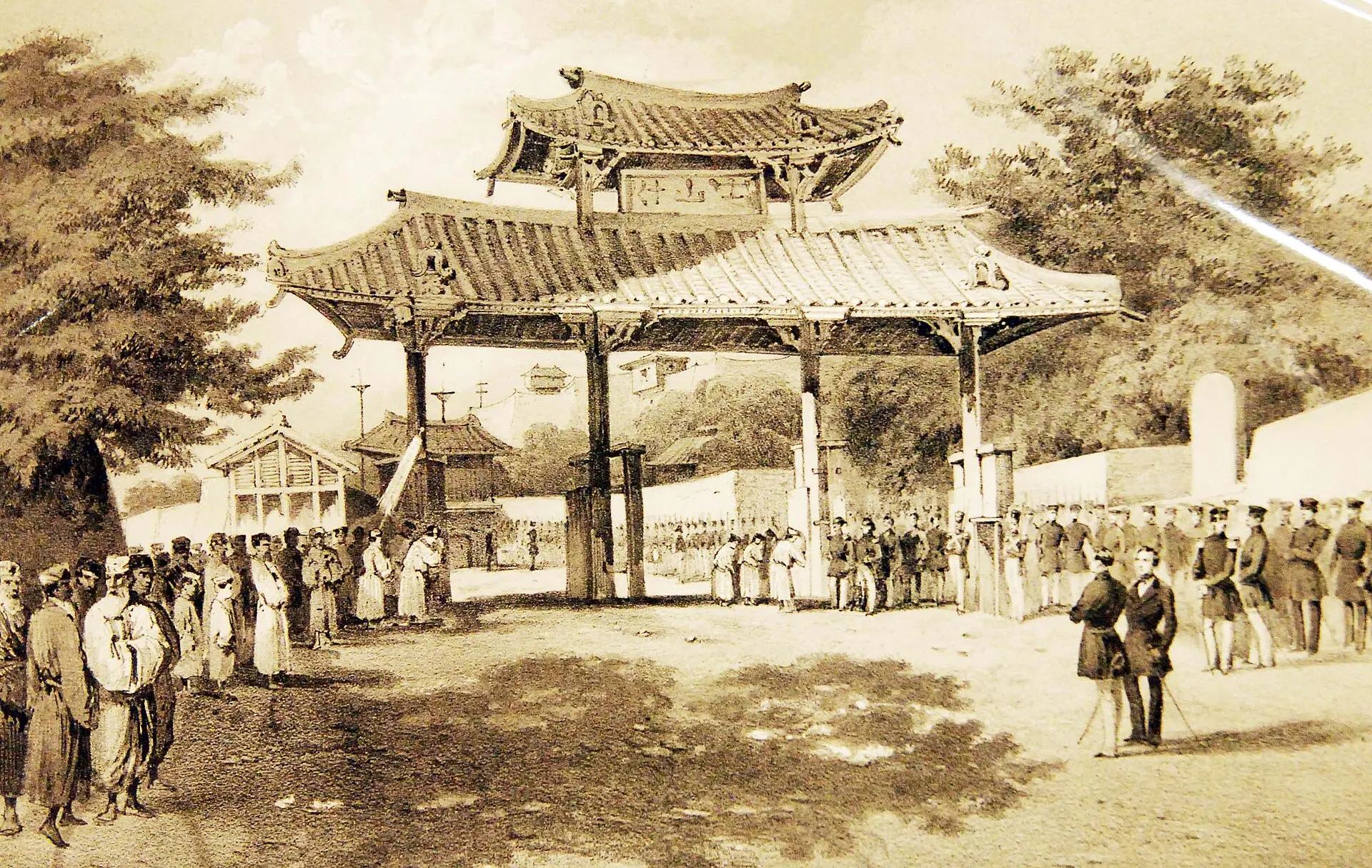
In the 19th century British, French and American ships called with growing frequency. In 1853 Commodore Matthew Perry used Naha as a base on his way to open Japan, marched to Shuri Castle uninvited, and in 1854 signed a compact with the kingdom; France and the Netherlands followed with their own agreements.
After the Meiji Restoration, Japan moved to absorb the kingdom. In 1872 the government declared it the Ryukyu Domain and its king a Japanese peer. In 1879, in what Japanese history calls the Ryukyu Disposition (Ryūkyū shobun), officials arrived with police and troops, abolished the domain and established Okinawa Prefecture. King Shō Tai was removed to Tokyo. Qing China protested, and a plan to divide the islands between the two states was discussed in 1880 but never concluded.
Okinawa then went through decades of assimilation policies, including the promotion of standard Japanese in schools at the expense of the local languages. Poverty, particularly the economic collapse of the 1920s, drove large-scale emigration to Hawaii, South America and mainland Japan; the descendants of those emigrants are the global Okinawan community that gathers for the World Uchinanchu Festival.
The Battle of Okinawa (1945)
In the last year of the Second World War Okinawa became the only part of Japan's home prefectures where a large land battle was fought among the civilian population. US forces landed on the Kerama Islands on 26 March 1945 and on the west coast of Okinawa Main Island at Yomitan and Kadena on 1 April. The Japanese 32nd Army, headquartered in tunnels under Shuri Castle, fought a long defensive battle and then withdrew to the south, where civilians were sheltering in caves.
Organised Japanese resistance ended in late June; 23 June is observed in Okinawa as Irei no Hi (Memorial Day), a prefectural holiday. The formal surrender in the Ryukyus was signed on 7 September 1945.
Okinawa Prefecture's estimate of the dead is 200,656: 188,136 on the Japanese side, of whom 122,228 were from Okinawa (including about 94,000 civilians), and 12,520 Americans. The Cornerstone of Peace at the Peace Memorial Park in Itoman, which lists the names of all who died, regardless of nationality or side, had 242,659 names as of 23 June 2026. The battle included forced mass suicides of civilians, the deaths of mobilised students such as the Himeyuri nursing corps, and the destruction of almost all historic buildings on the main island.
The southern battlefield is the most important historical landscape in Okinawa. The Okinawa Prefectural Peace Memorial Museum, the Himeyuri Peace Museum and the former Japanese Navy Underground Headquarters in Tomigusuku are sober and essential; the southern Okinawa guide gives practical details.
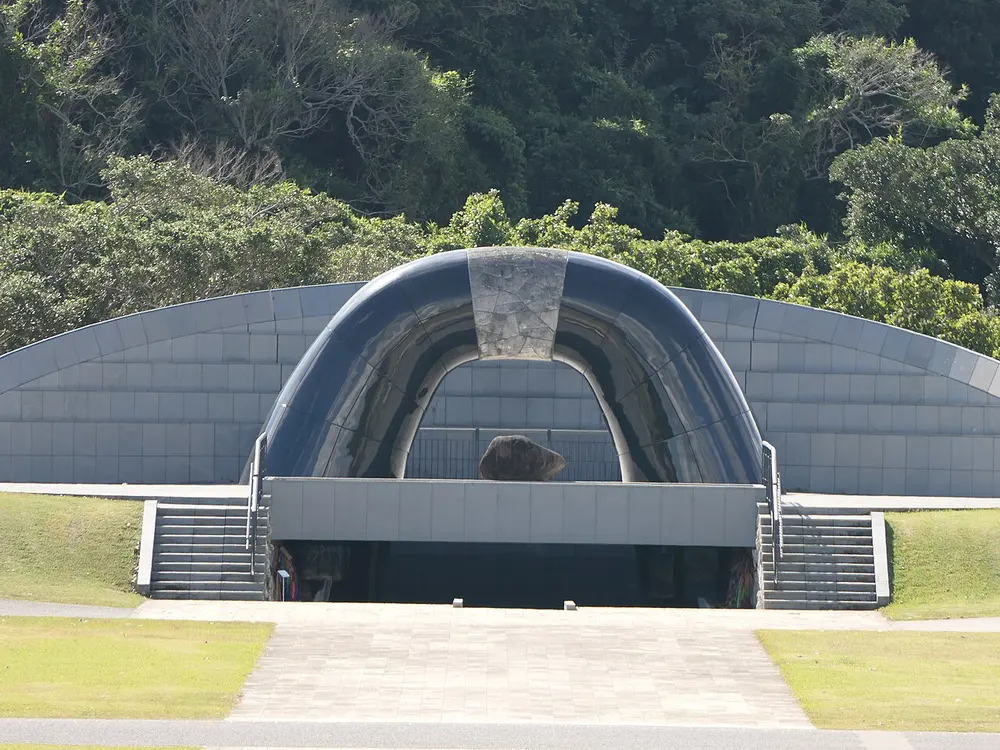
Peace Memorial Museum and Cornerstone of Peace tour
A guided visit to the Okinawa Prefectural Peace Memorial Museum and the Cornerstone of Peace at Mabuni, Itoman.
Check availabilityBook via GetYourGuideHimeyuri Memorial and Peace Museum guided tour
A guided visit to the Himeyuri memorial and peace museum in Itoman, remembering the student nurses of 1945.
Check availabilityBook via GetYourGuideNaha: the WWII Navy Underground Headquarters
A guided visit to the former Japanese Navy Underground Headquarters in Tomigusuku and its story of 1945.
Check availabilityBook via GetYourGuidePrivate WWII history tour with multilingual guide
A private tour of Okinawa's Second World War sites with a guide speaking several languages.
Check availabilityBook via GetYourGuideTour listings are on GetYourGuide. Prices, times and cancellation terms are shown live on each listing and can change; Ryukyu.com may earn a commission at no extra cost to you.
US administration (1945–1972)
After the war Okinawa and the other Ryukyu islands were placed under US military government. When the San Francisco Peace Treaty came into force on 28 April 1952 and Japan regained its sovereignty, the Ryukyus stayed under US administration; Okinawans still mark the date. The Amami Islands were returned to Japan earlier, on 25 December 1953, and rejoined Kagoshima Prefecture.
The US built and expanded large bases, taking farmland, sometimes by force, in the 1950s, and the islands used the US dollar from 1958 and drove on the right. A local Government of the Ryukyu Islands existed under the US Civil Administration. A broad reversion movement grew through the 1960s, and tensions peaked in incidents such as the Koza riot of December 1970.
Okinawa returned to Japanese administration on 15 May 1972. The yen replaced the dollar, and on 30 July 1978 the islands switched overnight to driving on the left, a changeover still remembered by its date, '730'.
Voices from life alongside Kadena Air Base
A guided tour of the Kadena area that looks at everyday life next to the large US air base.
Check availabilityBook via GetYourGuideTour listings are on GetYourGuide. Prices, times and cancellation terms are shown live on each listing and can change; Ryukyu.com may earn a commission at no extra cost to you.
Okinawa today: development and the base question
Since 1972 Okinawa has received large national development budgets, tourism has become its main industry, and Naha has grown into a modern city. It also remains Japan's prefecture with the lowest average income in many statistics, and the most heavily burdened by military bases.
According to Okinawa Prefecture, the prefecture, with about 0.6% of Japan's land area, hosts roughly 70% of the area of facilities used exclusively by US forces in Japan (70.3% in the prefecture's 2020 figures). As of 1 January 2025 there were 31 such facilities covering 18,454 hectares, about 8% of the prefecture's land. The planned relocation of Marine Corps Air Station Futenma to a new runway at Henoko in Nago, agreed between the Japanese and US governments, has been opposed by successive prefectural administrations; in a prefectural referendum in February 2019, about 72% of votes cast opposed the landfill at Henoko. The national government has continued construction. Views within Okinawa differ, and travellers will see both protest signs and base-town businesses.
For visitors, the history is present everywhere: in the ruins of gusuku, in the war memorials, in the American-style diners and drive-ins of Chatan and Koza, and in a renewed pride in Ryukyuan language, music and crafts. The reopening of the Shuri Castle main hall in November 2026 was celebrated as a moment of that renewal.
Timeline
- c. 12th century
Gusuku period
Farming spreads; local lords build stone strongholds.
- 1372
Tribute to Ming China
Chūzan's king Satto sends the first tribute mission.
- 1429
Unification
Shō Hashi completes the conquest of the Three Kingdoms.
- 1470
Second Shō dynasty
Shō En takes the throne; his line rules until 1879.
- 1609
Satsuma invasion
The Shimazu of Satsuma conquer Shuri; Amami comes under Satsuma's direct rule.
- 1719
Kumiodori
The court drama is first performed for Chinese envoys.
- 1853–54
Perry
Commodore Perry visits Shuri and signs a compact with the kingdom.
- 1879
Okinawa Prefecture
Japan abolishes the kingdom; King Shō Tai is moved to Tokyo.
- 1945
Battle of Okinawa
US landings from 26 March; about 200,000 dead.
- 1952
Treaty comes into force
Japan regains sovereignty; the Ryukyus stay under US administration.
- 1953
Amami returned
The Amami Islands rejoin Kagoshima Prefecture on 25 December.
- 15 May 1972
Reversion
Okinawa returns to Japanese administration.
- 2000
World Heritage
Nine gusuku and related sites inscribed by UNESCO.
- 2019
Shuri Castle fire
The reconstructed main hall burns on 31 October.
- 2021
Natural heritage
Yanbaru, Iriomote, Amami-Oshima and Tokunoshima inscribed.
- 23 Nov 2026
Seiden reopens
Shuri Castle's rebuilt main hall opens to the public.
Where to see this history
Kingdom: Shuri Castle, Tamaudun and Shikinaen in Naha; the gusuku ruins of Nakijin, Zakimi, Katsuren and Nakagusuku; Sefa-utaki in Nanjō; the Okinawa Prefectural Museum in Naha's Omoromachi district.
War: the Peace Memorial Park and Himeyuri museum in Itoman, the former Navy Underground Headquarters in Tomigusuku, and Urasoe's Maeda Escarpment (Hacksaw Ridge).
US era: Koza (Okinawa City) and Chatan, where base culture shaped food and music; the central Okinawa guide has details. A guided tour is worth it for the war sites in particular: the context matters, and guides know which places welcome visitors and how to behave there.
Frequently asked questions
Was Okinawa always part of Japan?
No. Until 1879 the islands were the Ryukyu Kingdom, which paid tribute to China and, from 1609, was also controlled by Japan's Satsuma domain. Japan annexed it in 1879 as Okinawa Prefecture.
When did Okinawa return to Japan after the war?
On 15 May 1972. The Amami Islands, to the north, had returned earlier, on 25 December 1953.
How many people died in the Battle of Okinawa?
Okinawa Prefecture's estimate is 200,656 dead, including about 94,000 Okinawan civilians. The Cornerstone of Peace lists 242,659 names (June 2026), as it includes all war dead connected with Okinawa.
What is Irei no Hi?
Okinawa Memorial Day, 23 June, marking the end of organised fighting in 1945. A memorial ceremony is held at the Peace Memorial Park in Itoman.
Why are there so many US bases in Okinawa?
The bases were built during the battle and the 27 years of US administration, and remained after 1972 under the Japan–US security treaty. Okinawa hosts about 70% of the area of US exclusive-use facilities in Japan (prefecture figures).
Sources and official information
Facts were checked against these official sources in November 2026. Opening hours, prices and timetables change, so confirm before you go.
- pref.okinawa.jp
- pref.okinawa.jp
- pref.okinawa.lg.jp
- whc.unesco.org
- oki-park.jp
- peace-museum.okinawa.jp
- himeyuri.or.jp
- okimu.jp
- archives.pref.okinawa.jp
- ryukyushimpo.jp
Ryukyu.com is an independent guide, not the official site of any tourism board, government, airline, port or ferry operator. Some links are affiliate links: tours go to GetYourGuide and stays go to Booking.com, and we may earn a commission at no extra cost to you.