- Region
- Miyako Islands, Okinawa Prefecture, Japan
- How long
- 3–5 nights
- Airports
- Miyako (MMY), 10–15 min from Hirara; Shimojishima (SHI) on Shimoji, across the Irabu Bridge
- From Naha
- About 50–55 min by air (JTA, ANA, RAC to Miyako; Skymark to Shimojishima), as checked November 2026
- Bridges
- Irabu Bridge 3,540 m (2015), Kurima Bridge 1,690 m (1995), Ikema Bridge 1,425 m (1992)
- Ferries
- No passenger ferry from Naha or Ishigaki; Hirara Port has the ferry to Tarama
In short
- What it is: a group of low, flat coral-limestone islands about 290 km south-west of Naha. Miyakojima, Irabu, Shimoji, Ikema and Kurima are joined by road bridges, so one rental car reaches all five.
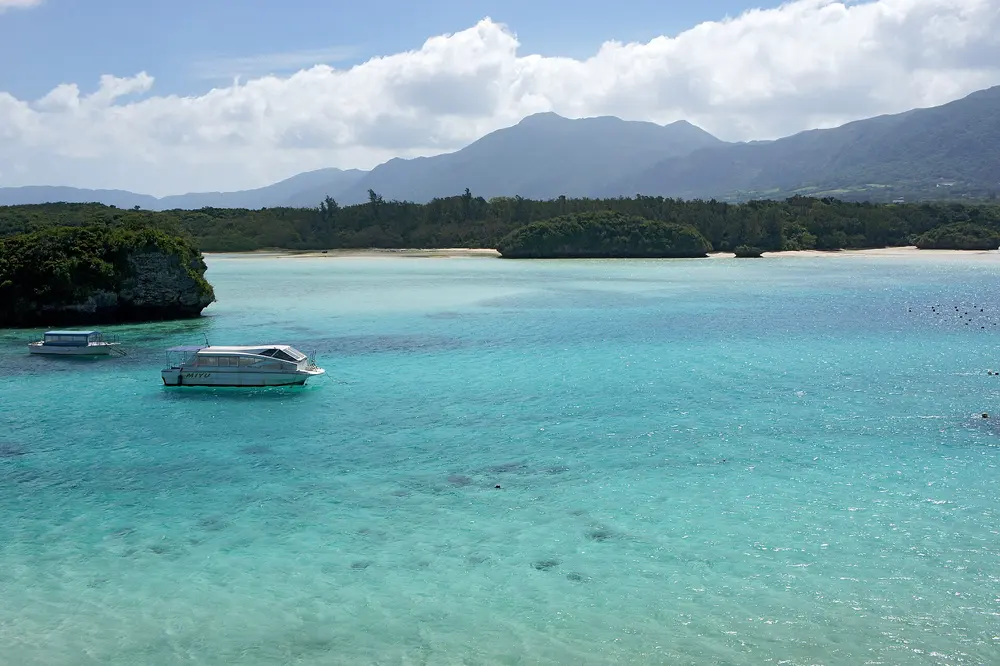
- Why go: the clearest water in the Ryukyus, long white beaches such as Yonaha Maehama, easy turtle snorkelling, the cliffs of Higashi-Hennazaki and the turquoise shallows at the end of the Shimojishima Airport runway.
- Getting there: fly. Miyako Airport has direct flights from Tokyo Haneda, Nagoya, Kansai, Naha and Ishigaki, and Shimojishima Airport has Skymark plus international flights from Taipei, Taichung, Seoul and Busan (as checked November 2026). There is no passenger ferry from Naha.
- How long: 3–5 nights. Base in Hirara for restaurants and value, on the south coast (Maehama, Shigira) for resorts, or on Irabu for quiet and sunsets.
- Getting around: a rental car is close to essential. Buses exist but are infrequent, and the sights are spread across about 40 km of island.
Why the Miyako Islands feel different
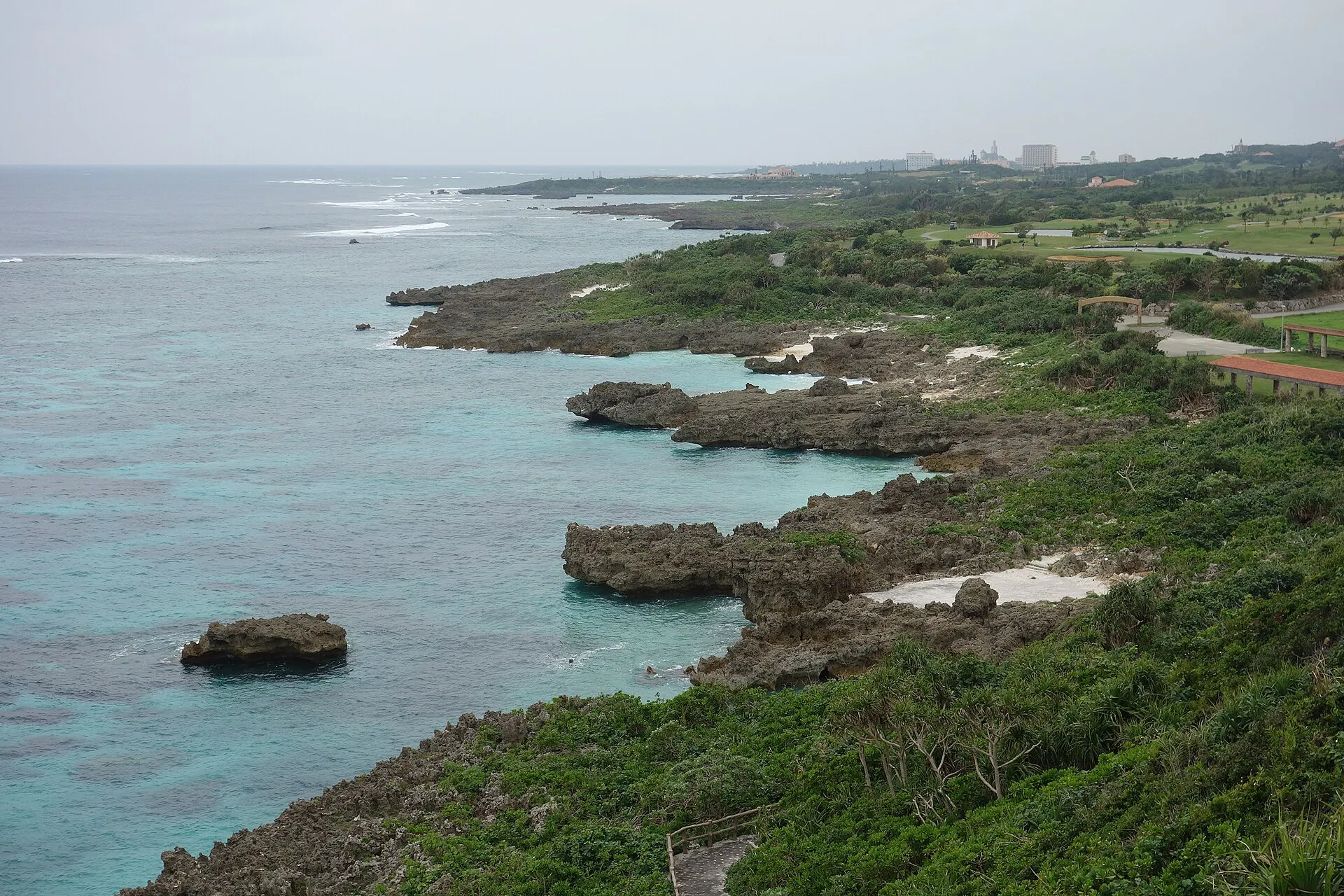
Miyako has no mountains and no rivers. The islands are raised coral limestone, with the highest ground on Miyakojima barely over 100 m, and rain soaks straight into the rock instead of running off into the sea. With no rivers carrying red soil and silt onto the reefs, the water around Miyako is unusually clear. Locals and the tourist industry call the colour Miyako blue, and in good light the shallows over white sand look almost luminous.
The flatness shapes the whole trip. There is no forest interior to explore as on Iriomote or Yanbaru, and few viewpoints higher than a lighthouse. What Miyako has instead is coast: long beaches facing every direction, limestone capes, reef lagoons, sandbars that appear at low tide, and a ring of smaller islands that you can drive to. Since the Irabu Bridge opened in 2015, five of the inhabited islands are connected by road, so you can sleep in one place and spend each day on a different island.
Miyako is also a separate cultural world from both Okinawa Main Island and the Yaeyama Islands further south. The Miyako language (Myaaku futsu) is distinct from the Okinawan of Naha, the islands have their own folk songs and festivals, and the local food has its own versions of Okinawa soba and champuru. The culture and music pages explain the wider Ryukyu background.
Book tours in MiyakoLive times, prices and free cancellation terms on GetYourGuide.
Check availabilityThe islands at a glance
Miyakojima City covers six inhabited islands: Miyakojima, Ikema, Ogami, Irabu, Shimoji and Kurima. Five of them are connected by bridges; Ogami is reached by a short ferry from Shimajiri. Tarama, halfway to Ishigaki, belongs to the Miyako group but to a separate village and is reached by air or a two-hour ferry; it has its own page, Tarama and the small islands.
| Island | How you reach it | Best for |
|---|---|---|
| Miyakojima | Main island; Miyako Airport, Hirara Port | Hirara town, Yonaha Maehama, Sunayama, Higashi-Hennazaki, Shigira, Imgya |
| Irabu | Irabu Bridge (3,540 m) from Hirara | Quiet villages, Toguchi beach, cliffs at Sabaoki, sunsets |
| Shimoji | Short causeways and channels from Irabu | Shimojishima Airport and 17END, Sawada and Nakanoshima beaches |
| Ikema | Ikema Bridge (1,425 m) from the north tip of Miyakojima | Coastal drive, wetlands, the boat departures for Yabiji reef |
| Kurima | Kurima Bridge (1,690 m) from Maehama | Views back to Maehama, cafés, a slow half day |
| Ogami | Ferry from Shimajiri port | A tiny sacred island; visit with respect for local rules |
Miyakojima and Hirara
Hirara on the west coast is the only town of any size, with the port, the city offices, most of the restaurants and izakaya, a supermarket or two, and budget and mid-range hotels. It is the practical base if you want to walk out to dinner each evening. Miyako Airport is about 10–15 minutes' drive away on the southern edge of town.
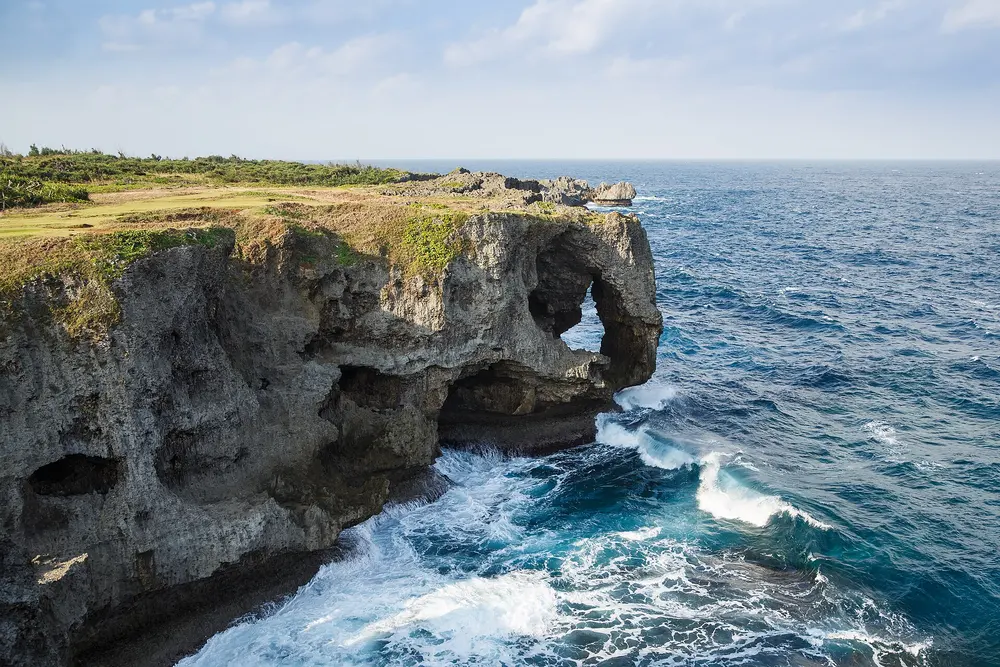
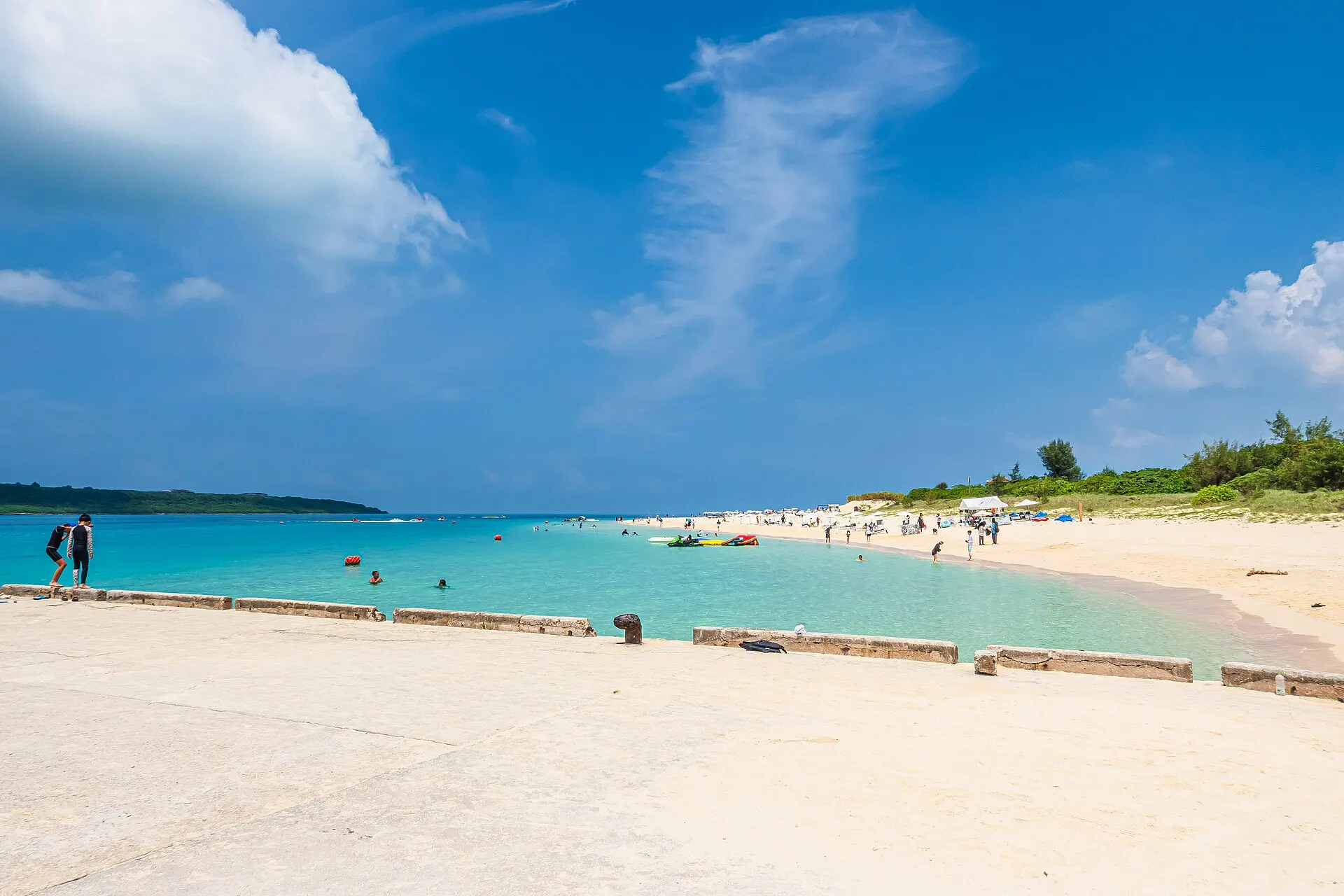
South of Hirara the road follows the coast to Yonaha Maehama, the long white beach that faces Kurima Island and appears on most posters of Miyako. Further east, the Shigira area has a cluster of resort hotels, a golf course and the sheltered inlet of Imgya Marine Garden, a natural cove with walkways that suits gentle snorkelling. The south-east coast ends at Higashi-Hennazaki, a narrow cape about 2 km long with cliffs on both sides and a lighthouse at the tip.
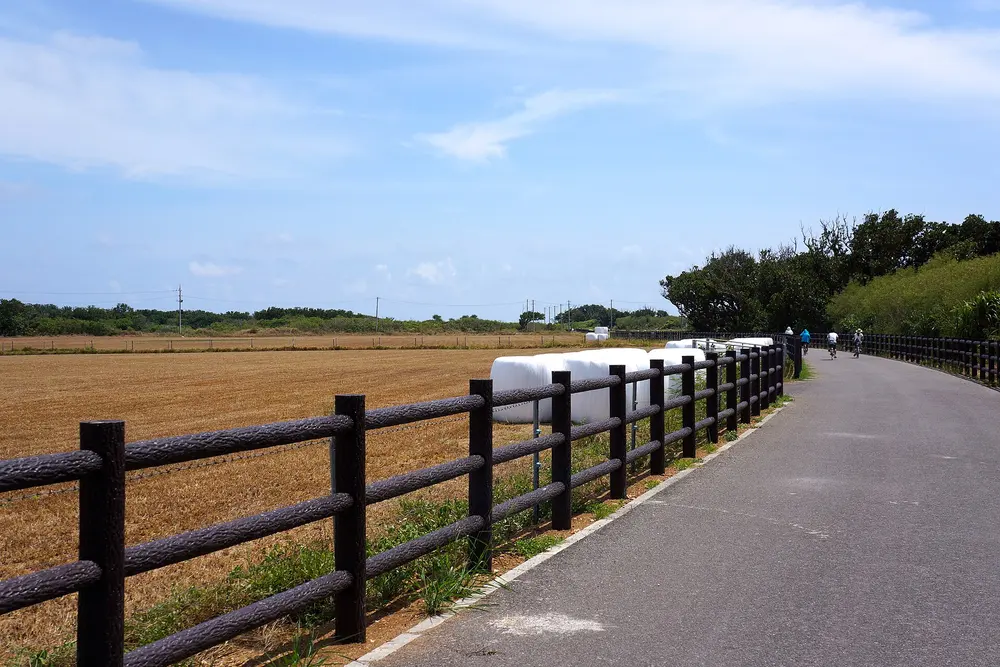
North of Hirara are Sunayama Beach, reached over a sand dune and known for its rock arch, and the road to Ikema. The interior is sugar cane, tobacco and small villages; it is pleasant to drive through, but the reasons to come are on the coast. Read the full list in things to do on Miyako.
Irabu and Shimoji: across the Irabu Bridge
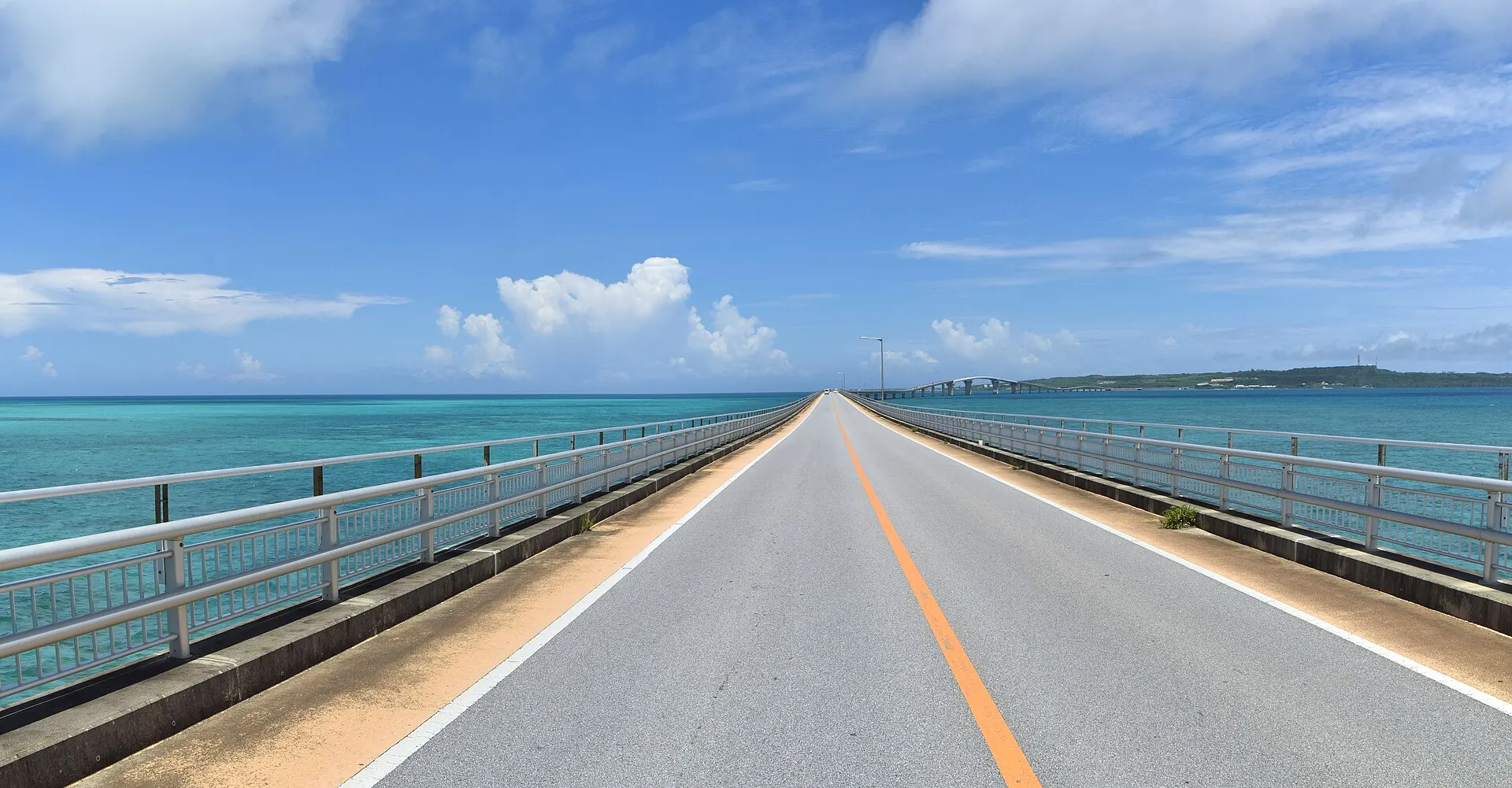
The Irabu Bridge opened on 31 January 2015 and runs 3,540 m from Hirara's northern edge to Irabu. It is the longest toll-free bridge in Japan, and the drive across, with the hump in the middle to let ships pass, is one of the most photographed in the islands. Before it opened, Irabu and Shimoji were reached by ferry; today the crossing takes a few minutes.
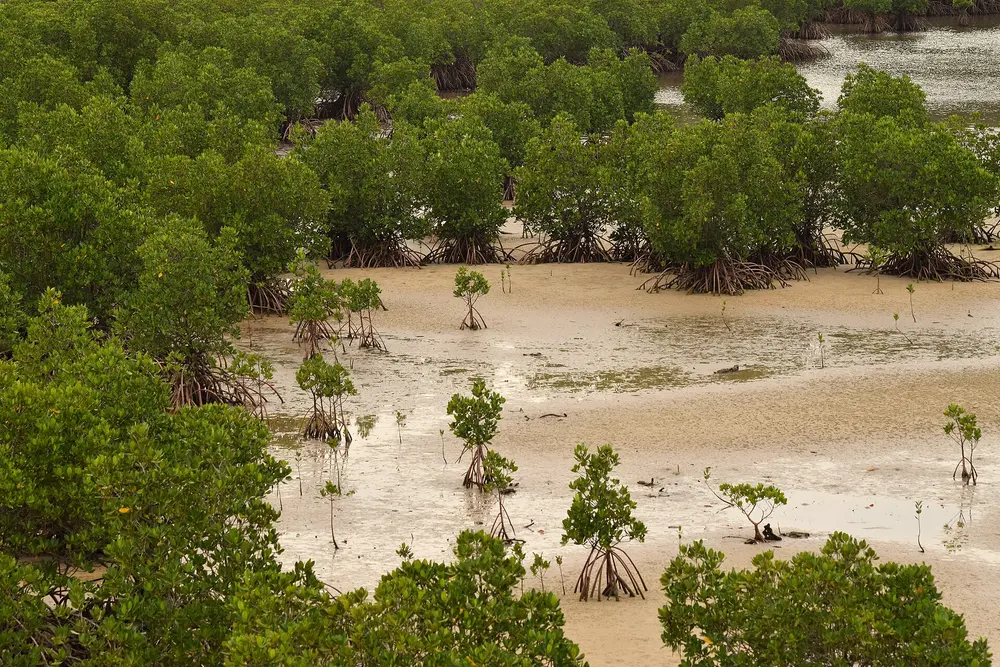
Irabu is the larger and more lived-in of the two, with fishing villages, the beach at Toguchi, cliffs and viewpoints along the north coast, and an increasing number of villas and boutique hotels. Shimoji, separated from Irabu only by narrow mangrove-lined channels, is where Miyako Shimojishima Airport sits. It was built as a pilot-training airfield and has a 3,000 m runway; a new passenger terminal opened in March 2019.
The northern end of that runway, nicknamed 17END, is famous for the colour of the shallow water around it. At low tide the sand banks show and the reef turns pale turquoise; at high tide it is all deep blue. Stay outside the airport fence and in the public areas, and do not fly drones there: it is an operating airport. Nearby Sawada Beach has large boulders scattered across the reef flat, and Nakanoshima is a sheltered snorkelling cove. The beaches and diving page has the details.
Ikema, Kurima and the Yabiji reef
Ikema is a small round island off the northern tip of Miyakojima, joined by the 1,425 m Ikema Bridge of 1992. The coast road around it is a short, pretty drive past fishing harbours and a wetland in the middle of the island. North of Ikema, between about 5 and 22 km offshore, lies Yabiji (八重干瀬), the largest coral reef complex in Japan, spread over roughly 17 km north to south. It is protected as a national Place of Scenic Beauty and Natural Monument. Most of it is always under water; around the largest spring low tides, especially in spring, parts of the reef emerge and boats run snorkelling and landing trips.
Kurima sits just off Maehama, linked by the 1,690 m Kurima Bridge of 1995. It is a quiet island of farms, a few cafés and guesthouses, with a viewpoint looking back across the channel to Maehama. Combine it with a Maehama afternoon.
The sea: beaches, turtles and reefs
Miyako's beaches are its main attraction, and they differ more than you might expect. Yonaha Maehama is long, wide and shallow, with soft sand and good facilities in summer. Sunayama is smaller, more dramatic, and needs care in waves. Aragusuku and Yoshino on the east coast have reef close to shore and are known for snorkelling; at Yoshino, coral and fish start a few metres from the sand. Imgya is sheltered and calm. Toguchi on Irabu is a broad sandy beach, and Nakanoshima on Shimoji is a rocky cove with good coral.
Green sea turtles feed on seagrass in several shallow bays, and turtle snorkelling is the most popular activity on the island. The rules are simple and important: do not touch, chase or block a turtle, stay several metres away, and never stand on coral. Licensed guides know the sites where turtles feed and where currents are safe. In summer, box jellyfish (habu-kurage) can appear in shallow water; swim at beaches with jellyfish nets in season, and carry vinegar as the beaches advise. See diving and snorkelling in the Ryukyus for the general safety rules.
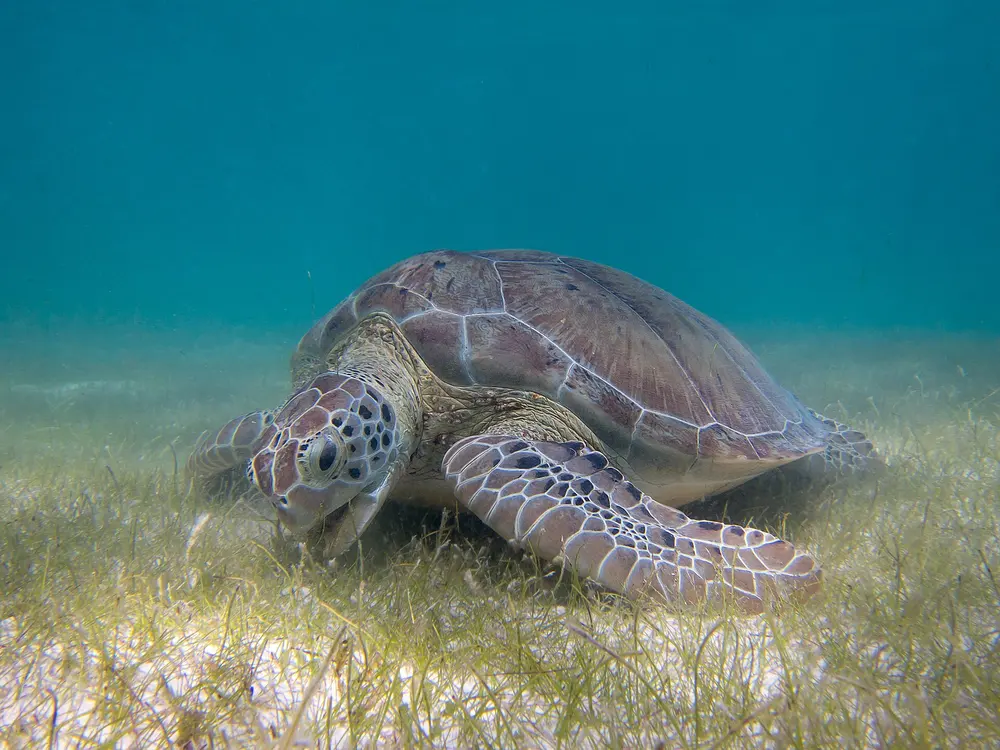
Miyako: sea turtle snorkelling tour
A guided snorkel at a Miyako bay where green sea turtles feed. Check the listing for minimum age, gear and meeting point.
Check availabilityBook via GetYourGuide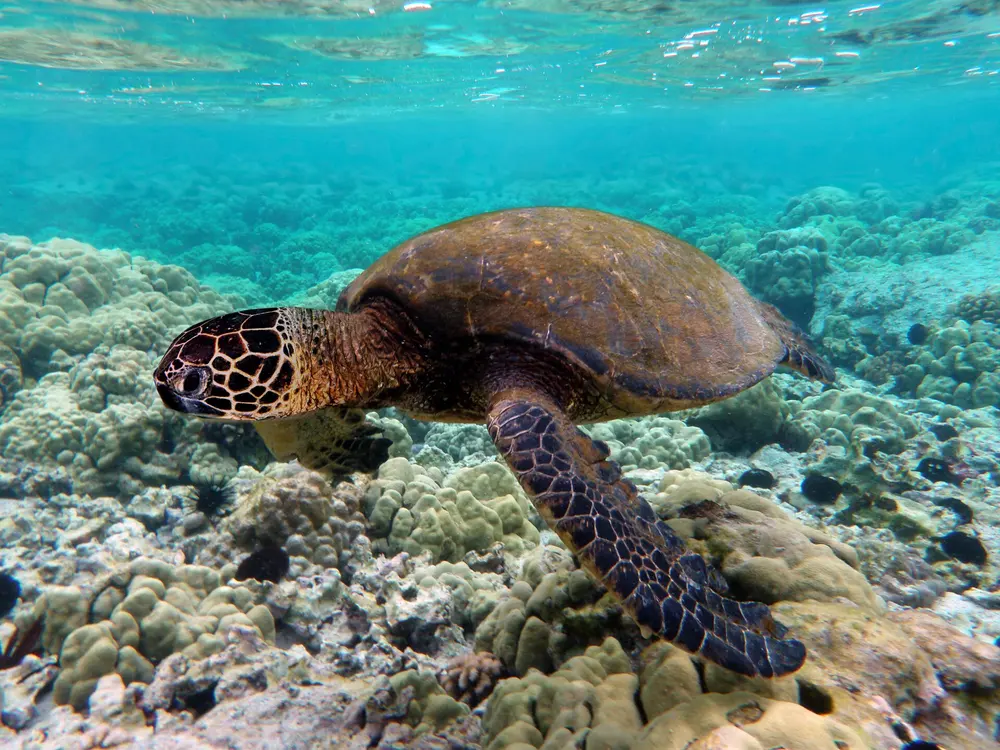
Miyako: snorkelling adventure with turtles and anemonefish
Guided snorkelling looking for sea turtles and anemonefish on Miyako's reefs.
Check availabilityBook via GetYourGuide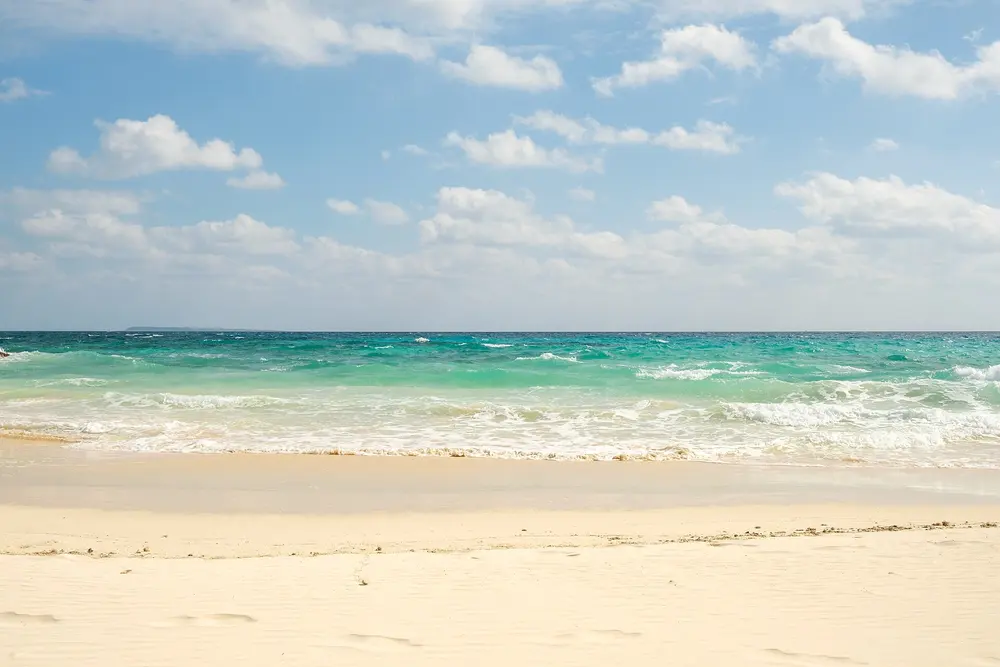
Miyako: SUP or canoe at a blue-water beach
Choose stand-up paddleboard or canoe on one of Miyako's clear, sheltered beaches.
Check availabilityBook via GetYourGuideTour listings are on GetYourGuide. Prices, times and cancellation terms are shown live on each listing and can change; Ryukyu.com may earn a commission at no extra cost to you.
Culture and food
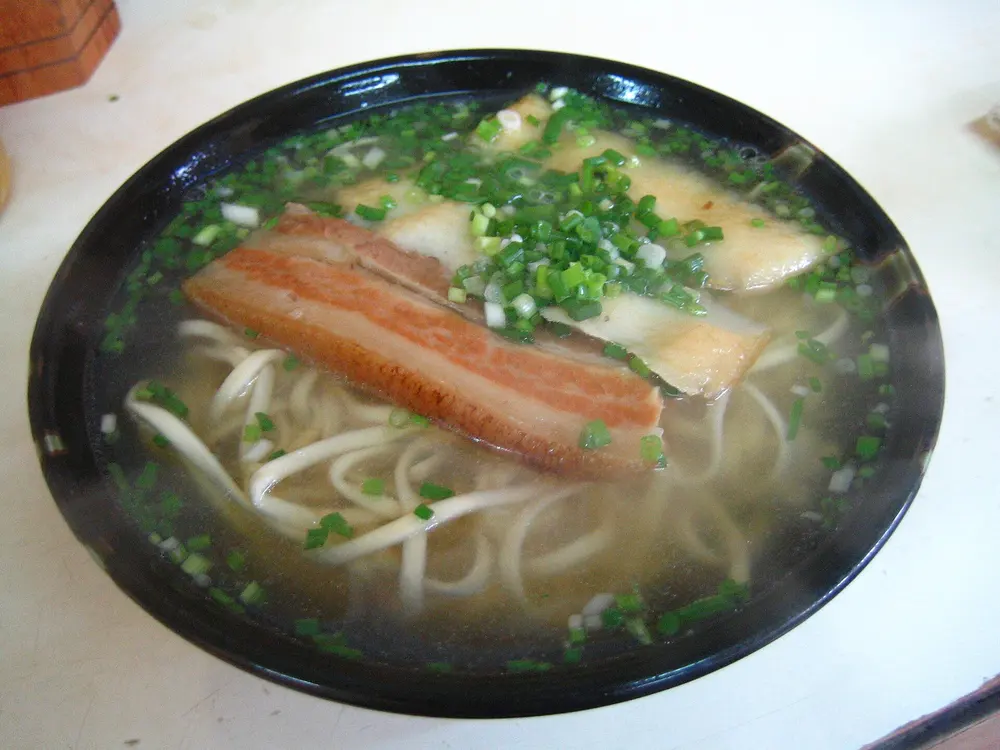
Look for Miyako soba, the local version of Okinawa soba, with the toppings traditionally hidden under the noodles; Miyako beef and pork dishes; summer mangoes; and island salt. Awamori is distilled on the islands, and Miyako has its own drinking custom, otori, in which a host makes a short speech and passes a glass around the table. You will be invited to join only in local company; it is never something you need to seek out. The food page covers Ryukyu cuisine in general.
Miyako jofu, a fine ramie cloth woven and dyed by hand, is one of Japan's designated Important Intangible Cultural Properties. Several shops in Hirara sell small pieces. In Shimajiri village in the north the Paantu ritual, in which masked figures smeared with mud bless homes, is one of the visiting-deity rituals inscribed together by UNESCO in 2018. It is a community ceremony, not a show: if you are on the island at the time, keep your distance, follow local requests and do not wear clothes you mind getting muddy.
Hirara is the place to eat out. Many izakaya serve island food with live sanshin music in the evenings, and restaurants fill up in the summer season, so reserve on busy nights.
When to go
Miyako is warm all year, but the sea and the weather change a lot by season. April to early May brings clear water and the lowest spring tides, the best time for Yabiji landings. The rainy season usually arrives in May and runs to late June. July and August have the warmest sea, long hot days and the most visitors, and typhoons become possible. September to November is often the best compromise: still warm water, fewer families, but typhoons remain possible into October. December to February is mild on land but windy, with cooler water (wetsuits recommended) and more cancelled boat trips.
Typhoons can close the airports and stop boat tours for one to three days. Build some slack into the end of your trip, and read typhoons and travel before booking in summer or early autumn. The best time to visit page compares all the islands month by month.
How long to stay and where to base yourself
Three nights is the minimum to see the main beaches, drive across all three bridges and spend one morning on a snorkelling or SUP tour. Five nights lets you add a Yabiji or sandbar boat trip, a slow day on Irabu and a spare day for weather.
- Hirara: best for first visits without a resort budget, for restaurants and nightlife, and for the bus and taxi network.
- South coast (Maehama, Shigira, Ueno): the resort hotels and villas, close to the best-known beaches; you will drive to dinner.
- Irabu and Shimoji: quiet villas and boutique hotels, sunsets, close to Shimojishima Airport.
- Ikema and the east coast: small guesthouses and villas for a slower stay.
Compare properties on the where to stay on Miyako page, and check getting there for which airport suits your flight.
Responsible travel on Miyako
- Coral: never stand on, touch or kick coral. Use fins only in deep enough water, and choose sunscreen that avoids oxybenzone and octinoxate, or cover up with a rash guard.
- Turtles: watch from a distance, never touch or feed them, and do not follow a turtle that swims away.
- Sunayama's arch: the rock arch has safety nets and fencing because of rockfall risk; do not climb it or go inside.
- 17END and the airport: stay outside the fence, park only where it is allowed, and do not use drones near the airport.
- Sacred places: utaki (sacred groves) such as Harimizu Utaki in Hirara are places of worship. Do not enter fenced-off areas or remove anything.
Book your first Miyako day
Most visitors book one guided sea activity, usually a turtle snorkel or SUP, and spend the other days driving between beaches. If you are not renting a car, a full-day bus tour covers the main sights in one go. All the options are compared on Miyako tours.
Plan your visit to Miyako
- Things to doThe sights worth your time on Miyakojima, Irabu, Shimoji, Ikema and Kurima, from the…
- Beaches & divingYonaha Maehama, Sunayama, Yoshino, Imgya, Toguchi and Nakanoshima compared, plus turtle…
- ToursThe Miyako tours worth booking on GetYourGuide, sorted by type, with who each suits and…
- Getting thereWhich airport to use, who flies there from Tokyo, Osaka, Nagoya, Naha, Ishigaki and…
- Where to stayHow to choose between Hirara, Yonaha Maehama, the Shigira resorts, the quiet east coast…
Frequently asked questions
Can you take a ferry from Okinawa Main Island to Miyako?
No. There is no passenger ferry from Naha or from Ishigaki to Miyako, as checked November 2026. Fly to Miyako Airport or Shimojishima Airport. The only scheduled passenger ferry from Hirara goes to Tarama.
Do I need a car on Miyako?
Practically, yes. The bridges and beaches are spread over about 40 km and buses are infrequent. Without a car, use taxis, a bus tour or tours with hotel pick-up. Foreign drivers need the right permit; see the car rental page.
Which is better, Miyako or Ishigaki?
Miyako has better beaches and clearer water and is easy to explore by car across its bridges. Ishigaki is the hub for ferries to Taketomi, Iriomote and the other Yaeyama islands, and has more forest and mountains. Many travellers combine them; flights take about 30–35 minutes.
Can I visit Yabiji reef?
Only by boat with a licensed operator. The reef is a protected Place of Scenic Beauty and Natural Monument, and parts of it emerge only around the lowest spring tides, mostly in spring.
Sources and official information
Facts were checked against these official sources in November 2026. Opening hours, prices and timetables change, so confirm before you go.
- city.miyakojima.lg.jp
- shimojishima.jp
- ja.wikipedia.org
- ekitan.com
- online.bunka.go.jp
- env.go.jp
- ich.unesco.org
Ryukyu.com is an independent guide, not the official site of any tourism board, government, airline, port or ferry operator. Some links are affiliate links: tours go to GetYourGuide and stays go to Booking.com, and we may earn a commission at no extra cost to you.