In short
- Forest: Kinsakubaru (certified guide required), Mount Yuwan, night drives for the Amami rabbit.
- Water: canoeing in the Sumiyō mangroves, beaches on the Kasari Peninsula and Kakeroma.
- Culture: Ōshima tsumugi mud-dyeing, the Tanaka Isson museum, shima-uta, kokutō shochu distilleries, Saigō Takamori's house.
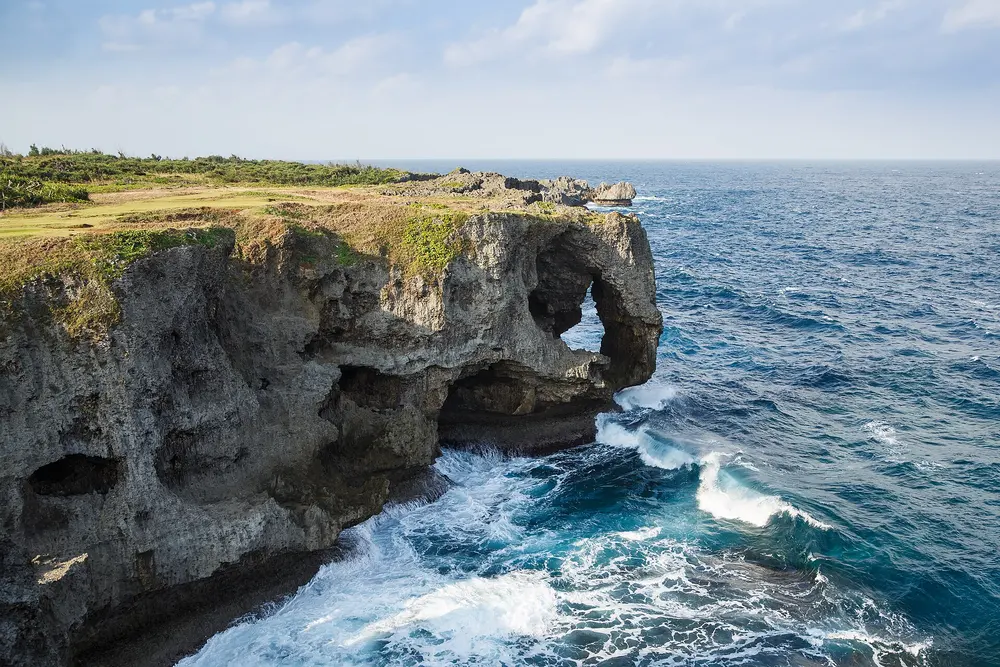
- Further south: Tokunoshima's bullfights and rock arches, Okinoerabu's caves, Yoron's sandbar.
Kinsakubaru and the forests
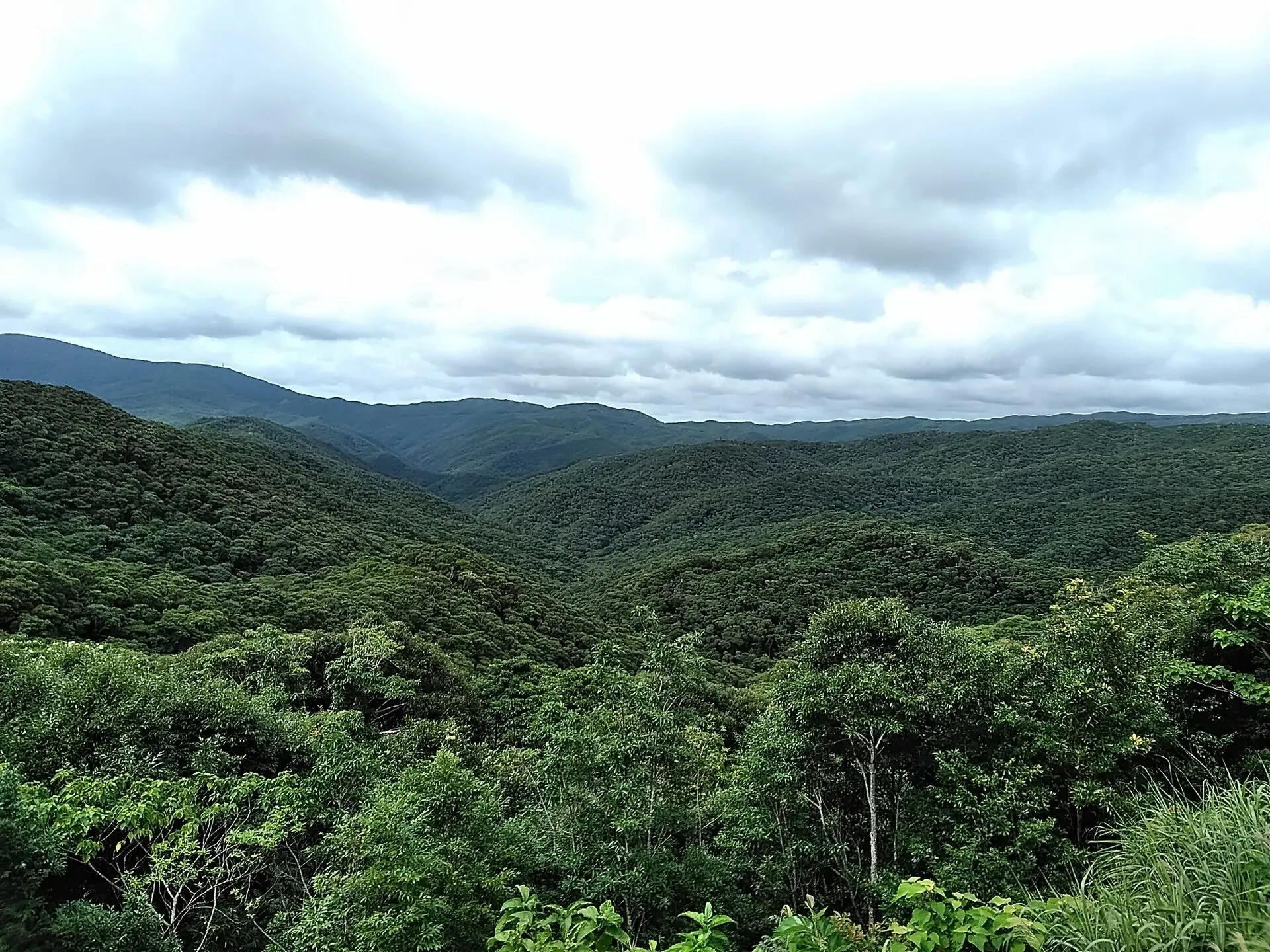
Kinsakubaru (金作原), in the hills west of Naze, is a primeval forest of giant tree ferns (hikagehego), Itajii chinquapins and epiphytes. Since the World Heritage listing, entry has been limited to tours with a certified eco-tour guide, with reservations, a maximum of 9 people per tour and 10 guide vehicles in the forest at once (Kagoshima Prefecture, as updated April 2026). Guides explain the plants, the birds and the Amami rabbit's habitat.
Elsewhere, Mount Yuwan (湯湾岳), 694 m, the highest peak in the Amami Islands, has a short trail from a car park through cloud forest, and a sacred site on its summit ridge. The Amami Wildlife Conservation Center in Yamato village explains the forest ecology and conservation.
Amami-Oshima private custom tour with a local guide
A private tour of Amami-Oshima with a local guide, planned around what you want to see.
Check availabilityBook via GetYourGuideAmami Oshima: Naze private shore excursion nature tour
Private nature-focused shore excursion from Naze port on Amami Oshima.
Check availabilityBook via GetYourGuideTour listings are on GetYourGuide. Prices, times and cancellation terms are shown live on each listing and can change; Ryukyu.com may earn a commission at no extra cost to you.
Book tours in Amami IslandsLive times, prices and free cancellation terms on GetYourGuide.
Check availabilityNight tours for the Amami rabbit
The Amami rabbit is nocturnal and lives in the forest, but it often feeds on roadsides at night. Certified guides drive slowly along the forest roads (such as the Santarō pass area) with lights, also finding the Ryukyu scops owl, Amami woodcock and Otton frog. Do not drive these roads fast at night on your own, do not chase animals with lights and do not get out to approach them. Night tours are mostly booked directly with local guides.
Mangroves and the coast
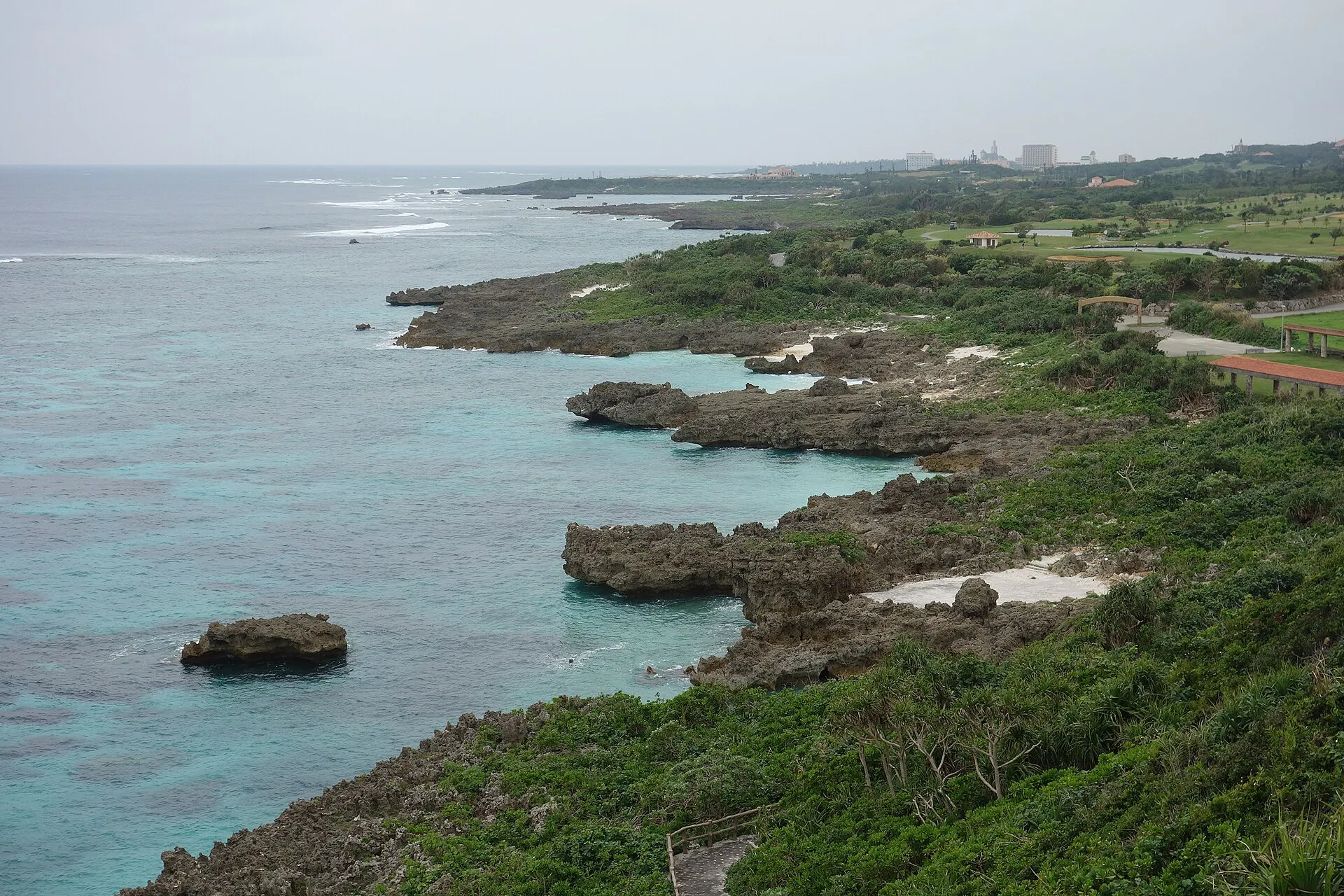
The Sumiyō mangroves (Amami-Oshima Mangrove Park) in the south-east are among the largest in Japan; canoe tours paddle up the channels at high tide, and an observation tower looks over the forest. The coast is lined with beaches: Tomori and Sakibaru on the Kasari Peninsula are known for their colour, Ōhama Seaside Park near Naze for sunsets, and the Ayamaru Cape for views. In the south, the Setouchi coast around Koniya faces Kakeroma across the Ōshima Strait.
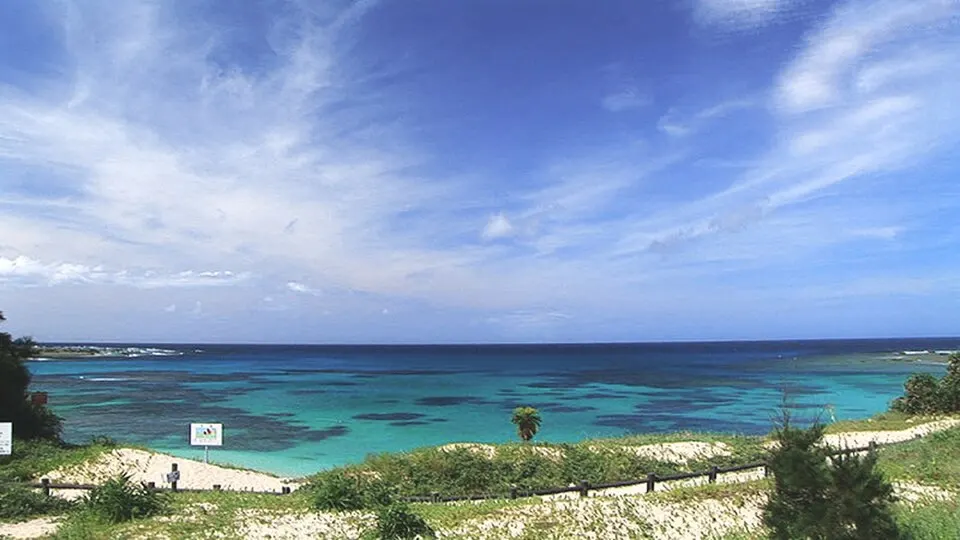
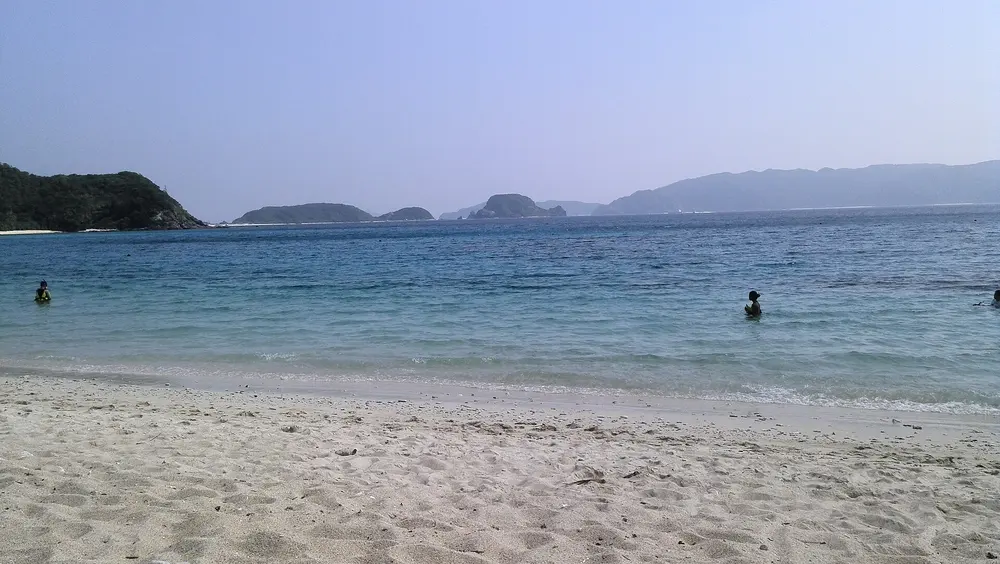
A beach on the Kasari Peninsula, Amami-Oshima.
Amami-Oshima 3-day adventure: cycling and paddling
A three-day active trip on Amami-Oshima combining cycling and paddling.
Check availabilityBook via GetYourGuidePrivate shore excursion: Amami coasts
A private shore excursion to the coasts of Amami-Oshima.
Check availabilityBook via GetYourGuideTour listings are on GetYourGuide. Prices, times and cancellation terms are shown live on each listing and can change; Ryukyu.com may earn a commission at no extra cost to you.
Ōshima tsumugi, art and history
Ōshima tsumugi is a hand-woven silk pongee famous for its fine kasuri patterns, dyed with an extract of Sharinbai (Rhaphiolepis) bark and then with the iron-rich mud of island paddies, giving its deep, glossy brown-black. Workshops and parks such as Tsumugi no Sato in Amami City show the dyeing and weaving and let visitors try mud dyeing.
In Amami Park, near the airport in Kasari, the Tanaka Isson Memorial Art Museum shows the work of the painter who moved to Amami in 1958 and painted its flora and birds until his death in 1977. In Tatsugō, the house where Saigō Takamori lived in exile is preserved by his descendants. Naze's arcades and the Yanmachi bar district have island restaurants and shima-uta live houses.
Private shore excursion: Amami-Oshima tsumugi
A private shore excursion on Amami-Oshima focused on Ōshima tsumugi silk.
Check availabilityBook via GetYourGuideAmami-Oshima brown-sugar shochu tasting
Taste kokutō (brown-sugar) shochu at a bar with around 200 varieties on Amami-Oshima.
Check availabilityBook via GetYourGuideTour listings are on GetYourGuide. Prices, times and cancellation terms are shown live on each listing and can change; Ryukyu.com may earn a commission at no extra cost to you.
Kakeroma Island
Kakeroma (加計呂麻島) is a long, narrow island of quiet bays and hamlets, reached from Koniya by the Setouchi town ferry to Sesō or Ikama (about 20–25 minutes) or by water taxi. Rent a car or scooter on the island, or book a guided half-day. Highlights include the Fukugi trees and old houses of Shodon, small beaches in almost every bay, and remains of wartime naval sites. Services are limited; take cash and food.
Kikai, Tokunoshima, Okinoerabu and Yoron
- Kikai — a flat island of raised coral reef, rising by up to about 2 mm a year, with sugar-cane fields, a huge banyan, and a short flight or ferry from Amami-Oshima.
- Tokunoshima — World Heritage forest in the north and centre (with its own Amami rabbits), the rock pillars of Inutabu, sandy Mushiroze coast, and the island's passion, togyū (bull versus bull bullfighting, with no matadors).
- Okinoerabu — a limestone island with hundreds of caves, including the show cave of Shōryūdō, the Fūcha blowhole, and Easter-lily fields in spring. GetYourGuide lists a caving tour here (per listing title).
- Yoron — a small coral island ringed by reef; Yurigahama, a sandbar that appears off Ōganeku beach at low tide, is reached by glass-bottom boat. On a clear day Okinawa's Yanbaru coast is visible.
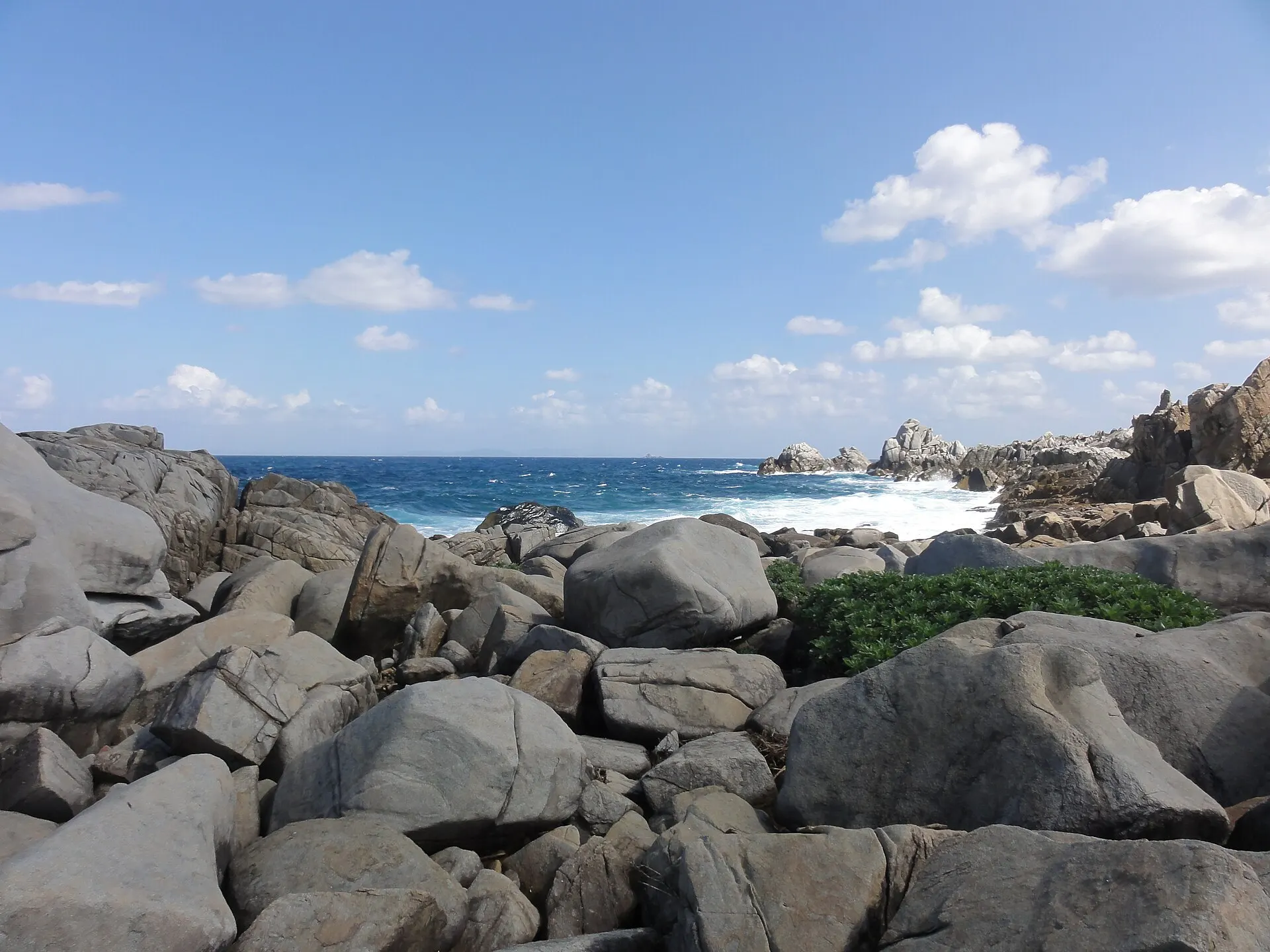
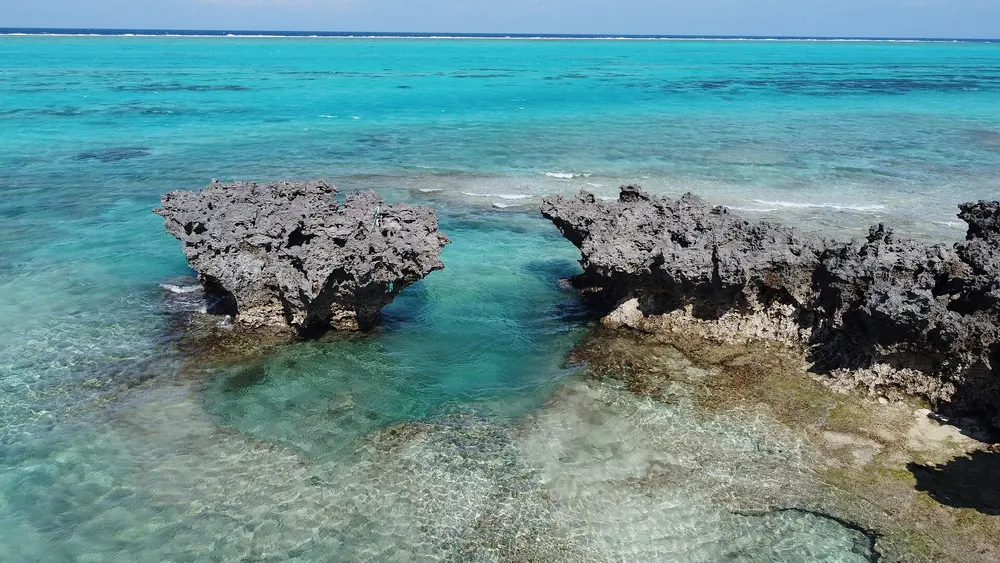
The rock shore of Mushiroze on Tokunoshima.
Okinoerabu caving tour
An adventure caving tour in the limestone caves of Okinoerabu Island.
Check availabilityBook via GetYourGuideTour listings are on GetYourGuide. Prices, times and cancellation terms are shown live on each listing and can change; Ryukyu.com may earn a commission at no extra cost to you.
Respectful travel
- Follow the national park and World Heritage rules: stay on trails, do not collect plants or animals, clean shoes between sites.
- Drive slowly at night everywhere in the forest: roadkill is a major threat to the Amami rabbit.
- Many sacred sites (kami-michi paths, tonera) remain in use; do not enter fenced or roped areas.
- Bring cash for smaller islands and villages.
Frequently asked questions
Can I walk Kinsakubaru on my own?
No. Since the local rules took effect, entry is only with a certified eco-tour guide, by reservation.
Is Kakeroma worth a day?
Yes for quiet beaches and villages; rent a car or scooter on arrival or book a guide, as there is little public transport.
Sources and official information
Facts were checked against these official sources in November 2026. Opening hours, prices and timetables change, so confirm before you go.
Ryukyu.com is an independent guide, not the official site of any tourism board, government, airline, port or ferry operator. Some links are affiliate links: tours go to GetYourGuide and stays go to Booking.com, and we may earn a commission at no extra cost to you.